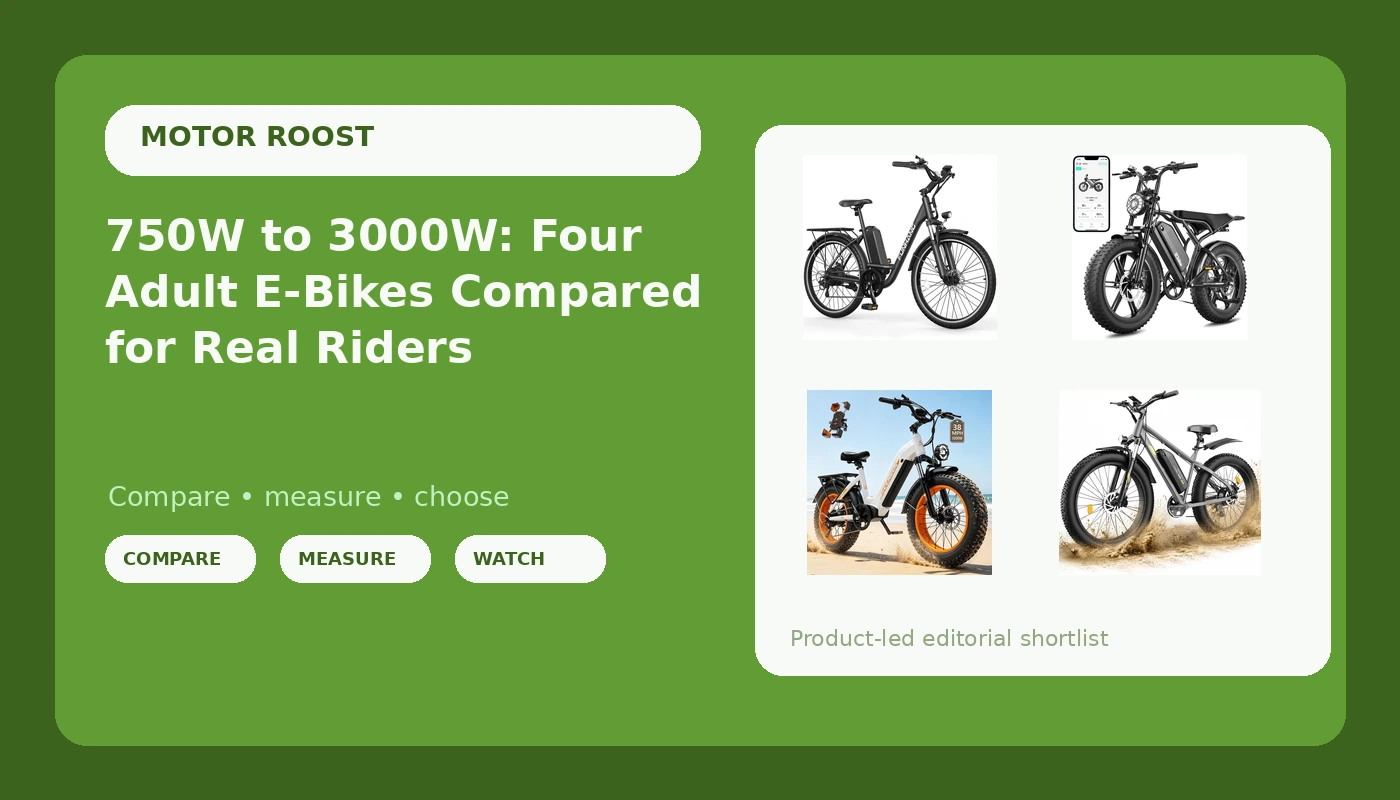
I have owned three e-bikes in three years, rebuilt two of them in my garage, and I am already shopping for a fourth. That is what happens when you ride enough to stop trusting spec sheets. So when I line up adult electric bikes compared side by side, I do it the way I would in my own driveway: voltage and peak watts first, battery watt-hours second, and every other number after that.
These four are the current short list. A 48V city cruiser, a 48V fat tire, a 26-inch fat tire mountain bike, and a 52V machine claiming 3000W and 105 miles. Two of them are commuters, one is a trail bike, and one is a small motorcycle that happens to have pedals bolted on.
The short answer: the SM5 gaps the rest on paper, the TST is the one I would commute on every day, the Funhang is the one I would hand a first-timer, and the INVANTI EB33 is the one that makes sense if dirt is the whole point.
One honest note before the table. I have not put a month on any of these four, so what follows is a spec sort plus the delivery-day checklist I run on every bike that rolls into my garage. A bike earns a ride report after 30 days and a few hundred hard miles. None of these has earned that yet, and I am not going to pretend otherwise.
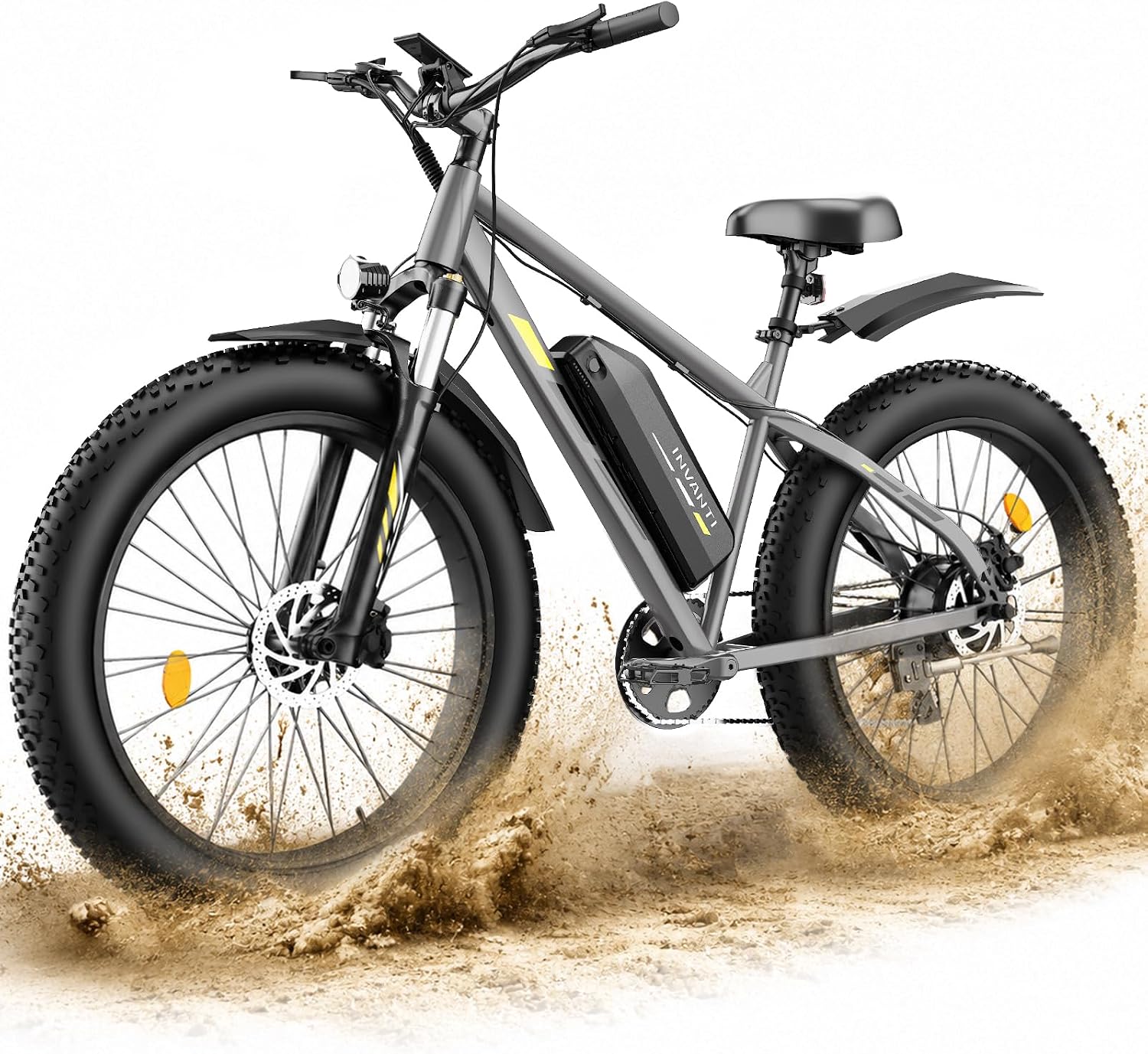
INVANTI EB33 26"x4" Fat Tire Electric Mountain Bike for Adults, 750W Ebike
Biggest contact patch in the field at 26x4, true mountain bike geometry, and 750W is honest power for dirt
Lowest motor rating of the four, and a 26x4 fat tire on pavement is slow and thirsty
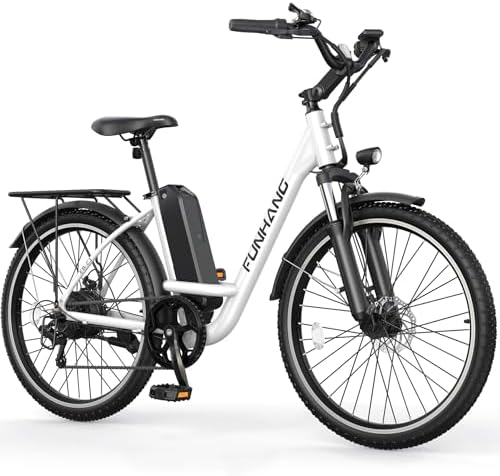
Funhang Electric Bike for Adults, 26" City Cruiser Ebike with 1000W Peak Motor, 20MPH 50 Miles Commuter Adult Electric Bicycles with 48V Battery, Adjustable Stem, 7-Speed, UL 2849 Certified
UL 2849 certified, adjustable stem, 7-speed drivetrain, 20 mph and a 50 mile claim, and it is the only bike here carrying a safety listing in the name
48V with a 1000W peak motor is the mildest drivetrain in this group, and cruiser tires are not built for the roads I ride
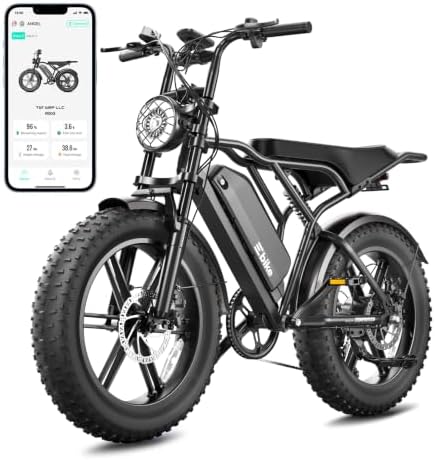
TST Electric Bike for Adults, 48V 15Ah Battery, 1500W Peak Motor, Fat Tire
1500W peak on a 48V 15Ah pack, fat tire comfort, and it sits in the middle of the field on every single axis
No UL listing in the spec, no wheel size published in the name, and 48V puts a ceiling on how far it can be tuned
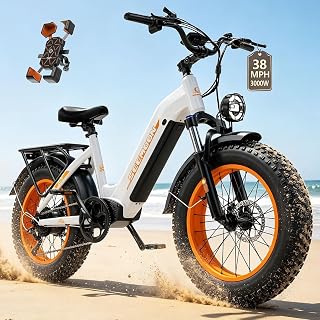
SM5 3000W 52V 25Ah E-Bike Up to 105Mi 20" Fat Tire Offroad Adults
3000W and a 52V 25Ah pack, the only 52V system here and the only one claiming triple-digit range
20-inch wheels, off-road geometry, the heaviest and priciest bike of the four, and that 105 mile figure will not survive a 200 pound rider
Prices and availability were captured from Amazon Creators API and may change.
How I sort a field like this
Five questions, in order. I do not skip any of them, and I do not reorder them for a nice-looking spec sheet.
- What is the voltage and the peak wattage? 48V or 52V decides the ceiling before anything else does.
- Will it move close to 200 pounds up a real hill without gasping? Hill streets in Denver are the test, not a flat parking lot.
- What is the battery actually showing when I get home? Not what the sticker claims. What the meter says.
- Will it survive being dropped? My son has dropped a bike four times. That is a review metric in this house.
- Can I tune it, or is the controller locked? Out of the box is never fast enough.
That framework splits these four cleanly into two camps. Three of them run 48V systems. One runs 52V. That single number tells you more about the bike than the price tag does, and it is the first thing I look at.
Funhang: the 48V commuter that comes with paperwork
The Funhang is the only bike in this comparison with UL 2849 certification written into its own name, and that matters more than people admit. UL 2849 is the standard that landlords, insurers, and apartment building managers ask about. If you are charging a battery inside a building that has rules, this is the line on the spec sheet that gets you through the door.
Beyond the certification, the build reads like a commuter. A 26-inch city cruiser frame, a 1000W peak motor, a 48V battery, a claimed 20 mph top speed, and a claimed 50 miles of range. The adjustable stem is the detail I appreciate most, because it means the bike fits a range of riders without swapping parts, and the 7-speed drivetrain means you can actually pedal it when the battery is low or you want the workout.
What it gives up is headroom. 1000W peak on 48V is the mildest drivetrain here, and 20 mph is a hard commuter ceiling, not a suggestion. Cruiser tires on a 26-inch wheel roll fast and efficient on smooth pavement, which is exactly what you want on a bike path. On the broken asphalt and gravel shoulders I ride, those same tires are where the comfort ends.
TST: the 48V fat tire in the middle
The TST is the bike I keep coming back to, because it does not try to win any single category. It runs 48V with a 15Ah battery and a 1500W peak motor, wrapped in fat tires. Do the math on the pack and you get 720 watt-hours, which is a real number for a commuter and a real number for a weekend trail loop.
The 1500W peak motor is the interesting part. That is 50 percent more peak than the Funhang, on the same 48V architecture, which means it should pull harder from a stop and hold speed better on a climb. Fat tires do the rest of the work. A good fat tire at the right pressure is cushiony in a way no suspension fork on a budget bike manages, and it glides over the stuff that rattles your teeth on a skinny tire.
Where I hesitate: there is no UL listing in the spec and no wheel diameter published in the name, and I do not like guessing at either. If a seller will not say, I assume the worst, and that goes double for battery cells. The 48V architecture also caps how far you can tune it later. It will be a comfortable, capable, mid-pack bike. It will not be the one that gaps anything.
INVANTI EB33: the 26-inch fat tire trail option
The INVANTI EB33 is the only true mountain bike geometry in this group, and it is the only one with a 26x4 tire. That combination is the whole argument for it. A 26-inch wheel with a 4-inch tire gives you the biggest contact patch here, which means traction on loose dirt, roots, and gravel that a 20-inch wheel simply cannot match.
The motor is rated 750W, the lowest number of the four. On dirt that is fine. Gearing and tire traction matter more than raw watts when you are climbing a loose grade, and a 750W system with the right gearing will walk up things a higher-rated motor on a slick tire will spin on. On pavement, though, you are paying for that traction in rolling resistance and battery drain, and 750W is not going to feel quick on a long commute.
This is the bike in the group I would buy for a specific job: trail days, fire roads, and riding with my son, where grip and stability beat top speed every time. It is not the bike I would pick to get to work on time.
SM5: the 52V, 3000W outlier
The SM5 is playing a different sport. 3000W, a 52V 25Ah battery, a claimed 105 miles of range, and 20-inch fat tires on an off-road frame. On paper it is not close to the other three. It is the only 52V bike here, and voltage is the number I cross-shop by before I ever look at price.
20-inch fat tires are a deliberate choice at this power level. They lower the center of gravity, they are incredibly stable at speed, and they put a lot of rubber on the ground. The trade is steering feel. A 20-inch wheel is twitchy at low speed and nervous over obstacles that a 26-inch wheel rolls straight through.
The 105 mile claim is the part I would ignore until proven. That number comes from a light rider, flat ground, low assist, and perfect weather, which is not how any of us ride. Range claims are marketing until the battery is still showing charge when you get home, and I track every mile to find out. What I can say is that 3000W and a 52V pack put this bike in a class the other three do not occupy, and it will be the heaviest thing in the group to lift onto a rack.
Voltage, watt-hours, and why the range claims never match
Here is the math that actually sorts these bikes. Watt-hours equals volts times amp-hours.
The SM5 carries 52 volts at 25Ah, which is roughly 1300 watt-hours. The TST carries 48 volts at 15Ah, which is 720 watt-hours. That means the SM5 holds close to 80 percent more energy than the TST, and that gap is the real story behind the 105 mile claim. It is not magic, it is a bigger battery.
The Funhang publishes 48V but not the amp-hours in its listing name, so I cannot run the math on it, and that is a gap worth noting. A 48V pack with a modest capacity will not match the TST's 720 watt-hours, which is one more reason the TST sits in the middle.
One caution on all of it: watt-hours predict range the way a gas tank predicts mileage. Riding style, rider weight, tire pressure, hills, and wind decide the rest. A 200 pound rider on a fat tire bike at 20 mph will see a fraction of any manufacturer's best case number, and the heavier the bike, the bigger that gap gets.
Assembly, tuning, and what survives month four
Every bike in this comparison arrives in a box, and what happens in the first two hours decides whether you like it in month four.
Check the box before you sign for it. Minor surface scratches from shipping are understandable and I shrug them off. Bent forks and crushed battery housings are not, and you want that documented before the truck leaves.
Then torque everything. Stem bolts, axle nuts, seat clamp, and brake calipers. Factory assembly is inconsistent, and a loose stem is the one mistake that sends people to the hospital. Bed the brakes in with a few controlled stops, set your tire pressure to your weight rather than the sidewall maximum, and check the display menu for a speed limit setting. If the controller lets you adjust assist levels, you just found the difference between a bike you tolerate and a bike you like.
Durability is the part nobody can promise you from a spec sheet. What I look for is whether the frame flexes under a heavy rider, whether the suspension or tire absorbs hits instead of passing them to your spine, and whether anything rattles loose after a few hundred miles. The UL 2849 listing on the Funhang is the one durability-adjacent claim here I can actually verify from the spec, and it is the reason I would trust that bike in an apartment building.
The trade-offs, stated plainly
- The Funhang gives up motor headroom and rough-road comfort. It gains certification, fit adjustment, and a drivetrain you can pedal.
- The TST gives up a safety listing and any published wheel size. It gains the best balance of power and battery capacity in the 48V group.
- The INVANTI EB33 gives up speed and pavement efficiency. It gains the biggest contact patch and the only real mountain bike geometry.
- The SM5 gives up weight, price, and low-speed manners. It gains a 52V system and roughly 1300 watt-hours, which nothing else here can touch.
Which one I would buy, and for whom
If you commute and you charge indoors, buy the Funhang. UL 2849 certification is worth more than a few hundred extra watts when your building manager is asking questions, and the adjustable stem and 7-speed mean it fits more riders than anything else here.
If you want one bike to do most things, buy the TST. 1500W peak and 720 watt-hours on fat tires is the most useful combination in this group, and it is the bike I would ride to work on Monday and take on a dirt path on Saturday.
If dirt is the point, buy the INVANTI EB33. A 26x4 tire and mountain bike geometry will out-traction every other bike on this list the moment the pavement ends.
And if you want the bike that gaps the field, buy the SM5. 3000W on a 52V 25Ah pack is a different category of machine, and I would rather have that headroom than a nicer paint job. Just do not expect 105 miles, and do not expect to lift it onto a hitch rack without a plan.
What I am watching next
Two things are still open on my list. The first is real-world battery data on the SM5, because 1300 watt-hours is a big claim and I want to see what the meter reads after a hard 20 miles. The second is whether the TST's controller can be tuned past its factory ceiling on 48V, because if it can, that middle-of-the-field bike gets a lot more interesting.
When either of those answers changes, this comparison changes with it. That is how it works. A bike is only as good as what survives, and a spec sheet has never once survived a hill.