I rode a fixie for eight years as a bike messenger in Denver, forty miles a day in every season, up and down the hill streets the tourists never see. My knees eventually told me to knock it off, so I bought an e-bike three years ago as a compromise and never went back. I commute on one daily, ride a dirt bike on weekends with my 14-year-old son, and keep a third bike around for long trail days. I am also almost 200 pounds, which means I am the test most spec sheets are not written for. This comparison of adult electric bikes is the version of the shopping trip I wish I had before I started cross-shopping 48V commuters against 52V off-road fat tire builds, because the numbers on these four listings are not measuring the same things.
Related: E-Bike Battery Voltage Explained 48V Vs 52V Vs 60V
The short answer: if you want the most machine for the money in this group, the SM5 is the one that earns its place, because 52V and a stated 25Ah pack is a different class of bike than a 48V commuter. If you want a light, certified, city-shaped bike for a short ride to work, the Funhang is the honest buy. The TST is the middle ground for mixed surfaces, and the Jasion RetroVolt is the one I would interrogate before clicking buy.
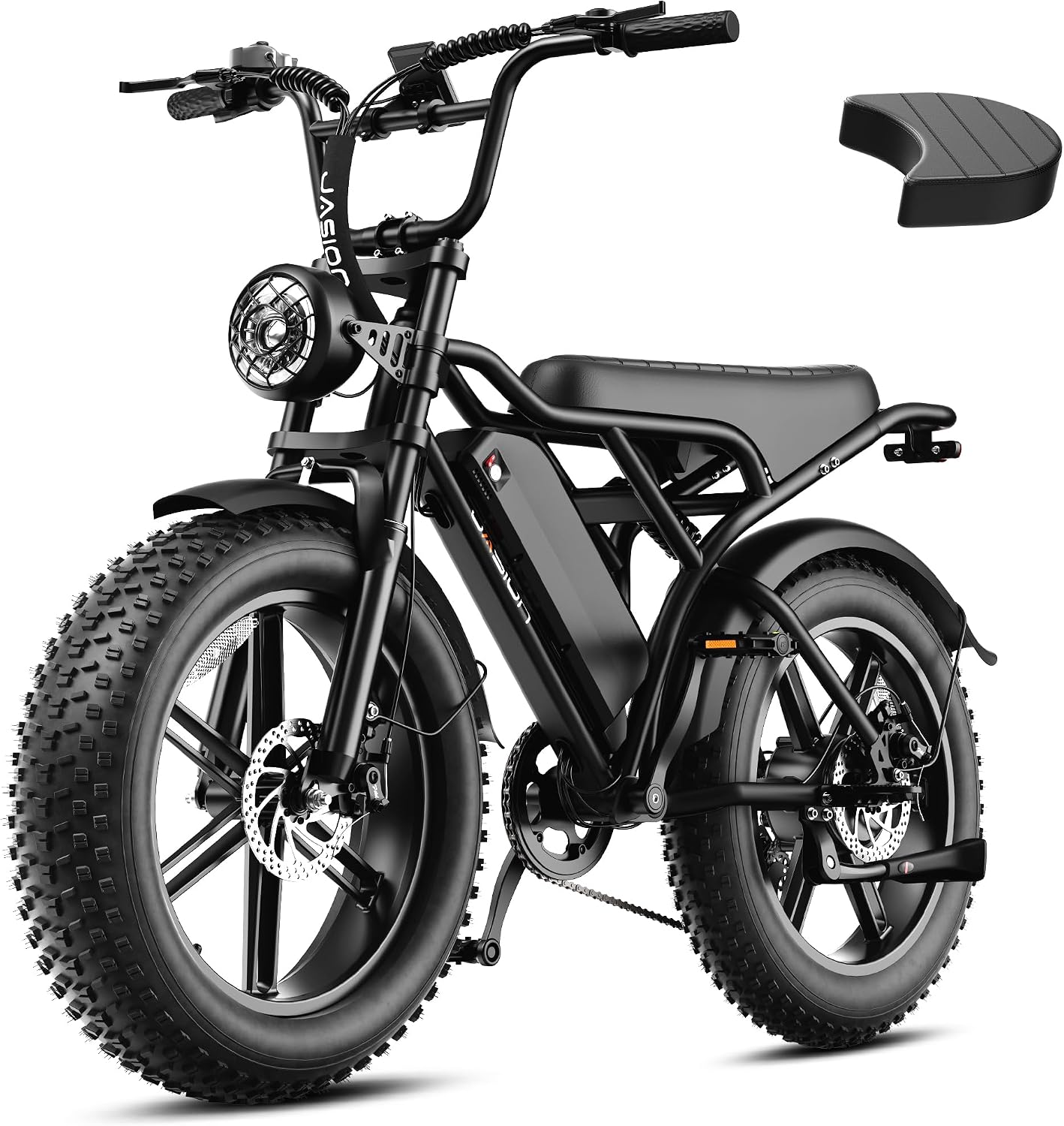
Jasion RetroVolt Electric Bike
2000W peak with fat tires, plus a claimed 70-mile range, reads like a lot of bike for the category
No voltage and no amp hours stated anywhere, so the big claims have nothing behind them
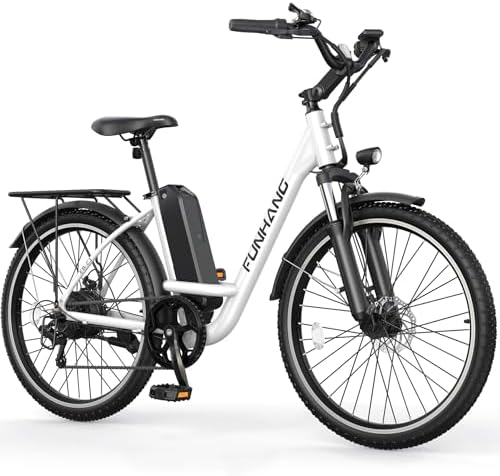
Funhang Electric Bike for Adults
UL 2849 certified, adjustable stem, 7-speed, 26-inch cruiser geometry that fits like a bicycle
Lowest peak power here at 1000W, no fat tires, and a 20 mph ceiling
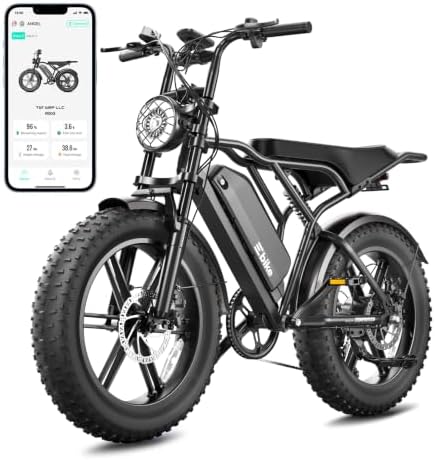
TST Electric Bike for Adults
48V 15Ah is a capacity you can calculate from, 1500W peak moves a heavier rider, fat tires handle rough pavement
Smallest stated capacity in the group and no advertised UL 2849 certification
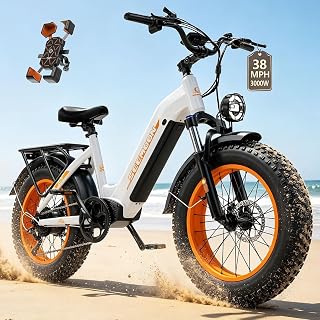
SM5 3000W 52V 25Ah E-Bike
Highest voltage, highest peak wattage, and the biggest stated pack of the four, with a claimed 105-mile range
Heaviest and most expensive class of bike here, and 20-inch wheels give up rollover on pavement
Prices and availability were captured from Amazon Creators API and may change.
What actually separates these four bikes
Voltage and wattage first, price second. That is the order I shop in, and it is the order that matters here, because these four bikes split into two clear groups. The Funhang and the TST run 48V systems. The SM5 runs 52V. The Jasion does not state its voltage in the listing at all, which tells you something about how it wants to be compared.
Peak watts are the other number sellers lean on, and they deserve a caveat. A 3000W peak rating is not 3000W continuous, and it is not the same 3000W on every controller. What peak watts do tell you is headroom, and headroom is what gets a heavier rider up a Denver hill without the motor gasping halfway. I care about that more than I care about top speed, because top speed is easy and torque is not.
Then there is the battery. Amp hours tell you capacity, voltage tells you the punch behind it, and cell brand tells you whether either number will still be true in two years. A pack that will not name its cells is a pack I assume the worst about.
Finally, geometry and tires. A 26-inch city cruiser and a 20-inch fat tire bike are not the same tool even when the motors match, and the difference shows up on the third mile, not the first.
Funhang Electric Bike for Adults: the commuter that plays by the rules
The Funhang is a 26-inch city cruiser with a 1000W peak motor, a 48V battery, a claimed 50-mile range, and a 20 mph ceiling. It is also UL 2849 certified, which is the line item I would not skip. UL 2849 covers the whole electrical system, not just the charger, and it is the certification that matters when your building manager, your insurer, or your spouse asks whether the bike charging in the hallway is safe.
The rest of the spec sheet is honest commuter stuff. An adjustable stem means you can fit the bike to your body instead of the other way around, and a 7-speed drivetrain means the bike still works as a bicycle when the battery is empty or when you feel like pedaling. Twenty miles per hour is not exciting, but it is the speed this class of bike is supposed to run, and it keeps the Funhang welcome on paths and in bike lanes where faster machines are not.
What it loses: 1000W peak is the least power in this group, and there are no fat tires here. If your commute is flat pavement and under ten miles each way, that is fine. If it involves gravel, sand, or a serious grade, the Funhang is going to feel like the small bike.
TST Electric Bike for Adults: the middle of the pack fat tire
The TST pairs a 48V 15Ah battery with a 1500W peak motor and fat tires. That combination is the classic all-rounder shape: enough power to move a heavier rider, enough stated capacity that you can do the range math yourself, and fat tires that soak up cracked asphalt, gravel shoulders, and the kind of pothole surface Denver throws at you every spring.
I like that the capacity is stated. A 48V 15Ah pack is a number you can work with, and that alone puts the TST above any listing that only advertises a range figure with nothing behind it. Fat tires also change the ride in a way that is hard to overstate on rough pavement, and they are the reason this bike can be a commuter on Monday and a light trail bike on Saturday.
What it loses: 15Ah is the smallest stated capacity in this group, and the SM5 carries 25Ah at a higher voltage. Wheel size is not part of the name here, so that is a question worth answering before you buy, and the listing does not advertise UL 2849 certification the way the Funhang does. Neither of those is a deal breaker. Both are things I would want confirmed before I spent money.
SM5 3000W 52V 25Ah: the off-road build
This is the outlier, and it is the one I would pick if the goal is capability. A 52V system with a stated 25Ah pack and a 3000W peak motor is a genuinely different tier from the 48V bikes above, and the claimed range of up to 105 miles only makes sense if the pack is as big as it says.
Here is the caveat, and it is a big one. Range claims are marketing until somebody your size rides the loop and photographs the meter at the end. That 105-mile figure was almost certainly recorded by a lighter rider, on flat ground, in a low assist mode, in good weather. That does not make it a lie. It makes it a best case. Plan your real range at roughly half of what the sticker says and you will not be disappointed.
The 20-inch fat tires are the other thing to understand. Smaller wheels with fat rubber give you more torque and more float over loose surfaces, at the cost of rollover and stability at speed compared with a 26-inch wheel. For off-road use and technical terrain, that is the right trade. For a long paved commute, it is not.
What it loses: it is the heaviest and most expensive kind of bike in this comparison, and a 3000W peak figure invites people to ride it harder than they should. It is also more bike than a beginner needs.
Jasion RetroVolt: the value fat tire with missing numbers
The Jasion RetroVolt advertises a 2000W peak motor, a claimed 70-mile range, and fat tires. On the surface that reads like a lot of bike for the category, and 2000W peak with fat rubber is a combination that will get a heavier rider around town without drama.
The problem is what the listing does not say. There is no voltage and no amp hour figure attached to the battery, and those are the two numbers that determine whether the 70-mile claim is plausible or fantasy. A 2000W peak motor with no stated voltage is a number without a denominator. Sellers who will not name their battery cells are sellers I assume the worst about, and that rule has saved me money more than once.
None of that means the bike is bad. It means the burden is on you to ask. If a seller can confirm the voltage, the capacity, and the cell manufacturer, the RetroVolt becomes a legitimate value pick with fat tires and real power. If they cannot, you are buying a shape and a promise.
The trade-offs nobody puts in the table
Three things separate these bikes in daily life, and none of them show up in a spec sheet.
The first is weight. A fat tire bike with a 52V 25Ah pack is a heavy object. You will feel it lifting it onto a rack, up apartment stairs, and into a garage. The Funhang, as the lightest and most conventional of the four, is the one you will not dread moving.
The second is tire width versus wheel size. Fat tires are cushiony on rough surfaces and slower on smooth ones. Small wheels are quick to turn and less stable at speed. Pick the tire that matches the surface you actually ride, not the surface in the product photos.
The third is the speed ceiling. A 20 mph bike is a bike that goes where bikes go. A 3000W off-road machine is a different relationship with the law, with trail access, and with your own judgment. Be honest with yourself about which one you are buying.
Assembly, shipping, and the first charge
Assembly is part of the deal, and if you cannot put the bike together in your garage, you do not really own it. Budget two hours for a first build, and do it with a friend if you can, mostly because a second set of hands makes holding the front wheel while you tighten the axle far less annoying. Check the stem bolts, check that the brakes do not rub, check the derailleur before you ride, and charge the battery fully before the first real trip.
Inspect the box before you sign for it. Minor surface scratches happen and are understandable. Anything more than that is a return conversation, and it is much easier to have that conversation before you have assembled the bike.
The bottom line
Buy the SM5 if you want the most capability and you are ready for the weight and the responsibility that come with a 52V off-road bike. Buy the Funhang if your riding is pavement, your commute is short, and you want a certified bike that fits and pedals like a bicycle. Buy the TST if you want one fat tire bike that does a bit of everything at 48V. And treat the Jasion RetroVolt as a value pick with homework attached: get the voltage, the capacity, and the cell brand in writing before you commit.
That is the same advice I give friends who text me before buying anything with a motor and two wheels. Voltage and wattage first. Then the battery. Then, and only then, the price.