I rode a fixie for eight years as a bike messenger in Denver, forty miles a day in every season, up and down the hill streets the tourists never see. My knees finally told me to knock it off, so I bought an e-bike as a compromise and never looked back. Three years later there are three bikes in my garage and a fourth on the wish list. So when a friend texts me asking whether a 6000W dual motor e-bike is worth double the money of a 1500W commuter, I don't send a spec sheet. I send what I've learned riding almost 200 pounds of rider up real hills.
That weight is the whole point of this comparison. Range claims get tested by 140-pound riders on flat ground in perfect weather, and almost nobody publishing a review is the size of the person reading it. I am. Every bike that earns a recommendation from me has to move me up a real grade and still show something on the battery meter when I get home.
The short answer: for raw capability per dollar, the E·Bycco dual motor bike is the pick. For a commuter you can actually live with every day, the 1500W 26-inch bike is the smarter money. The rear hub motor is for converting a bike you already own, and the inverter is the garage gear that keeps the other three charged and tuned.
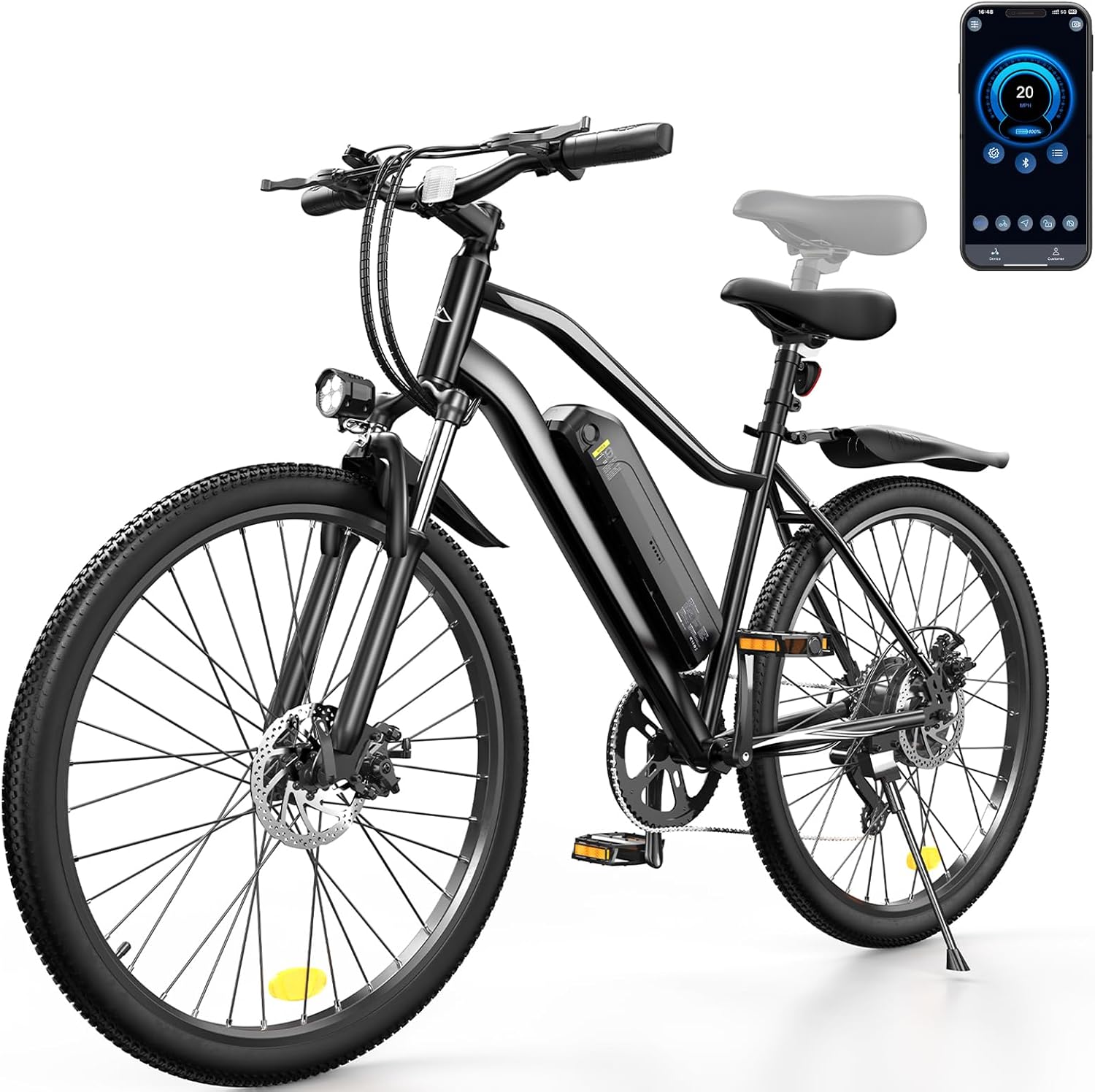
Electric Bike 26" Tire with 1500W Peak Motor, Up to 80 Miles Range
Lightest and most bicycle-like of the complete bikes here, 1500W peak is enough for a heavier rider on a normal grade
Single motor, no full suspension, no fat tire float, so the ceiling is lower than the dual motor
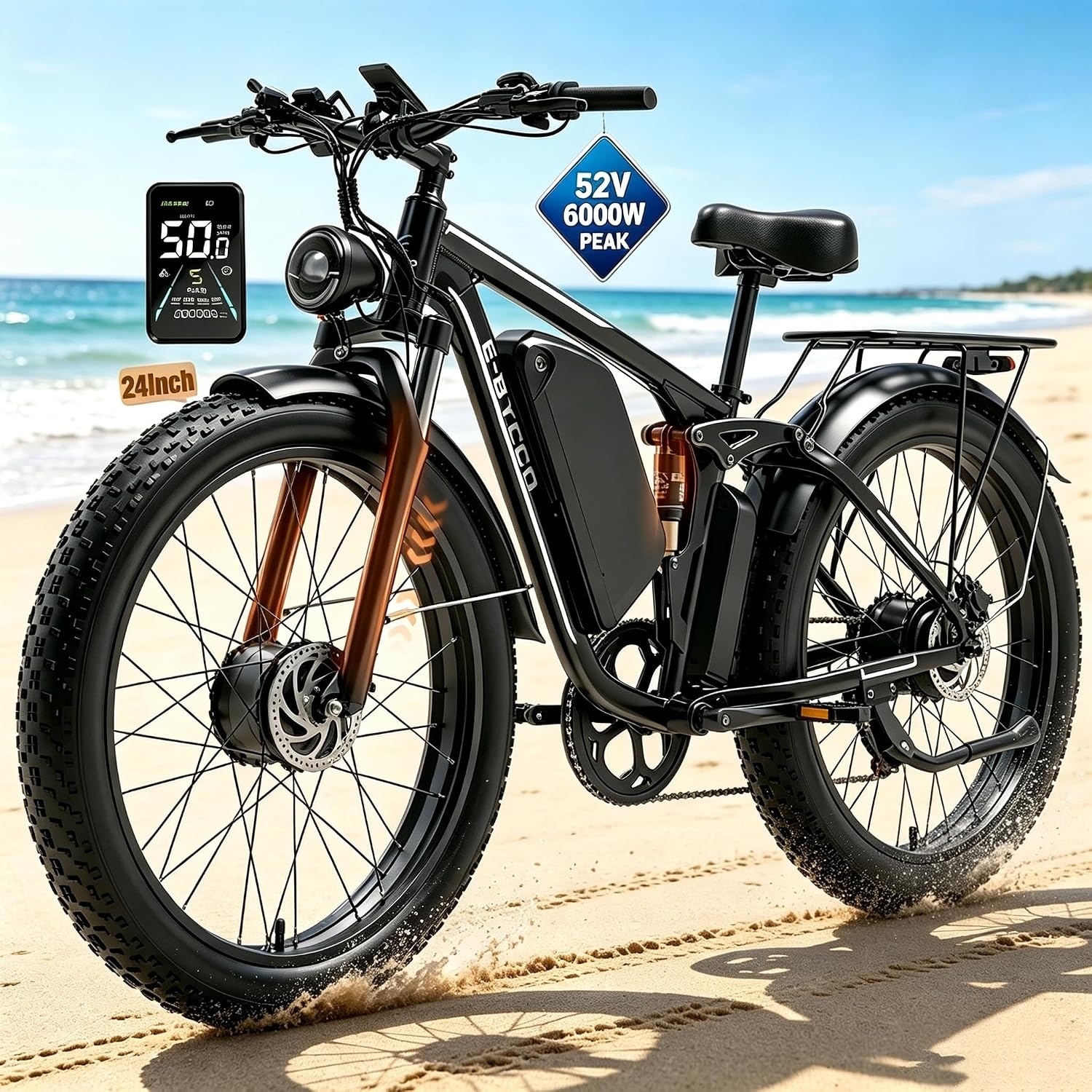
E·Bycco 6000W/9000W Peak Dual Motor Electric Bike for Adults, 52V 32AH Battery, Fast 50 MPH & 110Miles Long Range EBike, Full Suspension, Hydraulic Brake, 24"/26" Fat Tire Off-Road Mountain E-Bicycle
6000W with 9000W peak, 52V 32AH pack, full suspension, hydraulic brakes, dual drive traction
Heaviest and most expensive option, and the listing never names the battery cell manufacturer
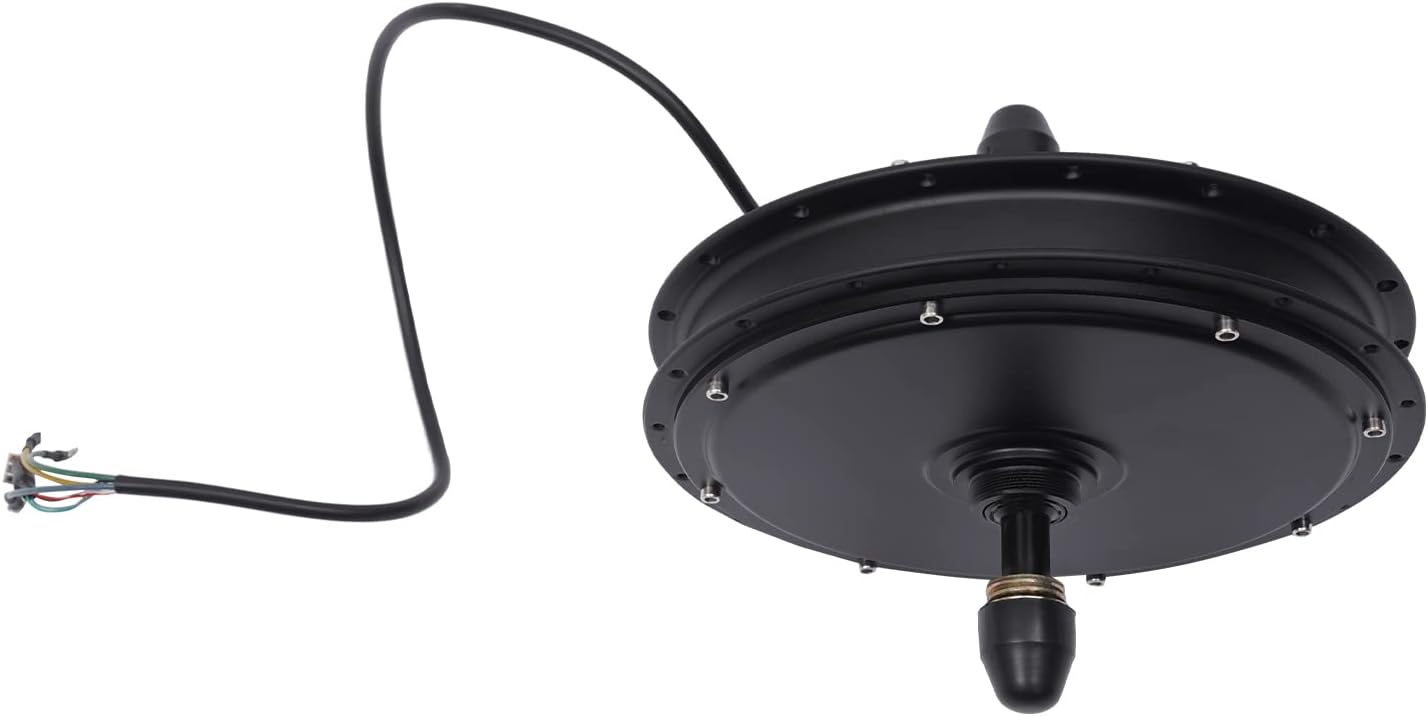
Ebike Motor Electric Bicycle Rear Wheel Hub Motor Mid Drive Brushless Gearless Hub Motor for Ebike Rear Wheel, Disc Brake (Black)
Cheapest way into electric assist if you already own a donor frame, gearless means fewer internal wear parts
It is a component, not a bike. No battery, no controller, no display, and the install is entirely on you
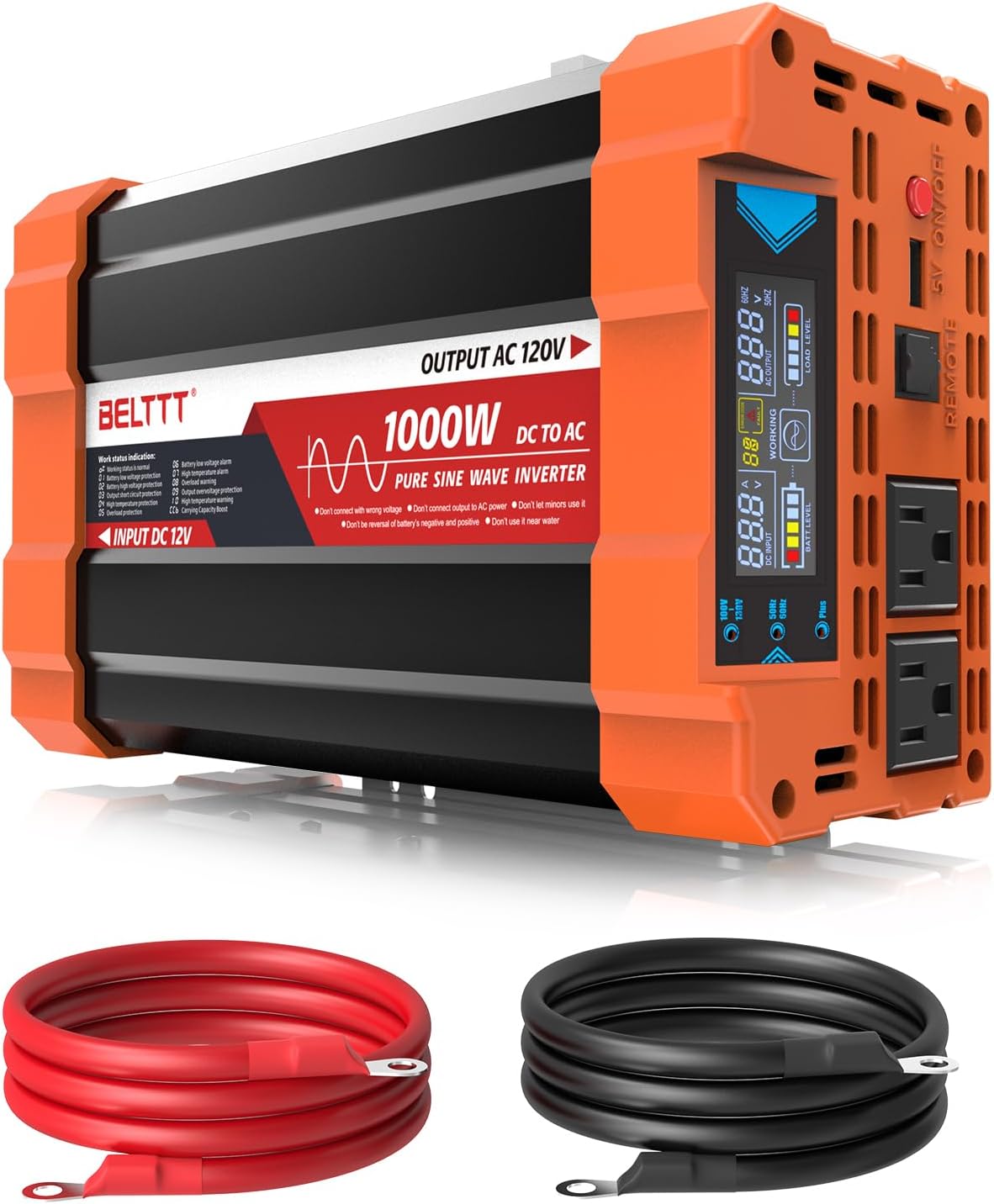
BELTTT 1000Watt Pure Sine Wave Inverter 12V DC to 120V AC, 2000W Peak
Pure sine wave output is the right call for chargers and electronics, 1000W continuous with 2000W peak covers a real garage bench
Needs a 12V battery bank to feed it, and it does not move a bike an inch
Prices and availability were captured from Amazon Creators API and may change.
What I actually look for
Five things, in order.
Voltage and wattage first, price second. I cross-shop 52V against 60V before I ever look at a price tag, because the battery platform decides everything downstream: how much torque you get, how far you go, and how much the replacement pack costs you in two years. A bike with a great motor and a battery you can't source parts for is a two-year bike.
Can it move almost 200 pounds up a real hill. Denver has grades that will humble a motor that looked fine on paper.
What the battery meter says when I get home. Not what the sticker claims. What the meter shows.
Will it survive being dropped. My 14-year-old has dropped his bike four times. That is a review metric in my house, not a joke.
Can I tune it. Out of the box is never fast enough. There is always a way to get a little more out of the controller, and a bike that locks you out of every setting is a bike that ages badly.
With that framework, here is how these four pieces sort out.
The 1500W commuter: the one most people should buy
Electric Bike 26" Tire with 1500W Peak Motor, Up to 80 Miles Range
1500W peak with a claimed 80-mile range is a commuter spec sheet, and I mean that as a compliment. Peak wattage tells you what the motor can do in a burst, and 1500W is enough to move a heavier rider up a moderate grade without the motor sounding like it is dying under you. The 80-mile figure is the one to treat with suspicion, the way I treat every range number, but on a bike like this the claim is at least in the right territory for a daily commute with pedal assist doing half the work.
What it wins on is weight and simplicity. This is a single-motor bike built around a 26-inch platform, which means it handles like a bicycle instead of a small motorcycle. You can lift it onto a rack. You can carry it up a flight of stairs. You can ride it to work in the clothes you plan to work in, which sounds trivial until you have commuted on something that weighs as much as a small motorcycle.
What it loses on is ceiling. There is no dual drive, no fat tire float, and no full suspension. On a steep grade with a heavy rider it will work for its living. If your commute is flat and under twenty miles round trip, that is fine and you will never miss the extra motor. If you are chasing the feeling of a bike that pulls hard no matter the hill, the rider weight, or the battery level, this is not that bike.
The 6000W dual motor: the one that does everything and weighs like it
E·Bycco 6000W/9000W Peak Dual Motor Electric Bike for Adults
6000W with a 9000W peak, a 52V 32AH battery, a claimed 50 mph top speed, a claimed 110 miles of range, full suspension, hydraulic brakes, and fat tires in 24 or 26 inch. On paper that is a different category of machine than everything else on this page, and the price gap reflects it honestly.
Two motors change how a bike feels, not just how it specs. Instead of one hub doing all the work, you get drive at both ends, which means traction on loose ground and a launch that a single motor cannot match. Full suspension is the other half of that equation. Cheap suspension rattles your teeth out on the same trail a good fork glides over, and this bike at least ships with the hardware to take a hit. Hydraulic brakes matter more than people admit on a machine this heavy and this fast, because rim brakes and cable discs fade when you actually need them.
Where I push back: weight, and the battery spec. A 52V 32AH pack on a dual motor fat tire platform is a lot of battery, and a lot of battery is a lot of pounds. This is not a bike you carry up a flight of stairs, and it is not a bike you lock up outside a coffee shop without thinking hard about it. The listing also gives you voltage and amp hours but never names the cell manufacturer. If a seller will not say whose cells are in the pack, I assume the worst, and I would want that confirmed before spending this kind of money. That is the one thing keeping this from being a no-questions pick.
If you want a trail bike that will gap a lot of expensive nameplates and you have a garage bay to store it in, this is the one.
The rear hub motor kit: for the bike you already own
Ebike Motor Electric Bicycle Rear Wheel Hub Motor, Brushless Gearless, Disc Brake
Brushless, gearless, rear wheel, disc brake compatible. This is a component, not a bike, and it is the cheapest way into electric assist if you have a decent hardtail or commuter frame sitting in the garage doing nothing.
Gearless is worth understanding before you buy. Fewer moving parts inside the motor means fewer things to wear out, and it tends to run quietly. The trade is that gearless hub motors generally want more current to make torque off the line, which is why the controller and the battery you pair it with matter as much as the motor itself. Buy a weak controller and you will blame the motor for a problem the motor did not cause.
What the kit does not include is the rest of the system: no battery, no controller, no display, no wheel build. You supply the donor bike, and you do the install. If you have never laced a wheel or soldered a connector, budget for a shop to finish the job, because a hub motor that is not properly secured in the dropouts is a bad day waiting to happen at speed.
For the right person, this is the best value on the page by a wide margin. For everyone else, it is a project with a learning curve.
The inverter: the piece that makes the garage work
BELTTT 1000Watt Pure Sine Wave Inverter 12V DC to 120V AC, 2000W Peak
This is not a bike part, and I am including it because it solves a problem every e-bike owner eventually runs into. Chargers, lights, a laptop, a bench light, a soldering iron when you are redoing connectors: all of it wants household AC. If you are running off a 12V battery bank, in a van, at a trailhead, or in a garage where the outlets are all spoken for, an inverter turns that bank into a usable outlet.
Pure sine wave is the spec that actually matters here. Modified sine wave output is cheaper and it is fine for a lamp, but anything with a charger or a motor in it prefers a clean sine wave, and I would not plug a bike charger into a modified wave unit on purpose. 1000W continuous with 2000W peak is enough headroom for a couple of bike chargers and a light without tripping anything.
The catch is honest: 12V DC input means you need a battery to feed it. This does not create power, it converts it. If you do not already have a 12V bank, factor that into the total.
The trade-offs, plainly
The E·Bycco is the most bike here, and it costs the most and weighs the most. The 1500W commuter is the least dramatic and the one I would recommend to the most people, because most people need a bicycle with help, not a motorcycle with pedals. The hub motor is the best value if you already own a frame and you like projects. The inverter is support gear that makes the other three easier to live with.
And price second, remember. A 52V platform and a 60V platform are not the same purchase even when the stickers look close, because the battery is the expensive part and you will be buying another one eventually. Buy the platform you can live with for five years, not the one with the best number on the box today.
Which one I'd buy
If you commute, buy the 1500W. It does the job, it is light enough to live with, and a range claim in the 80-mile neighborhood, tested honestly, is more than a week of most people's riding.
If you want the bike that does everything and you have a garage bay for it, buy the E·Bycco. Dual motors, full suspension, hydraulic brakes, and a 52V 32AH pack is a serious machine, and that spec sheet is the kind that makes expensive bikes nervous.
If you have a bike you love and you want it to be electric, buy the hub motor kit and plan the install properly instead of rushing it on a Saturday afternoon.
And if your garage has turned into a charging station, buy the inverter. Pure sine wave, 1000W continuous, 2000W peak. It is the least exciting purchase on this page and the one you will use the most.
What I'm watching next
I am still tracking range mile by mile on my own bike, photographing the meter at the end of every loop, because the only range number I trust is the one I logged myself. The next thing I want to test is how a dual motor bike behaves on a long climb with the battery down to half, which is where most spec sheets quietly stop being useful.
Until then, the rule stands. Voltage and wattage first, price second, and never trust a range claim from a rider who weighs less than you do.