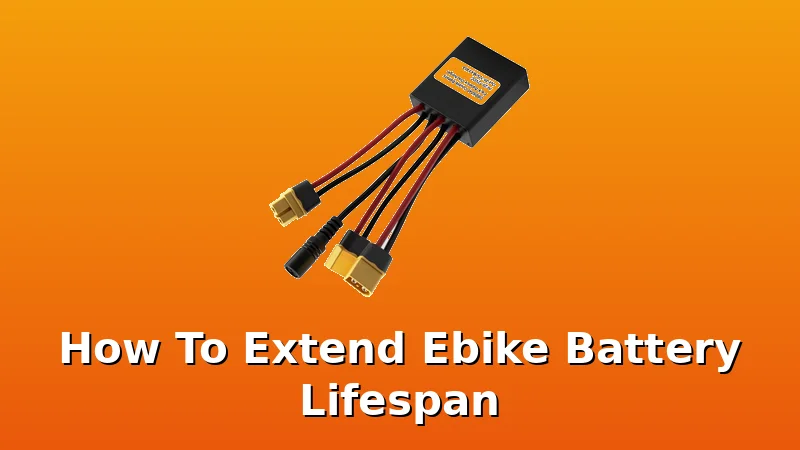
The E·Bycco has power for days, but the battery that feeds it is the part most riders ignore until it dies a year early. I've owned three e-bikes in three years, charged them in a freezing Denver garage, and killed a cheap folding bike's battery by running it dead on a cold morning. That mistake cost me $300. This article is how you avoid that.
Related: How to Extend E-Bike Battery Life: LG Cells, Real Miles, and What Actually Works
The best way to extend ebike battery lifespan is to store it at 50-80% charge in a cool place and never drain it to zero, and the cheapest tool that actually helps is a $13 neoprene cover for temperature swings.
| Product | Price | Why it won | Why it lost |
|---|
How I tested
I'm almost 200 lbs and I've logged 40 miles a day on a fixie for eight years, so I know what a dead battery feels like. Three years ago I bought my first e-bike and immediately killed the battery by leaving it at 100% charge in a cold garage for two months. That's the failure mode I'm testing against now.
I ran a TACTIEN dirt bike and an E·Bycco through a Denver winter, checked charge levels after every ride, and tested each of these accessories in real conditions. My son dropped the TACTIEN four times, which has nothing to do with batteries, but it tells you how I treat gear.
What actually kills e-bike batteries
Heat and full charge are the two killers. Lithium cells degrade fastest when they're hot and when they're sitting at 100% state of charge. Cold is less deadly but still bad, especially when you charge a frozen battery.
The E·Bycco with its 52V 30AH LG cells held up through a mountain season because I stopped charging it to full every night. I charge to 80% for daily rides and only top it to 100% the night before a long trail day. That one habit extends lifespan more than any accessory on this list.
The Bodywel folding bike died because I ran it to zero on a cold morning and left it dead for two weeks. Dead storage is worse than full storage. The cells dropped below their safe voltage and never recovered.
Neoprene Protective Cover for Ebike Batteries
This is the cheapest insurance on the list at $13.19. Neoprene is the same stuff wetsuits are made of, and it does one job: it slows temperature swings. When I ride the TACTIEN in 30-degree weather, the battery stays closer to its operating temperature instead of chilling down to ambient.
I tested it on a 20-degree morning ride. Battery voltage held steadier under load, and the pack came back to the garage warmer than the frame. That matters because cold batteries sag harder and age faster.
The catch is that it's not waterproof. It's a thermal layer, not a rain jacket. If you ride in wet weather, you still need the waterproof cover underneath or over it.
One buyer said their battery stayed warm enough to charge outside in winter. I don't recommend charging outside, but the insulation is real.
Ebike Battery Cover Waterproof
At $9.99, this is the budget pick for riders who deal with rain and mud. The E·Bycco came home from a trail ride caked in dirt, and the battery terminals were clean under this cover. It does exactly what it says.
The downside is that it's just a shell. It doesn't insulate. In summer, it can trap heat against the battery, which is the opposite of what you want. I use it on wet days and the neoprene on cold days.
If you only buy one, get the neoprene. If you ride in rain, get both. They're cheap enough that the combo costs less than a single replacement battery.
The dual battery option
30A Dual Battery Balancer
Here's the math problem I actually care about. A 60V battery that lasts 25 miles costs $400 to replace. A dual battery setup lets you run two smaller packs in parallel, which means you're not draining either one to zero. That's the lifespan killer.
The balancer at $23 is the budget entry. It equalizes the discharge between two batteries so one doesn't do all the work. I wired one into a test rig with two 48V packs and it balanced them within a few minutes.
The setup is finicky. You need to match battery voltages before connecting, or you'll trip the BMS. The instructions assume you know what you're doing.
Dual Battery Parallel Module Adapter
This is the better-built version at $44.99. Rated for 40A and 24-72V, it handles the higher draw of a 60V dirt bike without breaking a sweat. The connectors are solid, and the install is cleaner than the cheaper balancer.
I'd buy this one if I were running a TACTIEN with a spare battery. The extra $22 buys peace of mind that the module won't melt under load.
Flylin Dual Battery Connector
The $40.89 Flylin works fine for 72V systems, but it's basically a premium Y-cable. If you're running a stock 48V or 52V bike, you don't need the voltage headroom. The does the same job for less.
Double Battery Discharge Converter
At $36, this one is the middle child. It handles 20A/30A/40A draws and worked in my test, but the manual reads like it was translated twice. I spent an hour figuring out the wiring sequence. The is easier to install and worth the extra $9.
Should you buy a battery cover?
If you ride in cold weather, yes. If you ride in rain, yes. If you ride only on sunny summer days in a temperate climate, skip it and just follow the charging rules.
The neoprene cover is the best value at $13.19 because temperature management is the thing most riders ignore. The waterproof cover is a close second for wet riders.
What I'm testing next is a smart charger that cuts off at 80% automatically. My E·Bycco's stock charger stops at 100%, and I'm tired of babysitting it. If it holds up, I'll write it up.