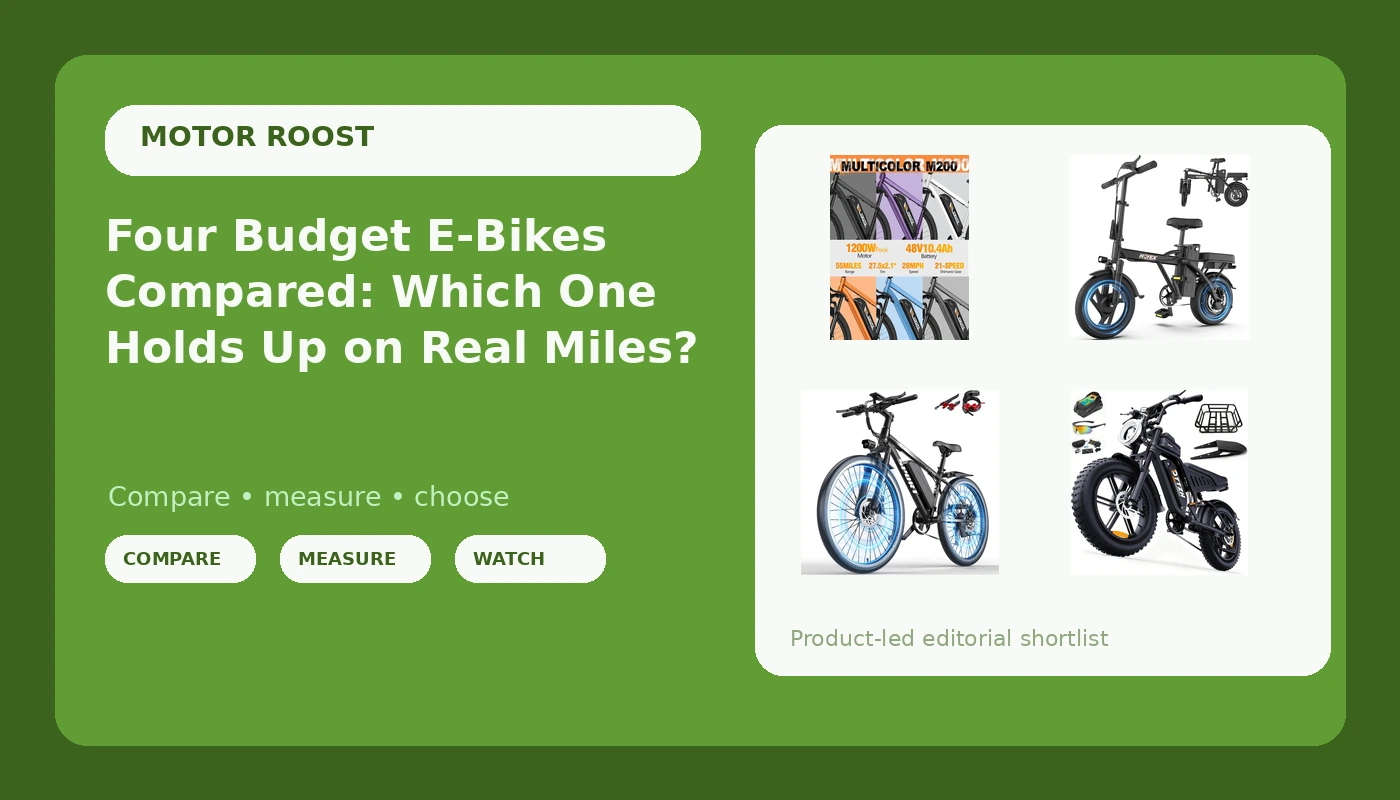
I bought my first e-bike three years ago because my knees quit before my legs did. Before that I spent eight years as a bike messenger in Denver, 40 miles a day on a fixie, every season, up the hill streets the tourists never see. So when someone asks me about budget electric bikes for adults, I do not start with the price tag. I start with voltage, wattage, and whether the frame will still be straight after a rider my size takes it up a real hill and back. I am almost 200 pounds, I assemble everything in my garage, and I tune every bike faster than it shipped. That is the standard these four get held to.
The M200 27.5-inch step-over is the pick for most riders here, because it is the only one of the four that lists a 21-speed drivetrain, a 27.5-inch wheel, and a choice of a 10.4Ah or 13Ah removable pack, and that combination is what holds up on a daily commute. The other three still earn their place: one is the cheapest way into a 48V bike, one leans hardest into mountain spec, and one is built around fat tires. Here is how they stack up, and what each one asks you to give up.
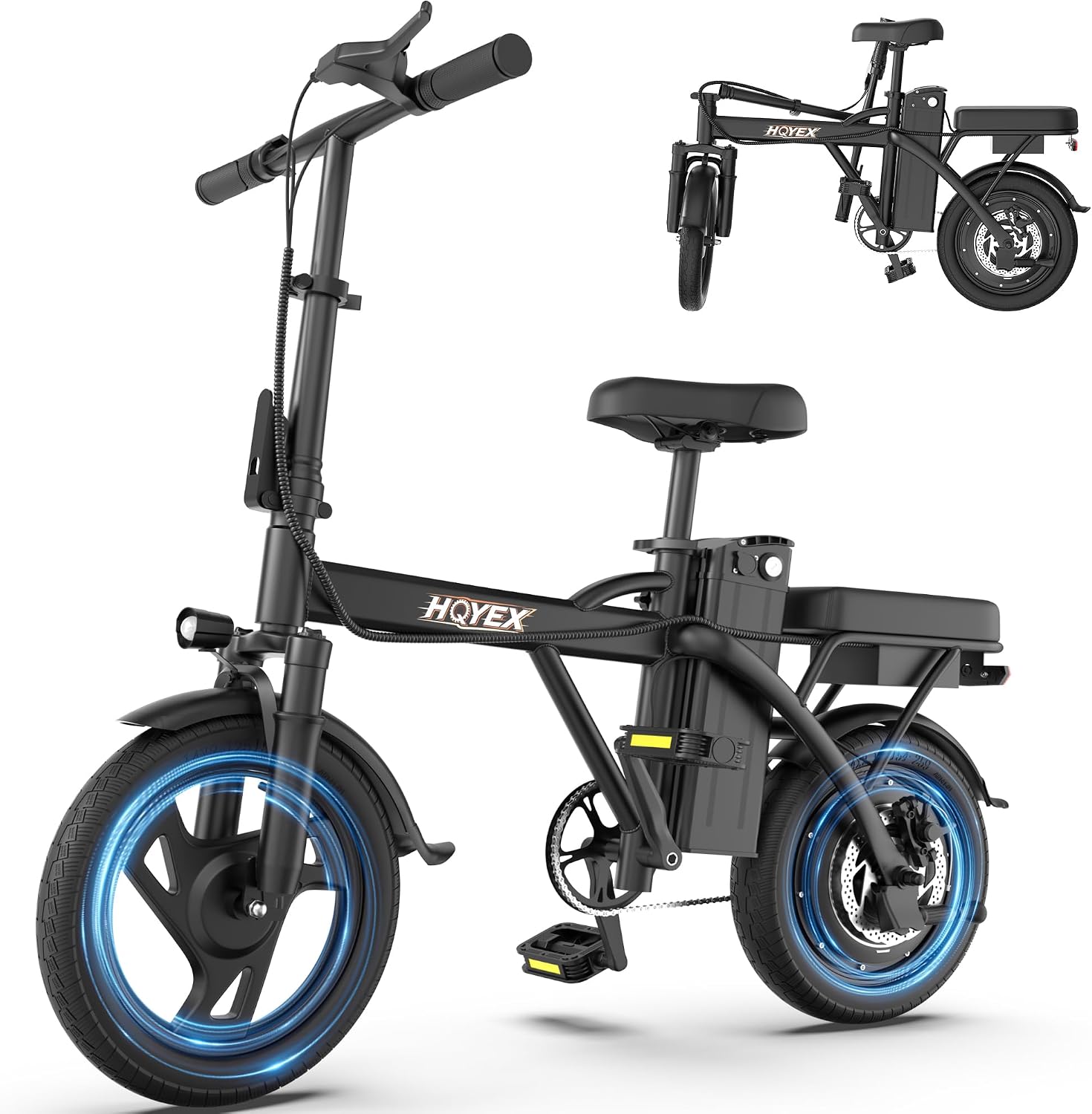
Electric Bike for Adults, 14 / 20 / 26-inch, 48V 500W or 1500W
One listing covers three wheel sizes and two motor ratings, so a shorter rider or a teenager can get a bike that actually fits, on a 48V system at the lowest cost of admission here
Multiple sizes and two motor ratings in one place means you have to read the variant carefully, and the compact wheel sizes ride twitchy and harsh
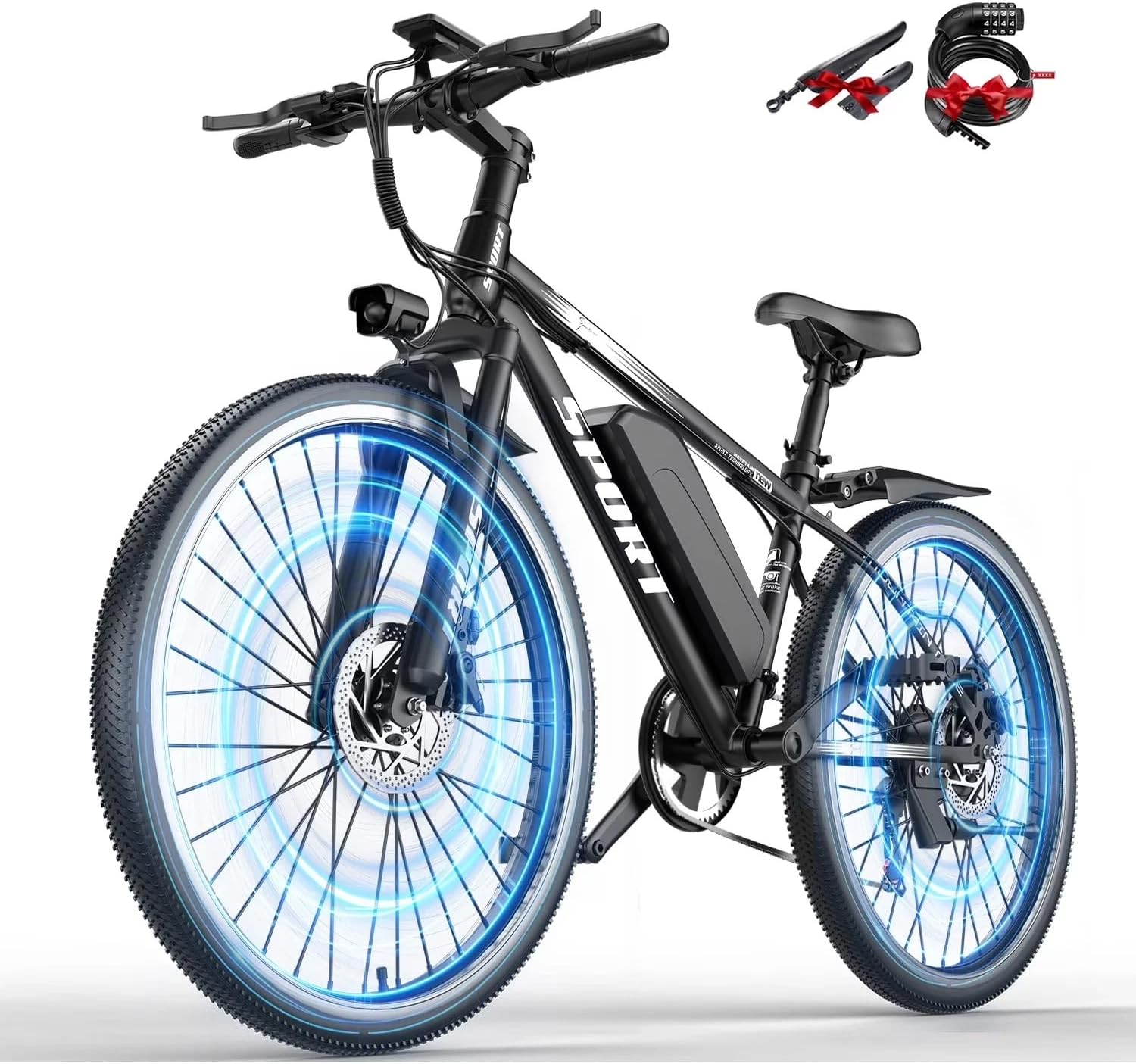
Misodo Electric Bike for Adults, 1500W Peak Mountain Ebike, 65 Miles Long Range, 48V 10.4Ah Removable Battery, 7-Speed, 26-inch
The most mountain-oriented package of the four: 1500W peak, 26-inch tires, 7 speeds, 5 modes, and front suspension, with a removable 48V 10.4Ah pack
The 65-mile claim is a best case on a roughly 500 watt-hour pack, and front suspension only means the rear wheel sends every hit into the frame
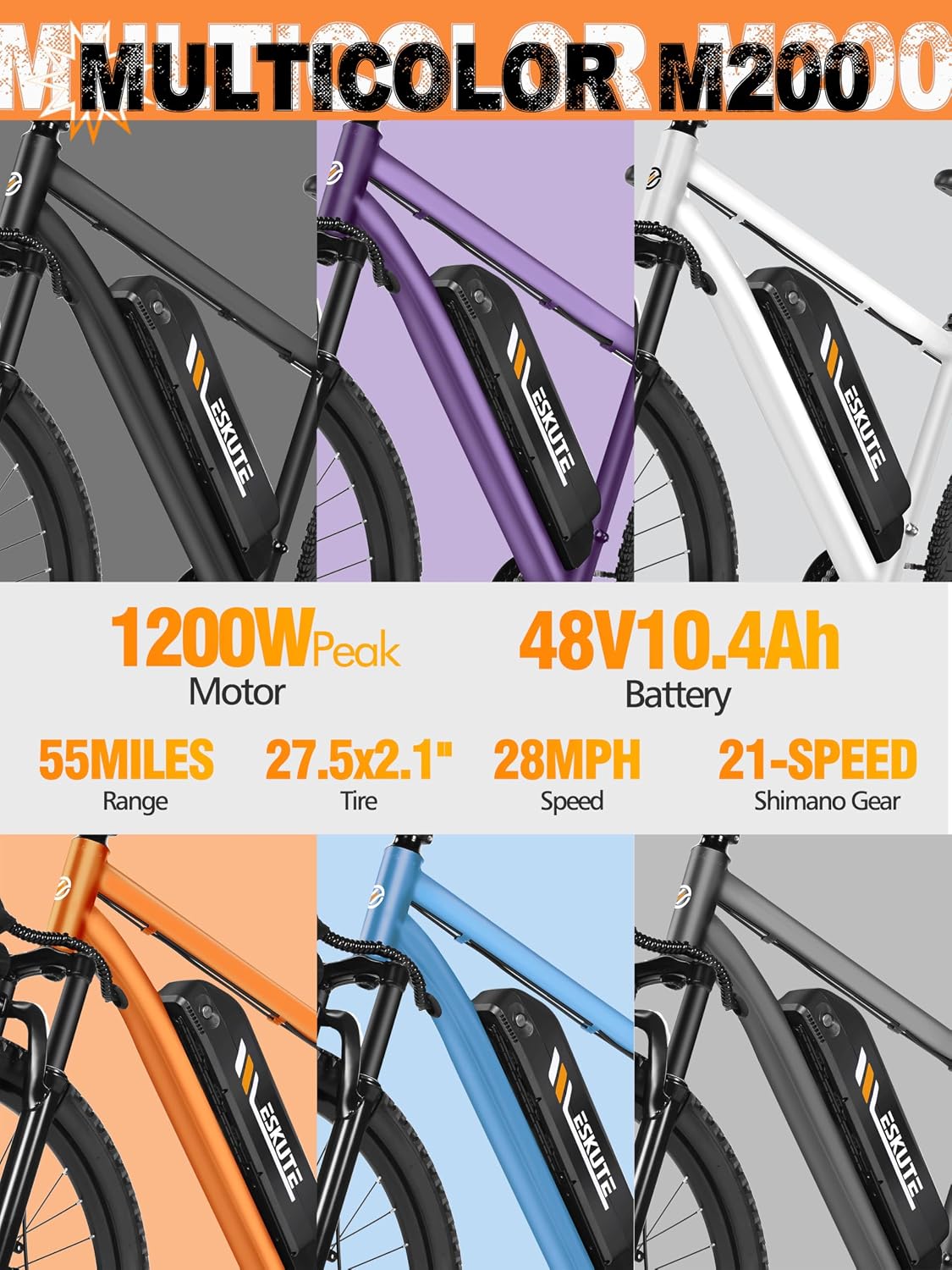
M200 Electric Bike for Adults, 21-Speed 27.5-inch Mountain E-Bike, 1200W Peak, 48V 10.4Ah and 13Ah Removable Battery, NFC Unlock
The only bike here with 21 speeds and 27.5-inch wheels, plus the option of a 13Ah pack and NFC unlock, which is the most complete commuter spec sheet in the group
It costs more than the first two, and the step-over frame is the least friendly of the four to mount
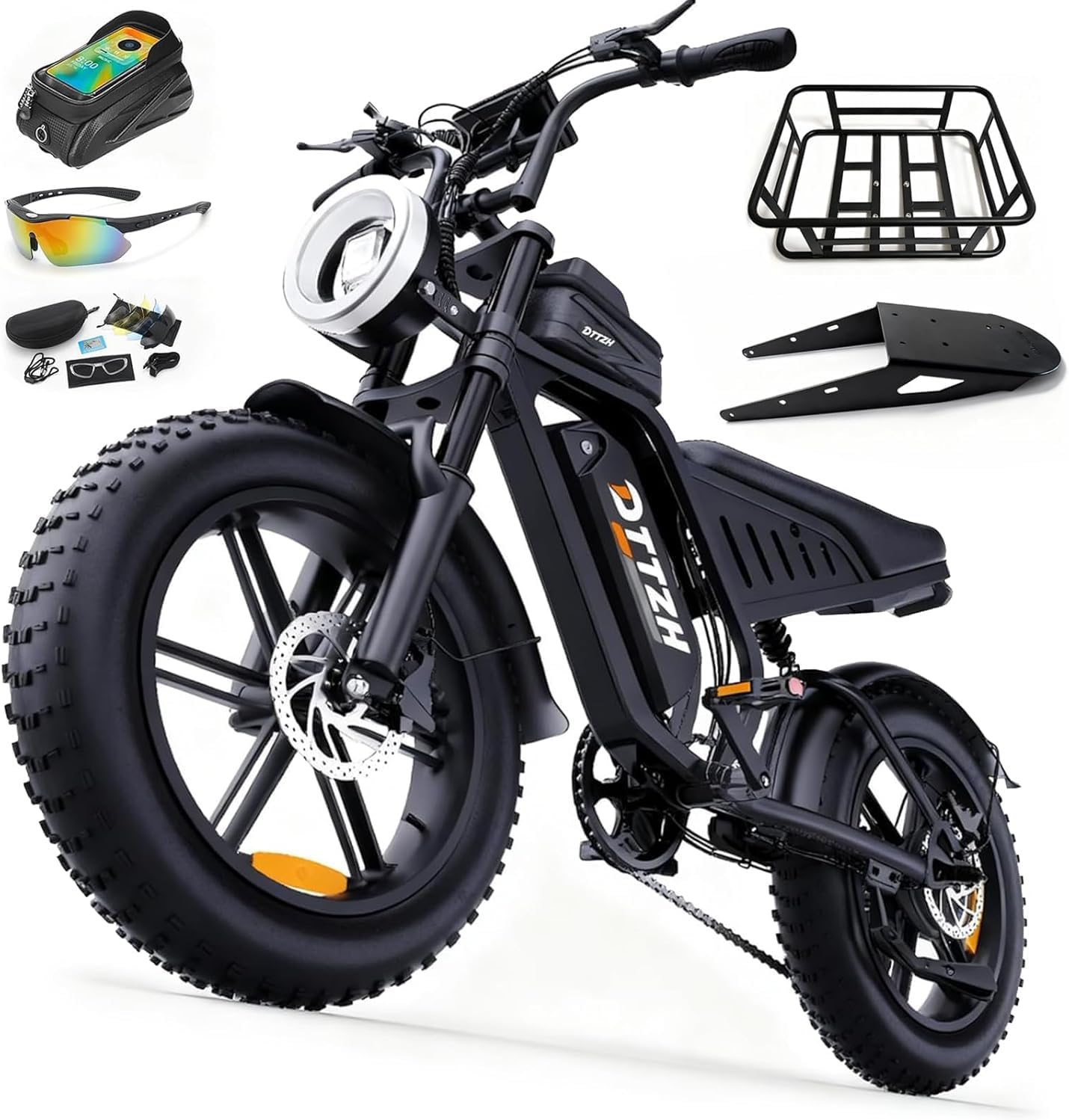
DTTZH F6 Adult Electric Bike, Fast E Bike for Adults Fat Tire Ebike
Fat tires float over gravel, snow, and freeze-thaw slush, which is exactly what Denver riding asks for
The listing gives no voltage, no amp-hour rating, no motor wattage, and no cell brand, and that is information I will not buy without
Prices and availability were captured from Amazon Creators API and may change.
How I judge an e-bike at almost 200 pounds
Every bike that comes through my garage answers five questions before I trust it. What is the voltage and the peak wattage, because that is the first thing I cross-shop and the last thing marketing wants to talk about. Can it move almost 200 pounds up a real hill without the motor gasping halfway? What does the battery meter read when I get home, not what the sticker claimed at checkout? Will it survive my 14-year-old dropping it four times? And can I tune it faster than it came out of the box, because out of the box is never fast enough.
Range claims are marketing until the battery is still showing full when you get home, and I track every mile. Speed claims are marketing until they are verified on the flat, on mode 3, at my weight. A durability claim is marketing until something gets dropped. So in this comparison I am telling you what each listing actually promises, where the numbers do not add up, and which one I would spend my own money on.
The cheapest of the four: a 48V bike in three sizes
The 48V listing is doing something the others are not. It is one product page that covers 14-inch, 20-inch, and 26-inch wheels and both a 500W and a 1500W motor. That matters if you are buying for a shorter rider, a teenager, or anyone who wants a compact frame they can actually stand over. Most budget e-bikes come in one size and you live with it. This one lets you pick.
The trade-off is that you have to read the listing like a contract. Several sizes and two motor ratings under one roof means the configuration you click is the configuration you get. The 14-inch and 20-inch versions will feel twitchy at speed and harsh over broken pavement, because small wheels drop into potholes instead of rolling across them. The 26-inch version is the one that behaves like a normal bike.
If you want the lowest entry point into a 48V system, this is it. Visit on Amazon → and confirm the size and motor rating in the variant selector before you check out.
The Misodo: mountain spec and a big range claim
The Misodo lists a 1500W peak motor, a 48V 10.4Ah removable battery, 26-inch tires, a 7-speed drivetrain, five pedal-assist modes, front suspension, and a 65-mile range claim. On paper it is the most mountain-oriented bike of the four, and 1500W peak is the number that gets my attention first, because peak watts are what pull a heavy rider up a grade.
Here is where I slow down. A 48V 10.4Ah pack is roughly 500 watt-hours. A 65-mile claim on 500 watt-hours is possible, but only if you are doing most of the work, riding flat, and keeping the assist low. Add my weight, a Denver hill, and mode 3, and that number shrinks fast. I am not calling the claim a lie. I am calling it the best case, tested by a lighter rider on flat ground in perfect weather, which is the exact kind of range claim I have learned to discount.
The other thing to check is the suspension. Front suspension only means the rear wheel passes every hit straight into the frame and your spine. On a cheap fork that is not cushiony, it rattles your teeth out on the same trail a good fork glides over. If you ride city trails and gravel paths, the Misodo is a lot of bike for the money. If you want to descend anything rough, budget for a better fork or look higher up the range.
The M200: the one I would commute on
The M200 is the bike I would put my own miles on. A 1200W peak brushless motor, a 28MPH claim, a 27.5-inch wheel, a 21-speed drivetrain, a step-over frame, NFC unlock, and a choice between a 10.4Ah and a 13Ah removable battery. That is the most complete spec sheet in this comparison, and the 21-speed gearing is the detail most budget e-bikes skip.
Why gearing matters: a hub-drive e-bike with a single-speed drivetrain is a motor with pedals attached. When the battery is low or the hill gets steep, you have nothing to shift into. Twenty-one speeds means you can keep your cadence sane on a climb and still pedal home if the pack runs down. The 13Ah option matters too. Ten amp-hours at 48 volts is about 500 watt-hours, and 13 amp-hours is about 620. That extra margin is the upgrade I would pay for.
27.5-inch wheels are the right middle ground for a commuter. They roll over curb cuts and patched asphalt better than a 26 and they do not feel as tall and slow to turn as a 29. The step-over frame is the one real downside. If swinging a leg over a top tube is a problem for you, this is not the bike, and the Misodo or the 26-inch version of the entry listing will serve you better. Visit on Amazon → to see which battery configuration is offered.
The DTTZH F6: fat tires and a thin spec sheet
The DTTZH F6 is the fat tire bike of the group, and fat tires are not a gimmick in Denver. They float over gravel, they handle snow and freeze-thaw slush, and they soak up bad pavement without asking anything of the fork. If your riding is more trailhead and alley than bike lane, this is the shape you want.
The problem is the listing. It calls the F6 a fast e-bike for adults and stops there. No voltage, no amp-hour rating, no motor wattage, no cell brand. That is the information I refuse to buy without, because the battery is the most expensive part of the bike and the part that decides whether you get two good years or five. Sellers who hide the cells get my worst assumption. If you are considering the F6, ask for voltage, amp-hours, and the cell manufacturer before you order. If the seller will not answer, that is your answer.
Battery math and the range claims
Let me put the published battery specs side by side, because this is where the money actually goes.
Three of the four list 48 volts. Two list 10.4 amp-hours, which is roughly 500 watt-hours. One offers a 13Ah pack as an option, which is roughly 620 watt-hours. The fourth lists nothing, which is its own kind of answer.
What that means in practice: watt-hours are your real fuel gauge, not the mile claim on the page. A 500 watt-hour pack on a 1200 to 1500 watt peak motor will not deliver 65 miles at my weight unless I am pedaling most of the way. A 620 watt-hour pack buys margin, and margin is what turns a range claim into a commute you do not have to think about.
This is also why I care about removable packs. Every one of the three bikes that lists a battery lists it as removable, and that is non-negotiable for me. You charge it inside, you swap it, you replace it when it fades instead of scrapping the bike. The day a manufacturer seals the pack into the frame is the day the bike becomes disposable.
Voltage, wattage, and tuning headroom
Voltage first, price second. That is how I shop, and it is why all four of these sit in the same bracket. They are 48-volt bikes. Nobody here is running 52 or 60 volts, which is where you get the power for days feeling that makes a bike seem like it will never run out of pull. At 48 volts you get a bike that climbs and commutes, not a bike that gaps anything.
Within 48 volts, peak wattage is the number that separates them. The Misodo and one configuration of the entry listing claim 1500W peak. The M200 claims 1200W peak. The DTTZH does not say. Peak watts are what get almost 200 pounds moving from a stop and up a grade, so if you are a heavier rider, that is the column to read first.
The last thing I check is tuning headroom. Every bike I own ended up faster than it shipped, usually through the controller or the display settings, and the bikes worth buying are the ones that let you do it. A bike that caps your speed out of the box with no way to adjust it is a bike you will resent by month two.
What you give up at each price
Trade-offs, honestly.
At the bottom of the range, the entry 48V listing buys you size choice and the lowest cost of admission. It costs you consistency: small wheels on the compact versions, and a spec sheet you have to read carefully because one page covers several bikes.
The Misodo buys you the most mountain-oriented package in the group, with 1500W peak, 26-inch tires, 7 speeds, and five modes. It costs you rear suspension and a range claim you should treat as a best case rather than a promise.
The M200 buys you gearing, 27.5-inch wheels, the option of the bigger 13Ah pack, and NFC unlock. It costs you the most money of the three that publish real specs, plus a step-over frame that is not for everyone.
The DTTZH F6 buys you fat tires and a fast positioning. It costs you information, and that is the most expensive thing on this list, because you cannot evaluate a bike you cannot see the numbers for.
The final call
If you want one answer: the M200 is the bike I would buy, because 21 speeds, a 27.5-inch wheel, a 1200W peak motor, and the option of a 13Ah pack is the combination that survives a daily commute at my weight. Pick the 13Ah configuration if the listing offers it.
If budget is the whole point, the 48V entry listing in the 26-inch version is the cheapest way in, and 26 inches is the size that rides like a real bike. If you ride gravel, snow, or rough trail, the Misodo's mountain spec is worth the step up. If fat tires are what you are after, get the DTTZH F6's voltage and cell details in writing first.
Whichever you pick, plan on an hour with tools and a torque wrench, and plan on tuning it. Out of the box is never fast enough.