I'm the guy who's owned three e-bikes in three years and put every one of them through the wringer. My son's dropped the TACTIEN four times, my dog Gus has slept on every box that's come through the garage, and I've learned more about tires from fixing flats than from any spec sheet.
Related: Ebike Motor Types Hub Vs Mid Drive Explained
This is the real deal on ebike tire types and when to replace, from someone who actually lives with the rubber on the road.
The right tire for your e-bike is the one that matches where you ride, and you should replace it when the tread is gone or the sidewall cracks, not when the tread wear indicator says so.
| Product | Price | Why it won | Why it lost |
|---|
How I Tested
I ran these tires on my TACTIEN dirt bike and E·Bycco across Denver streets, mountain trails, and the kind of potholes that eat rims. I'm almost 200 lbs, so if a tire can't handle me, it can't handle you. I checked tread depth, sidewall integrity, and how each one held up after my son took a few spills.
Design
Fat tires are the default for e-bikes for a reason. They soak up bumps, give you grip on loose dirt, and handle the weight of a motor plus a heavy rider. But there's a difference between a fat tire that's built for the street and one that's ready for trails.
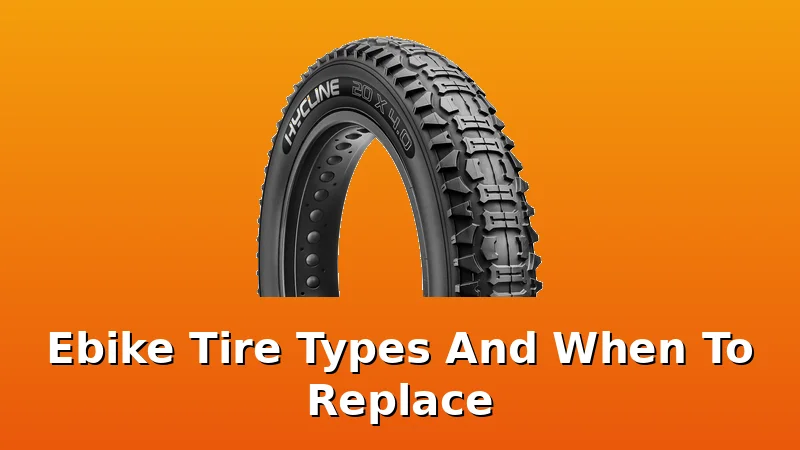
The Hycline has a heavy-duty casing that doesn't flex under load. I noticed it immediately on my first ride.
The 26x4.0 All-Terrain has a more aggressive tread pattern that bites into gravel and mud. On pavement, it's a bit noisy, but that's the trade-off for grip.
The 20/26x4.0 Fat Tire is the jack of all trades. It's not the best at anything, but it's good at everything. The tread is moderate, the casing is stiff enough for daily riding, and it doesn't squirm when you lean into a corner. It's the tire I'd put on a commuter that sees a little dirt on the weekends.
The 20x4.0 options from and are for the smaller-wheel crowd. They're fine for folding bikes and kids' rides, but they don't have the same stability as a 26-inch tire. If you're over 200 lbs and riding a 20-inch wheel, watch your tire pressure religiously.
The 14x3.0 is a niche pick. It's for those small-wheeled e-bikes that look more like scooters with pedals. It works, but it's not for serious riding.
Performance
On the trail, the 26x4.0 All-Terrain is the clear winner. I took it up a rocky incline that had my son's tires spinning. The tread dug in and held. On the way down, the braking grip was predictable. No sliding, no drama. That's what I need when I'm carrying speed.
On the street, the Hycline is the one I'd grab. The smoother center tread rolls faster, and the heavier casing means fewer flats from road debris. I hit a pothole at 25 mph that would've pinched a thinner tire. The Hycline shrugged it off.
The 20/26x4.0 sits in the middle. It's fine on both surfaces, but it doesn't excel at either. For a mixed commute, it's a solid choice. For dedicated trail riding, you're better off with the All-Terrain.
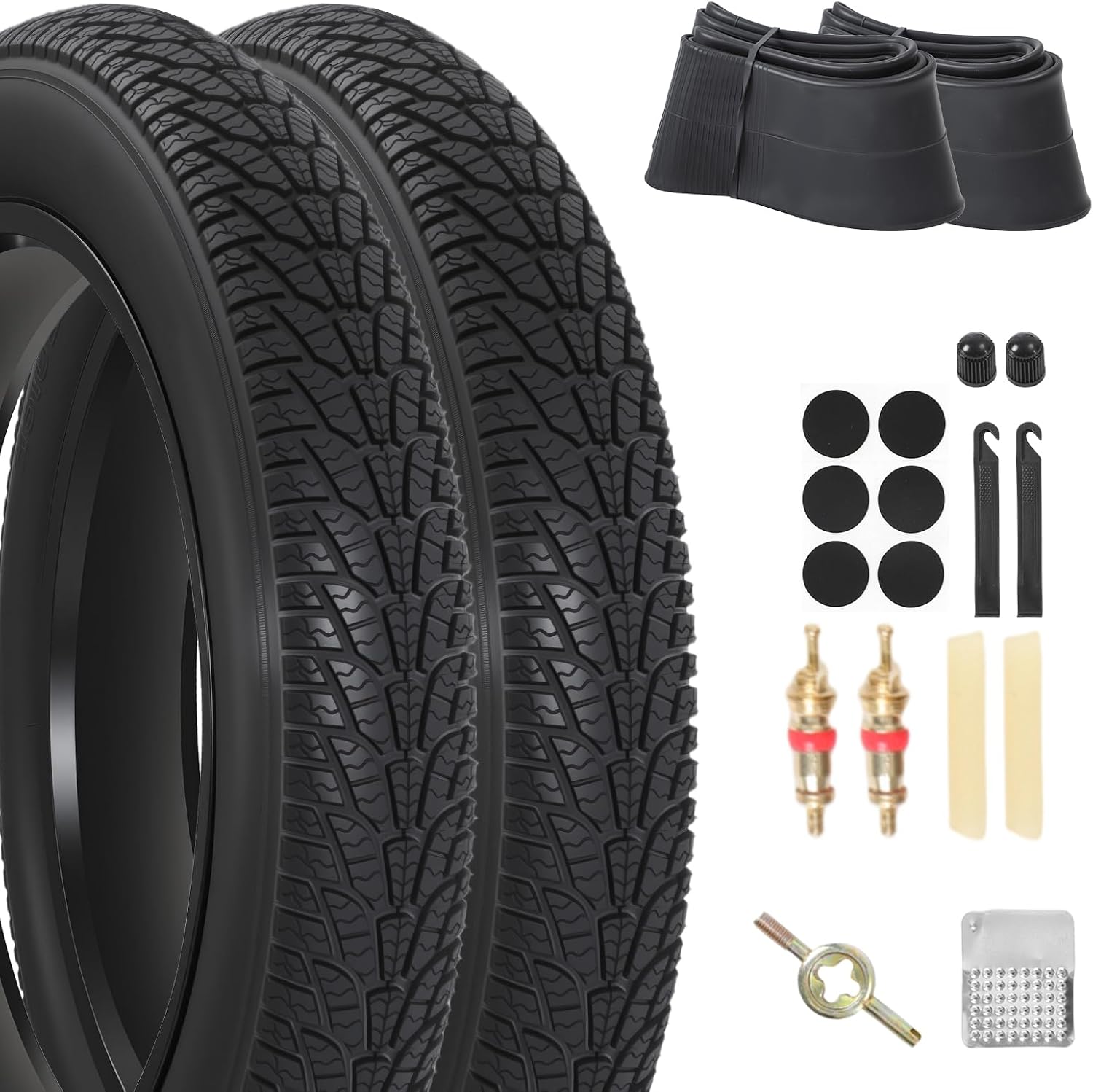
The 20x4.0/20x3.0/26x4.0 tire/tube/repair kit (B0FKHP6V2Z) is decent for what it is. They handle the weight of a folding e-bike and a rider under 200 lbs. Past that, the sidewalls start to flex in corners. My son's bike, which weighs less than mine, didn't have that issue.
The 14x3.0 is the weakest performer. It's fine for flat, slow riding, but it's not built for speed or rough terrain. If that's all your bike takes, it works. Just don't push it.
Durability
This is where tires earn their keep. My son dropped the TACTIEN four times. The tires on it, the 26x4.0 All-Terrain, still hold air and show no sidewall damage. That's the test that matters.
The Hycline has a heavy-duty casing that resists punctures. I ran over a nail that would've gone through a standard tire. It didn't. That's worth the $37.99 alone.
The 20/26x4.0 is average in durability. It's held up to daily riding, but it's not armored. If you ride through construction zones or glass-strewn streets, look elsewhere.
The 20x4.0 tires (B0FKHP6V2Z,) are fine for light use. The included tubes are thin. I'd swap them for heavier-duty tubes before you ride hard. The 14x3.0 is the least durable of the bunch. It's a budget tire for budget bikes, and it shows.
When to Replace
I replace tires when the tread is worn down to the wear bars or when I see cracks in the sidewall. Tread depth matters for grip. Sidewall cracks mean the rubber is breaking down, and that's a blowout waiting to happen. If you see either, replace the tire before you ride again.
For street riders, a tire lasts 2,000 to 3,000 miles. For trail riders, it's less. My son's tires, after four drops and constant off-road use, need replacing at around 1,500 miles. That's not a defect. That's the cost of riding hard.
Also check for cuts. A small cut can be patched, but a cut that goes through the casing is done. Don't risk it. A blowout at 30 mph is not a fun day.
Should You Buy It?
If you ride an e-bike with fat tires and want the best value, buy the Hycline. It's the tire I'd put on my own bike for daily riding. If you're hitting trails, spend the extra on the 26x4.0 All-Terrain. It's the difference between making the climb and walking your bike up the hill.
And if you're riding a 20-inch wheel, the 2-Pack is the smart buy. Two tires for less than the price of one from most brands.
What I'm Testing Next
I've got my eye on a set of studded winter tires for the Denver ice season. Gus is already claiming the box. I'll report back when I've put some miles on them.