I rode a fixie for eight years as a bike messenger in Denver, forty miles a day, every season, up and down the hill streets the tourists never see. My knees quit before the bike did. I bought my first e-bike three years ago as a compromise, and now there are three in the garage and a fourth in my head. So when a friend texts me "what should I buy," I ask one question first: do you already own a bike you like? That question is the spine of this e-bike motor comparison, because two of these four parts make a bike you already own faster or more usable, one is a complete machine, and one is the thing that hauls them to the trailhead.
I'm almost 200 lbs, which means I am the test nobody else runs. Range claims measured by a 140-lb rider on flat ground in perfect weather are marketing, not data. Voltage and wattage come before price in my search bar, every time: 52V or 60V, how many peak watts, and what the pack actually shows when I get home. I track every mile on my own bikes, and I have never once run a pack dead, which tells you how conservative the numbers in this article are going to be.
Related: E-Bike Battery Cells Explained: Why LG Matters
If you already own a frame you trust, the 1000W 48V rear hub motor is the cheapest real jump in performance on this list. If you own nothing yet, the Seemoon 6000W dual motor bike is the one that arrives as a complete machine. The Schuck throttle is a repair part and the Allen Sports rack is a transport part, and both solve problems that have nothing to do with speed.
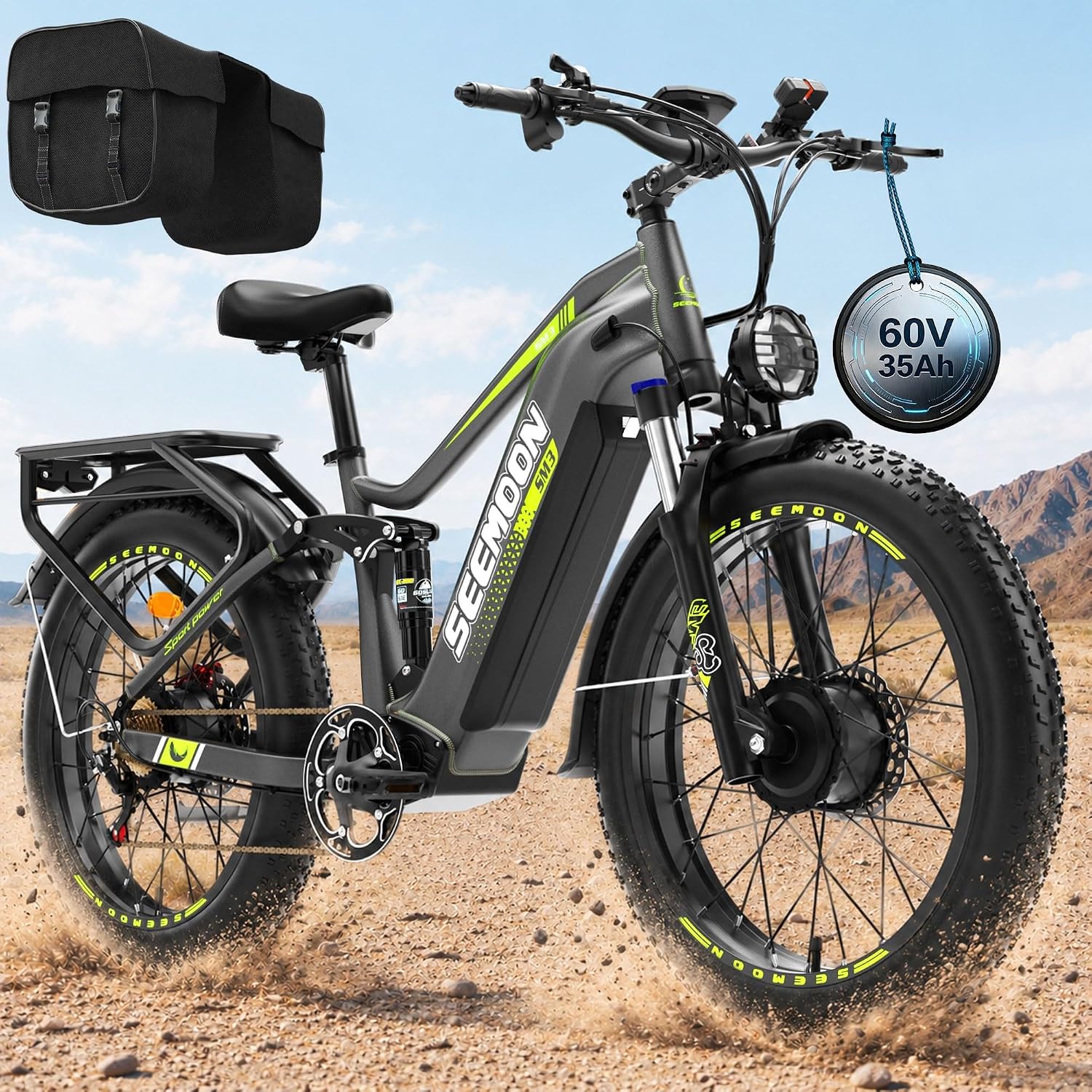
Seemoon 6000W Dual Motor 50MPH E-Bike, 60V 35Ah, 24" All Terrain
The only complete bike here: 60V, 35Ah, dual motor, all-terrain tires, one purchase and one warranty
Heaviest thing on the list, 24" wheels limit parts swapping, and the speed and range figures are seller claims until someone your size verifies them
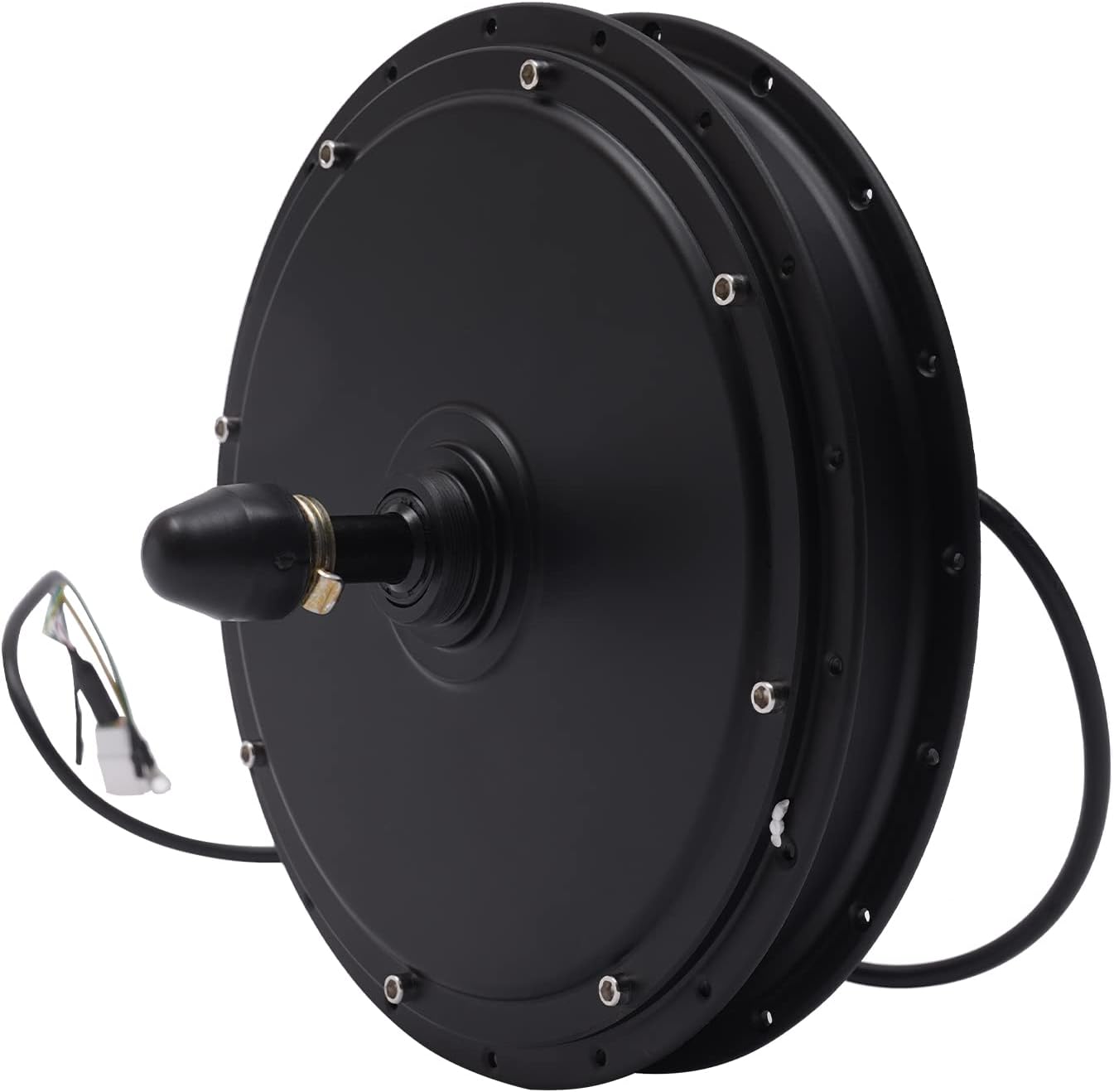
1000W Ebike Motor, 48V Rear Wheel Hub Motor
The real upgrade path: it turns a frame you already trust into a 24 to 34 mph bike
48V ceiling, you supply the controller, battery and wheel build, and the dropout spec has to match exactly
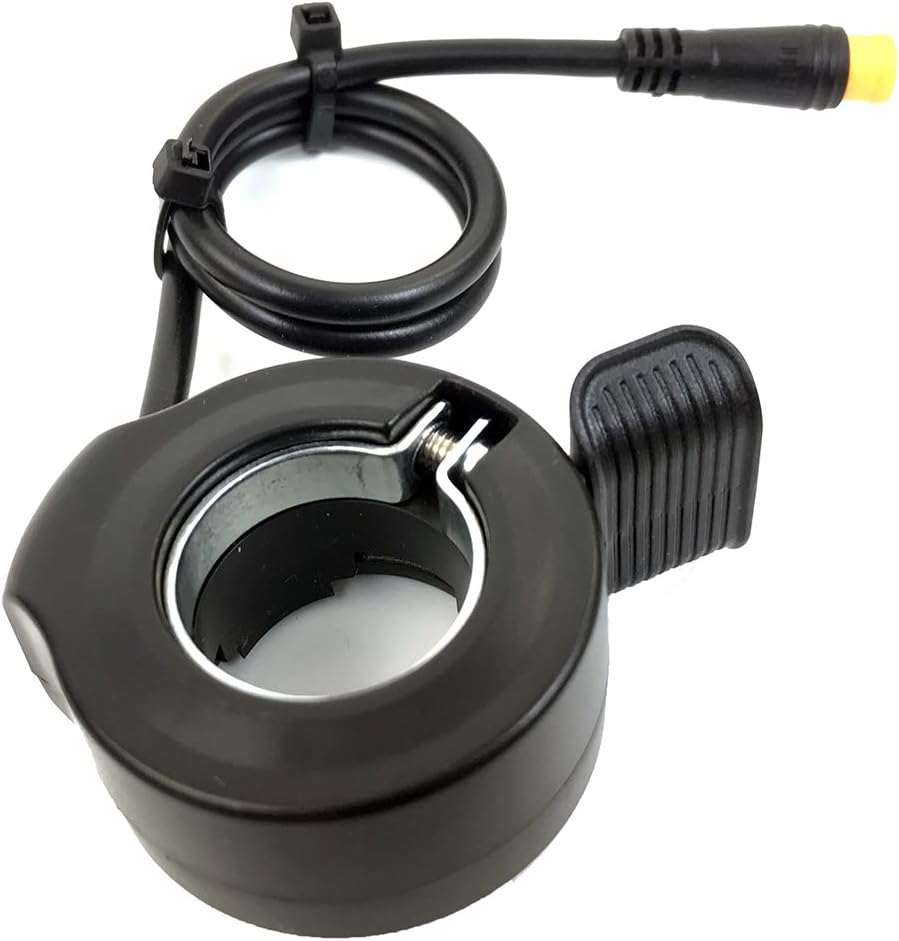
Schuck E-Bike Thumb Throttle 130X, Waterproof Accelerator, 22.2mm Handlebars
Cheapest fix on the page: replaces a dead throttle, fits standard 22.2mm bars, works left or right
Adds zero power, and connector and voltage compatibility is entirely on you to check
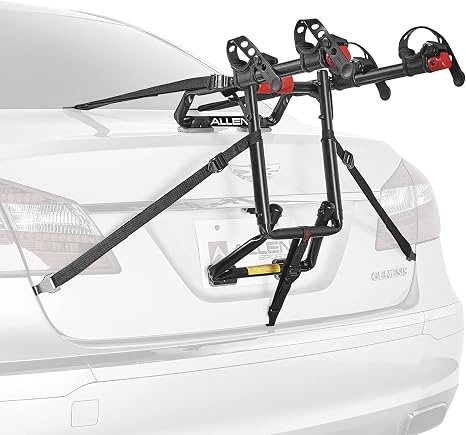
Allen Sports Premier 2-Bike Trunk Rack, Model S102, Black
Two bikes to the trailhead with no hitch and no install, folds flat in the trunk
Straps ride on paint, two bikes is the hard limit, and it is not the answer for a heavy e-bike
Prices and availability were captured from Amazon Creators API and may change.
How I read a listing at 200 lbs
Four things, in order. Voltage and wattage first, because a 48V system and a 60V system are not the same bike with different stickers. Second, whether it can move almost 200 lbs up a real hill without gasping. Third, what the battery shows at the end of a ride, not what the sticker claims. Fourth, whether I can tune it faster than it came out of the box, because out of the box is never fast enough.
One thing I will say up front: these four items are new to my bench, so treat every speed and range number below as the seller's claim, not my log. What I can do is read the specs the way I read them before I spend my own money, and tell you which numbers actually decide the purchase and which ones are decoration.
The complete bike: Seemoon 6000W dual motor
The spec sheet on this one is the loudest on the page. 60 volts, a 35Ah pack, dual motors totaling a claimed 6000W, a claimed 50 mph top speed, a claimed 150 miles of range, and 24" all-terrain tires. Do the multiplication on the pack: 60 volts times 35 amp-hours is 2,100 watt-hours, which is a genuinely big battery. That number is the one I trust most here, because it is arithmetic, not marketing.
The 50 mph claim is the one I would want to see on flat ground before I believed it. Speed at that level is not a motor problem anymore, it is a tire, brake and frame problem, and a 24" wheel spinning that fast is doing a lot of work. The 150-mile range figure is almost certainly measured at a lower assist level than the one that gets you to 50.
What it wins on is completeness. You are not sourcing a controller, a battery, a wheel and a throttle and hoping the connectors agree with each other. It shows up as one machine with one warranty, and for someone who has never built anything with a motor, that is worth real money. What it loses on is weight, wheel size, and flexibility. A 24" wheel does not share tubes, tires or rims with the 26", 27.5" and 29" stuff already in your garage, and a bike this heavy is a commitment every time you lift it onto a rack or up a stairwell.
The upgrade path: 1000W 48V rear hub motor
Read the fitment line before you read the title on this one, because the title calls it both a mid drive and a rear hub motor and those are different jobs. The number that decides whether it bolts onto your bike is the dropout figure, 5.31", so measure your frame before you get excited. If your dropouts do not match, nothing else in the listing matters.
The performance claim is 38 to 55 km/h, which is roughly 24 to 34 mph depending on battery, rider weight and controller. That is a real jump over a stock 250W or 500W commuter, and it comes on a bike you already know the geometry of, which is the whole appeal. You keep the frame that fits you and the brakes you already trust.
The catch is everything around the motor. A hub motor is one part of a system, so you are also buying a controller, a battery, and either a wheel build or a rim swap, and then you are doing the wiring yourself. The 48V ceiling also means you are not going to match the 60V bike on paper, ever. I would rather own a 48V bike I built and understand than a 60V bike I cannot diagnose, but that is a garage-tester opinion, not a spec.
The cheap fix: Schuck 130X thumb throttle
This is a $20-ish solution to a problem that otherwise parks your bike for a month. The 22.2mm or 0.87in clamp is the standard handlebar diameter, so it fits the vast majority of bars, and it is listed as left or right universal with a waterproof housing. If your throttle died in the rain, or your bike came as pedal-assist only and you want throttle control, this is the shortest path.
Two things to check before you order, and both of them are the reason people leave one-star reviews on throttle listings. First, the connector: there are several common plug styles and they are not interchangeable without splicing. Second, the voltage of your system, because a throttle built for one voltage range does not always play nicely with another. Get those two right and this is a five-minute install. Get them wrong and it is a return.
What it does not do is make your bike faster. It is a control part, not a power part, and no throttle on earth adds a watt to your motor.
The part nobody thinks about: Allen Sports S102 trunk rack
Every one of these purchases ends with the same question: how does the bike get to where you want to ride it? The Allen Sports Premier 2-Bike Trunk Rack answers that without a hitch install. It straps to the trunk lid, holds two bikes, and folds flat enough to live in the trunk when you are not using it. For a sedan owner who rides three towns over on weekends, that is the entire use case, solved cheaply.
Where it loses is exactly where e-bikes live. Trunk racks carry weight on straps and paint, so check the published weight limit against your bike before you trust it with something that has a 60V pack in the frame. Two bikes is a hard ceiling, and a heavy e-bike plus a second bike is usually past what a trunk rack wants to see. For two analog bikes or one light folder, it is fine and it is cheap.
The trade-offs nobody lists
Voltage versus control. The 60V bike gives you more system than the 48V motor ever will, and it gives it to you assembled. The 48V conversion gives you less ceiling and total control over every part on the bike. I preach buying the 60V and skipping the 52V, and I still commute daily on a lower-voltage bike because the range suits my loop. Both things are true.
One warranty versus five vendors. A complete bike is one phone call when something fails. A conversion is a motor from one seller, a controller from another, a battery from a third, and a wheel build from whoever is closest. When it works, it is yours. When it does not, you are the support department.
Weight is a spec too. A dual motor all-terrain bike is heavy in a way you feel on stairs, in apartment halls, and on the rack. If your storage is a basement stairwell, weight matters more than top speed.
Assembly is part of the deal. Neither path arrives ready. Budget an evening, a set of hex keys, and a friend if you have one. I built my first one solo in two hours and I will never stop mentioning it.
Parts commonality. Standard wheel sizes keep you out of trouble. Odd sizes mean ordering tubes online instead of grabbing them at the shop on a Saturday morning.
What I would buy, in order
If you own no bike at all and you want one purchase that does everything, the Seemoon dual motor is the pick, because it removes every compatibility question in one transaction. If you own a hardtail or a commuter you already like, the 48V hub motor is the better spend, since you keep the frame, the fit and the brakes you already know. If your only problem is a dead or missing throttle, buy the Schuck and get back on the road this week. And if your problem is that the trail is ninety minutes away, the Allen Sports rack is the cheapest way to fix that, as long as you respect its weight limit.
What I am watching next
I have a range test running on my own 52V pack, photographing the meter at the end of every ten-mile loop, and I am still teaching my son to tune his speed limiter without cooking the controller. The next thing I want to put a scale and a stopwatch on is a dual motor bike at my weight, because 6000W and 50 mph are numbers that deserve a 200-lb rider on a real hill before anyone repeats them as fact.