Related: Best E-Bike for Heavy Riders: What Actually Holds Up
I rode a fixie for eight years as a bike messenger in Denver, 40 miles a day, every season, up and down the hill streets the tourists never see. My knees quit before the bike did, so three years ago I bought my first fat tire electric bike as a compromise. I have not looked back since. I commute on one daily, I have assembled a few in my garage in about two hours flat, and I have tuned every one of them to run faster than it did out of the box.
That history is why I read e-bike listings the way I do. Voltage and wattage first, price second. Range claims are marketing until the battery is still showing full when you get home. Peak watts are not continuous watts, and when a listing says 2000W, the seller is hoping you will not ask which kind.
This guide covers four things you can buy right now for a fat tire electric bike: two complete Jasion models at two different price points, a 48V hub motor kit for the rider who already has a frame in the garage, and the book I hand to anyone who asks me where to start. I will tell you what each one is for, what the spec sheet actually promises, and where I would put my own money.
Best Overall: Jasion Thunder/PRO/ST Electric Bike
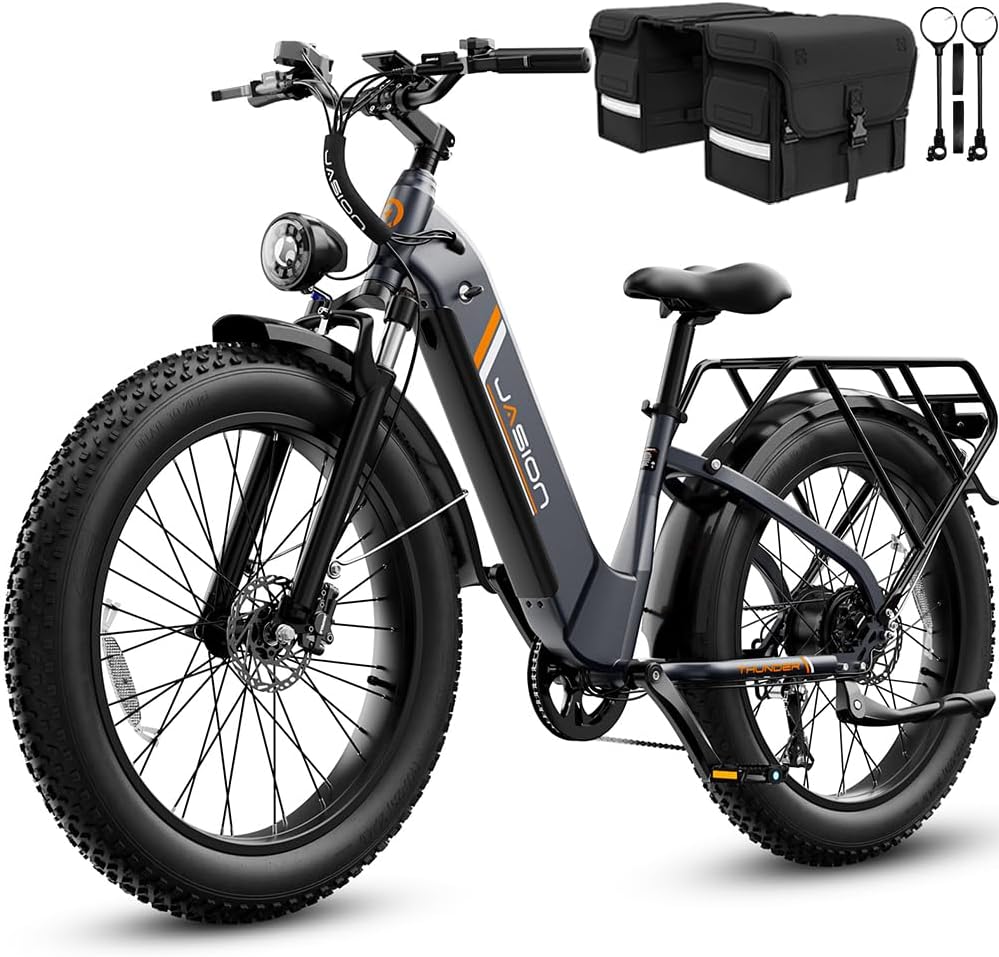
This is the bike I would point a commuter at first, and it is also the listing that needs the most careful reading, because it covers three trims under one name. Thunder, PRO and ST share a silhouette and not much else: 2000W peak on one version and 1800W peak on another, 1040Wh or 864Wh of battery depending on which one you click, 35MPH or 30+MPH claimed top speed, 500 pound or 400 pound capacity.
The 26 inch fat tire is the part I care about most. Fat tires are what make a commuter usable in Denver in February, and they are what keep a heavier rider from feeling every expansion joint on the way downtown. A 500 pound capacity claim tells you the frame and the wheels were designed with adults in mind, not a 140 pound test rider on flat ground. That matters more than a top speed number, because you can always add speed and you cannot add frame.
The range claim is 90 miles on the big battery and 80 on the smaller one. I track every mile on my own bikes, and here is the rule: that number is a best case, not a promise. Assist level, rider weight, hills, wind and cold all take a bite out of it. If you get 60 percent of the claim on a real commute with real hills, you are doing fine.
What I would confirm before ordering: which trim, which battery size, and whether the controller will let you tune it. A bike that caps your speed out of the box with no way to unlock it is a bike you will resent by month three.
Best Value: Jasion RetroVolt Electric Bike
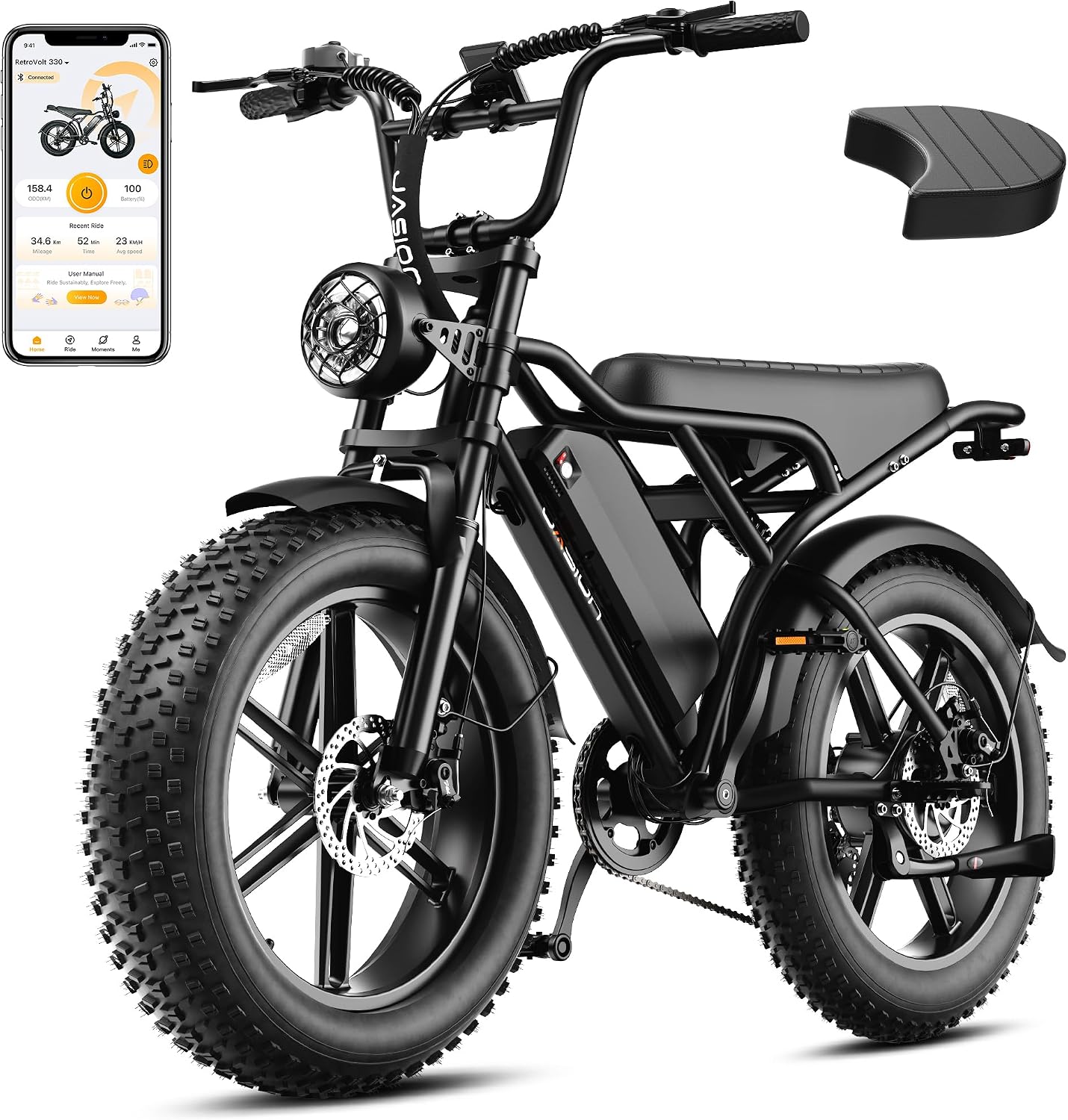
The RetroVolt is the lower cost of the two Jasion bikes here, and it is the one I would hand to a rider who wants a fat tire commuter without stretching. 2000W peak, a 70 mile claimed range, fat tires, and the same basic shape as the Thunder line at a smaller number on the tag.
Seventy miles is a claim, and I would treat it exactly like the 90 mile one above. Where the RetroVolt earns its spot is in the daily math. Most commutes are 10 to 15 miles round trip. Even half of the claimed range covers a week of riding between charges for a lot of people, and that is the real selling point: you stop thinking about the battery. If your round trip is 30 miles or more, buy the bigger pack instead.
The tradeoffs are the usual ones at this end of the market. You get the motor and the fat tires, and you give up some top end and some battery headroom. For a first e-bike that is a fair trade. For a rider who already knows they want more, it is not.
The Build-Your-Own Route: 48V Rear Hub Motor
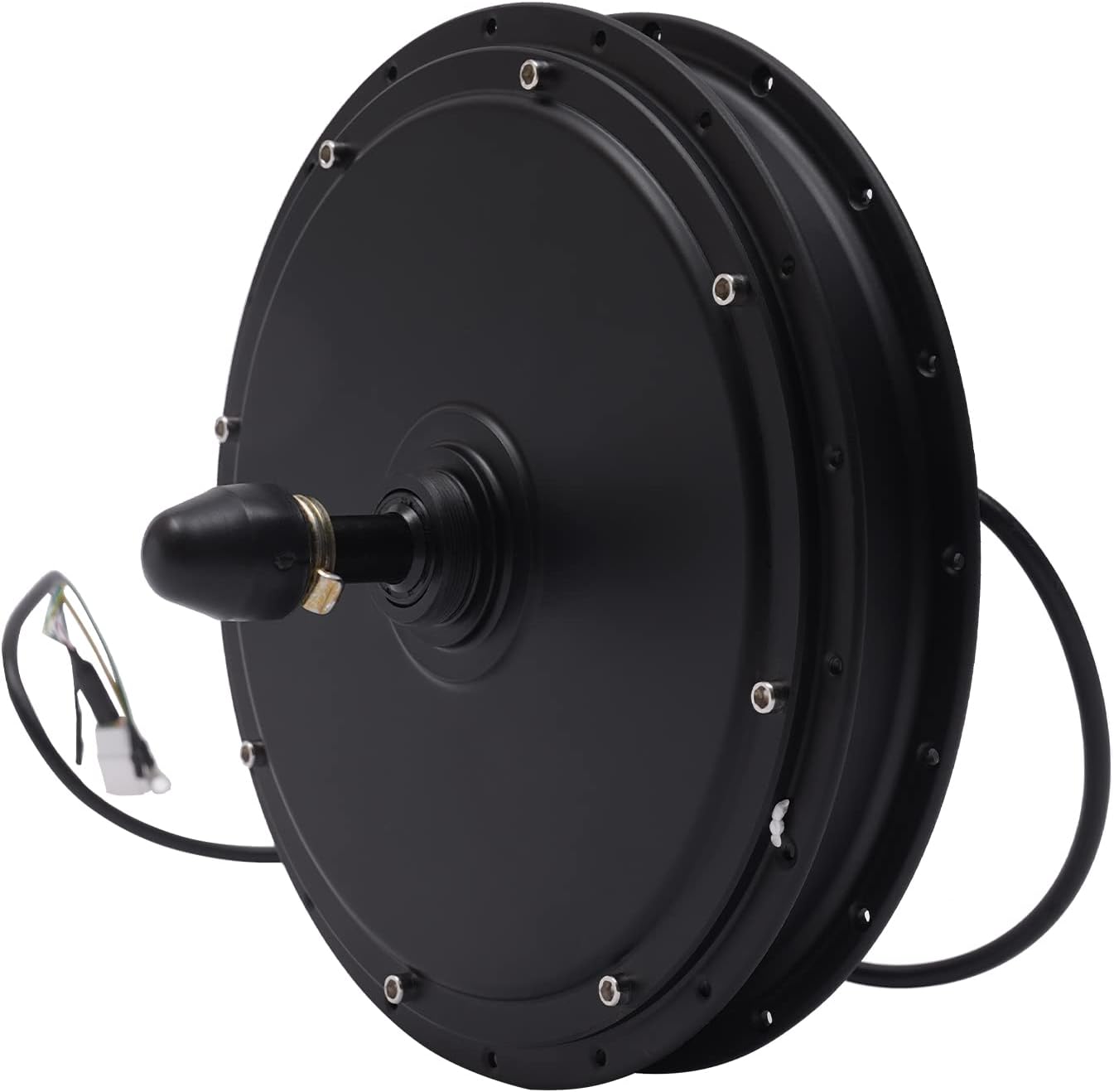
Some of you already have a frame in the garage, and this is the kit for that: a 1000W, 48V rear hub motor rated for 38 to 55 km/h, built for rear wheels with dropouts of 5.31 inches. That last number is the whole ballgame. Measure your dropouts before you order, because a hub motor that does not fit your frame is a paperweight with spokes.
A conversion is the cheapest way into a fast bike and the way that teaches you the most. You will learn what a controller actually does, you will learn why torque arms are not optional, and you will learn that assembly is part of the deal. If you cannot put it together in your garage, you do not really own it.
The honest caveat: a conversion is not a warranty. You are the mechanic now. If that sounds like a Saturday project, this is a real path to a bike that surprises people at stoplights. If it sounds like a headache, buy the RetroVolt and be riding tomorrow.
How I Evaluate an E-Bike
Every bike gets the same five questions, whether it arrives as a complete build or as a pile of parts.
- What is the voltage and what is the peak wattage? 52V and 60V systems behave differently, and peak watts are not continuous watts.
- Will it move a rider near 200 pounds up a real hill without gasping? A bike that only works for a light rider on flat ground is a toy, not transportation.
- What does the battery show when you get home? Not what the sticker claims. What it shows.
- Will it survive being dropped? My son has dropped his four times. That is a review metric in this house.
- Can I tune it? There is always a way to make a bike a little faster. A bike that locks you out of that is a bike you will outgrow.
Notice what is not on the list. Price is the last thing I look at, after I know what the bike is. A cheap bike that cannot carry you is expensive. A bike that carries you for three years is cheap.
Analysis and Spec Notes
Peak watts versus continuous watts is the biggest soft spot in e-bike marketing. A motor rated at 2000W peak may pull a fraction of that continuously, and the peak number is the one that goes in the title. Neither Jasion listing here gives you a continuous figure, so treat the peak as a ceiling and not a cruise.
Watt hours predict range better than any other single number. A 1040Wh pack is a genuinely big battery. An 864Wh pack is a good one. When one listing offers both, it is telling you there are two different bikes on the page, and the version you click is the version you get.
Fat tires are not a style choice. They are suspension you cannot break, and they are the reason a fat tire bike stays comfortable on chip seal, gravel and the pothole fields that pass for bike lanes in most cities. Suspension is where cheap bikes cheat. A good fork glides over the same trail a bad one rattles your teeth out on.
Cells are the other place sellers get quiet. If a listing will not tell you whose cells are in the pack, assume the worst. LG cells are the standard I trust, and owners know exactly what that means: a battery that lasts instead of a battery that lies.
Capacity ratings tell you about the frame and the wheels, not just the rider. At almost 200 pounds, plus a backpack, a lock and groceries, I am asking a bike to carry more than the test rider it was designed around. A 500 pound rating is headroom. A 400 pound rating is enough. A bike with no rating at all is a question mark.
E-Bike Reference Table
This is the table I keep open when I cross-shop. Claimed numbers come from the listings. Verify them on your own commute, at your own weight, on your own hills.
| Bike or part | Motor and battery | Claimed range and speed | Best for | Price |
|---|---|---|---|---|
 Visit on Amazon → Visit on Amazon →Jasion Thunder/PRO/ST |
2000W/1800W peak, 1040Wh or 864Wh battery depending on trim | 90 or 80 miles, 35 or 30+ MPH | Long commutes, heavier riders, the biggest battery here | $985.77 |
 Visit on Amazon → Visit on Amazon →Jasion RetroVolt |
2000W peak, fat tire | 70 miles | First e-bike, shorter commutes, the lower cost of the two | $539.99 |
 Visit on Amazon → Visit on Amazon →48V rear hub motor kit |
1000W, 48V rear hub | 38 to 55 km/h | Riders with a frame and a garage | Check current Amazon price |
 Visit on Amazon → Visit on Amazon →The Beginner's Guide to Ebikes |
Book | Not applicable | New owners who want the vocabulary before the purchase | $5.99 |
The pattern in that table is simple. The two complete bikes are the low-effort path: charge it, ride it, done. The hub motor kit is the high-effort path with the best power per dollar if you already own a frame. The book is cheap insurance for anyone who has never owned a bike with a motor before.
The Book I Hand Every New Owner
Not everyone wants to learn by breaking something. The Beginner's Guide to Ebikes is what I hand a friend who just bought their first bike and does not yet know what a controller does, what a watt hour is, or why the range number on the box is not the range they will get. It is not going to tell you which bike to buy. It is going to give you the vocabulary to read a listing and know when someone is selling you peak watts and calling it power for days.
I would rather you spend a few dollars on that than spend a few hundred on a battery you did not need. Read it before you order, not after.
Should You Buy the Jasion Thunder/PRO/ST?
If you want the biggest battery and the highest claimed speed in this group, yes. The 1040Wh version is the one I would pick, and I would confirm which trim I am buying before I hit the button, because the 864Wh version is a different bike with a different range claim. A 2000W peak motor on a 26 inch fat tire is more motor than most commuters will ever use, and the 500 pound capacity rating means it was built for adults who actually weigh something.
The things I would keep an eye on: which trim ships, whether the controller is tunable, and how the battery reads after a month of real commuting. Charge it, track it, and compare the number on the display against the number on the listing.
Should You Buy the Jasion RetroVolt?
Yes, if you want a fat tire commuter and you want to spend less than the Thunder line costs. The 70 mile claim is the number to be skeptical about, and the 2000W peak is the number that matters on the hills. For a first e-bike, or a second bike for a shorter commute, it covers the job.
If you already know you want the longest range and the most headroom, skip it and buy the bigger battery. Buy once. The RetroVolt is a good bike. It is just not the biggest one here.