Most riders treat winter as an off-season. I don't, and the reason is simple: my knees don't care what month it is. When I rode a fixie 40 miles a day as a Denver messenger, January meant ice in the shadow of every building and salt on every surface, and I still showed up. Now that a motor does the heavy lifting, the problem changed shape. It isn't whether I can ride. It's how to build a winter e-bike riding setup that keeps me turning pedals when the roads are bad and keeps the bike alive when the roads are fine.
My answer is two machines: one e-bike with a battery I can carry inside, and one indoor cardio machine that takes the hit on the days Denver wins. The e-bike handles the commute and the dry stretches. The indoor machine handles everything else.
Get that split right and you stop losing three months a year. Get it wrong and you spend March re-learning your own legs.
Why you should trust me
I rode a fixie for eight years as a bike messenger in Denver, 40 miles a day, every season, up and down the hill streets the tourists never see. My knees finally told me to knock it off, so I bought my first e-bike three years ago as a compromise. I commute on one daily now, ride a TACTIEN electric dirt bike on weekends with my 14-year-old son, who has already dropped it four times, and keep an E·Bycco around for long trail days. I own three bikes and I'm already planning a fourth.
I'm almost 200 pounds, which is the test most reviewers never run. A bike is only as good as what survives. Specs mean nothing until the thing has been dropped, ridden hard, and ridden again the next day. I assemble every bike in my garage, I tune every one of them past how it came out of the box, and I track every mile, because a range claim is marketing until the battery is still showing a charge when I get home.
Winter is where that attitude pays off. Cold cuts battery capacity, salt eats chains, and the days you skip are the days you feel in April.
How I judge a winter setup
These are the criteria I run every machine through before it earns a spot in the garage. They apply whether the machine has a motor or a flywheel.
- Voltage and wattage first, price second. A 48V system with a real peak wattage number tells me more than any marketing badge. I cross-shop by voltage before I ever look at the tag.
- Weight capacity that clears me. I'm almost 200 pounds. Anything rated below that is not a bike I can honestly review, and it's not a bike I'll tell a friend to buy.
- A removable battery. This is the single most important winter feature on any e-bike. A pack you can carry inside stays warm, charges properly, and lasts more seasons than one that freezes in a garage every night.
- Assembly you can do yourself. If you can't put it together in your garage, you don't really own it. Assembly is part of the deal, and winter is when you learn your bike.
- Low-impact indoor work. The indoor half has to be something my knees tolerate on a bad day. Recumbent and rowing positions beat a spin bike for that.
The two machines that make the plan work
One goes outside, one stays in. Here's the pairing and why each half earns its place.
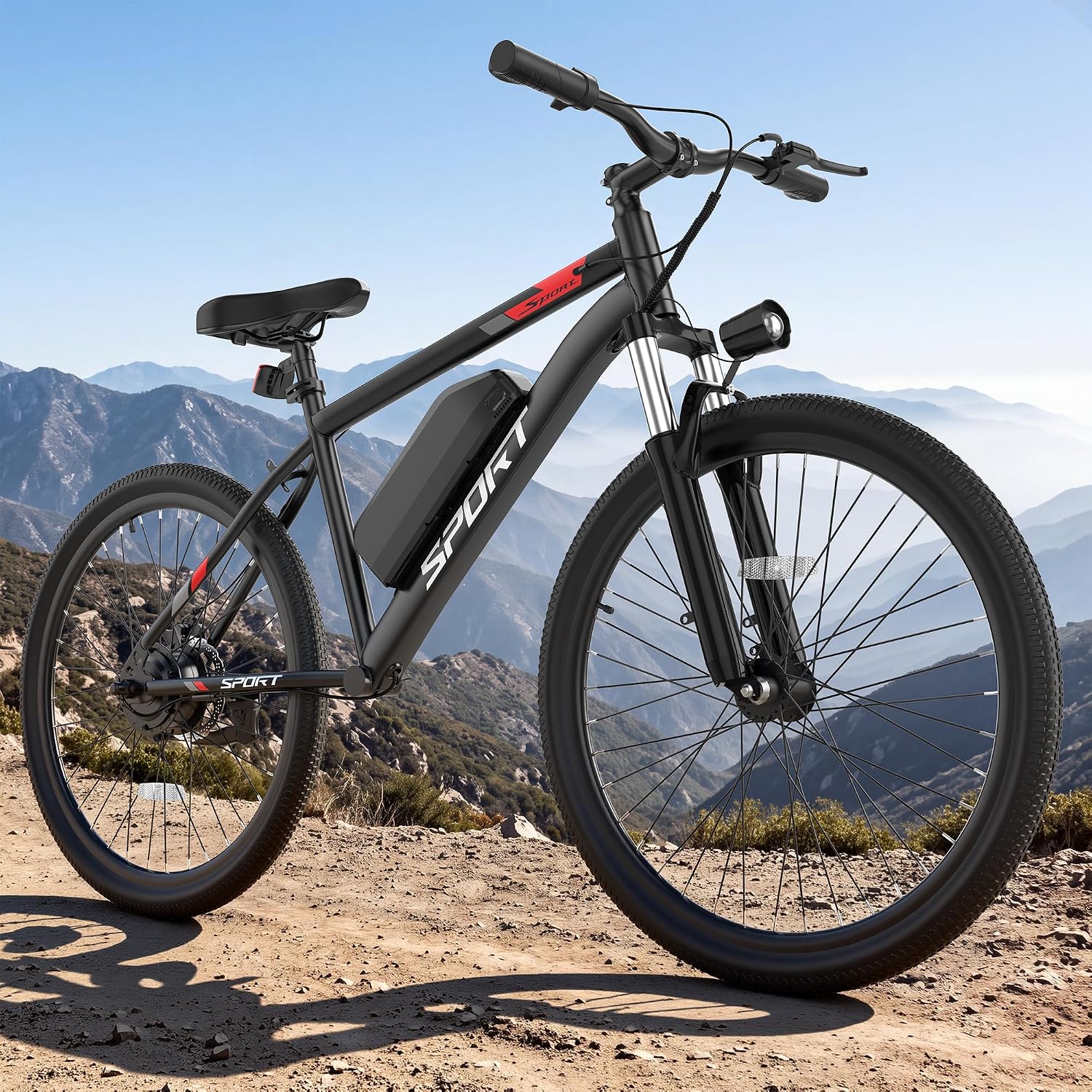
The outdoor half: Electric Bike for Adults, 20”/26" 1000W Peak Motor Electric Bike, Ebike with 48V 249WH Removable Battery, 3-Speed Adult Electric Bicycles for Men Women Commute Beach Snow All Terrain
 Visit on Amazon →
This is the outdoor half of the setup, and the reason it works in a Colorado winter is right in the spec sheet: a 48V 249WH removable battery. Removable is the whole argument. When the temperature drops, that pack comes inside with me, charges at room temperature, and goes back on the frame in the morning. Leave a battery in a cold garage all winter and you're asking it to lie to you about range in March.
The 1000W peak motor is the other half of the winter case. Peak wattage is what gets you up a hill when you're dressed in layers and carrying a heavier bag than you would in July. The listing covers 20-inch and 26-inch builds, and it's positioned for commute, beach, snow, and all-terrain use, which is the right framing for a bike that has to work on a plowed street in January and a gravel path in June.
It's a 3-speed, so set your expectations honestly. This is a simple drivetrain, not a wide-range hill climber, and the pack is small by e-bike standards, which means shorter loops and a charger in your bag rather than all-day epics. For a commuter that lives indoors and works year round, that trade is fine.
Flaws but not dealbreakers: The 249WH pack is a small battery, so plan winter rides around it instead of hoping. Budget for a spare charger if your commute is long.
Anyone who wants one bike that handles a daily commute and can be brought in from the cold every night should start here.
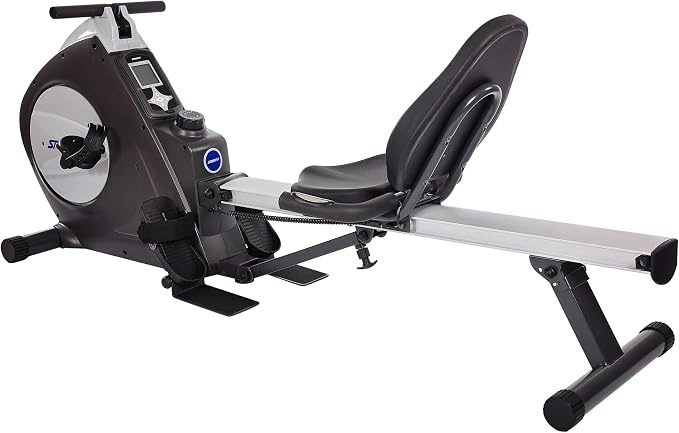
The indoor half: Stamina Conversion II Recumbent Exercise Bike and Rower - Cardio Machine with smart Workout App - Exercise Bike for Home Workout - Up to 250 lbs Weight Capacity
 Visit on Amazon →
This is what saves the winter. The Stamina Conversion II is a recumbent exercise bike and a rower in one machine, with a smart workout app, and it's rated to 250 lbs. I'm almost 200, so that rating is the first thing I checked, and it's the reason this machine is on the list at all.
The recumbent position is the part my knees care about. You sit back, you spin, and there's no load stacked on a joint that already spent eight years delivering packages across Denver. On the days when ice makes the street a bad bet, 40 minutes here keeps the habit intact and keeps my legs remembering what work feels like.
The rower side is the bonus. Rowing pulls in your back, your arms, and your hips in a way that pedaling never does, and it's a genuinely different session instead of the same motion with a different view. Two machines in one footprint matters when the garage is already full of bikes.
Flaws but not dealbreakers: It's a recumbent, so you won't get out of the saddle and sprint. The rowing motion is also not a bike position, so treat it as cross-training, not ride simulation.
Anyone who loses weeks every winter to bad roads, and wants one machine that covers both a spin day and a rowing day, will get real use out of this.
The winter workflow, step by step
Here's how I actually run the split from November through March.
Step one: Write down your outdoor threshold. Decide in advance what conditions send you inside: ice on the shaded streets, fresh snow before plows, or a temperature that makes your hands useless in ten minutes. When the rule lives in your head, you negotiate with it every morning. Write it down and you stop arguing with yourself.
Step two: Bring the battery inside every night. This is the habit that protects the most expensive part of the bike. A removable pack comes off in seconds, goes inside, and charges where it's warm. Do it every night, not just the cold ones, so it becomes automatic.
Step three: Run the two-minute pre-ride check. Tires, brakes, lights. Winter hides problems: a soft tire feels firmer in the cold, and a dim light looks fine in a garage and invisible in a snow flurry. Two minutes at the door beats a walk home.
Step four: Layer so you can shed, and run lights all winter. You'll be cold for the first mile and warm for the rest. Dress for the ride, not the driveway. And run your lights in daylight too, because low winter sun in Denver is worse than darkness.
Step five: Rinse the salt off after every ride. Road salt is the thing that quietly kills winter bikes. Rinse the frame, wipe the chain, dry it, and put the bike away clean. This one step is the difference between a bike that lasts three winters and one that lasts one.
Step six: Turn bad days into indoor days, not rest days. This is the whole point of the second machine. When the rule from step one says stay in, you don't sit down. You do 30 to 45 minutes on the recumbent, or a rowing session if your back needs the work. The goal is not a personal record. The goal is that your legs never learn what a week off feels like.
Step seven: Log the miles and the battery state. Photograph the battery meter at the end of each ride, or just write down the percentage and the distance. After a month you'll know exactly what cold does to your range on your routes, and you'll plan around it instead of guessing.
Step eight: Use the worst days for garage work. A snowed-in Saturday is the best time to torque bolts, check brake pads, inspect cables, and do the tuning you've been putting off. Out of the box is never fast enough, and there's always a way to tune it a little more.
Where this setup breaks down
Three honest caveats.
First, the indoor machine does not build bike handling. You'll keep your engine and your habit, but cornering on ice is a skill that only comes back on ice. When the roads clear, take the first ride easy.
Second, cold is real for batteries. Any pack, on any bike, gives you less in January than it did in September. A 249WH pack is already on the small side, so plan your winter loops shorter than your summer ones and don't treat a range drop as a defect.
Third, a recumbent and a rower will not make you fast on a bike. They'll keep you from starting over. That's the honest value, and it's a big one.
What this all costs
Two purchases, and both are links you can check yourself rather than numbers I'm quoting at you. Check current Amazon price on the e-bike for the outdoor half, and check current Amazon price on the recumbent machine for the indoor half.
The math that matters isn't the sticker. It's the winter you don't lose. If you ride four months a year instead of twelve, you're paying full price for a third of the bike you bought.
The short version
A winter e-bike riding setup is two machines and one rule. The e-bike with the removable pack handles every decent day, and that pack sleeps indoors so it doesn't lie to you in February. The recumbent bike and rower handles the days the roads win, and it does it without wrecking your knees. The rule is that a bad weather day becomes an indoor day, not a day off.
Do that and March shows up with your legs still under you, the bike still clean, and the battery still honest. That's the job. Winter isn't the off-season. It's just the season with more parts to it.