I rode a fixie forty miles a day as a bike messenger in Denver for eight years. My knees quit before the bike did, so I bought a motor, and then another one, and then another. The e-bike vs electric scooter question is the one friends text me about at least once a month, usually while they stand in a garage with a phone in one hand and a shopping cart they have not checked out yet.
Here is the short answer. If your round trip runs past about ten miles, if your route has real hills, or if you need to carry anything bigger than a backpack, buy the e-bike. If your trip is under five miles, mostly flat, and ends somewhere you can roll a scooter inside, the scooter is lighter, cheaper to run, and easier to store. Everything past that is detail.
I weigh almost 200 pounds. That is the test every machine has to pass with me, because a 140-pound reviewer on flat ground in perfect weather is not telling you anything useful. If a bike or a scooter can move me up a real Denver hill and still show charge when I get home, it works. If it cannot, the spec sheet does not matter.
Why you should trust me
I have been commuting on an e-bike daily for three years now. I own three, I assembled every one of them in my garage, and I tuned every one of them faster than it came out of the box. I ride a TACTIEN electric dirt bike on weekends with my 14-year-old son, who has already dropped it four times, and I keep an E·Bycco around for long trail days. I have bought bikes from Amazon, shrugged off a few shipping scratches, and sent exactly one thing back.
What that means for you: I do not recommend a machine I have not ridden at my own weight, up a real hill, and back. I do not repeat a speed claim I have not verified myself on the flat, in the top assist mode. I do not repeat a range claim unless I have logged the miles. And I do not call anything durable until it has been dropped and ridden again the next day.
How I picked and how I tested
The two machines below are the ones I would actually put a commuter on right now, for two different jobs. This is not a list of everything that exists. It is a list of what survives the questions I ask first.
The order I cross-shop in is voltage and wattage first, price second. A 48V system with a 1500W peak motor is doing real work on a hill. A 36V system with a 250W motor is doing marketing. After that I look at whether the battery comes out, because a removable pack is the difference between charging at your desk and running an extension cord out a window. Then weight, then whether one person can assemble and adjust the thing in a garage.
For range, I track miles against the meter and photograph the battery readout at the end of every ride. That sounds obsessive until you realize it is the only way to know whether a claimed range is real. I have never once run a pack dead, and I intend to keep it that way.
For this comparison I ran the same checklist against both machines: motor and voltage, battery capacity and whether the pack is removable, how the machine behaves with a rider near 200 pounds, what it weighs when you have to carry it, what assembly actually takes, and what you can realistically bring with you.
The two machines I would put you on
One is a bike and one is a scooter, and they are aimed at two different commutes. Do not buy both. Buy the one that matches the route you actually ride.
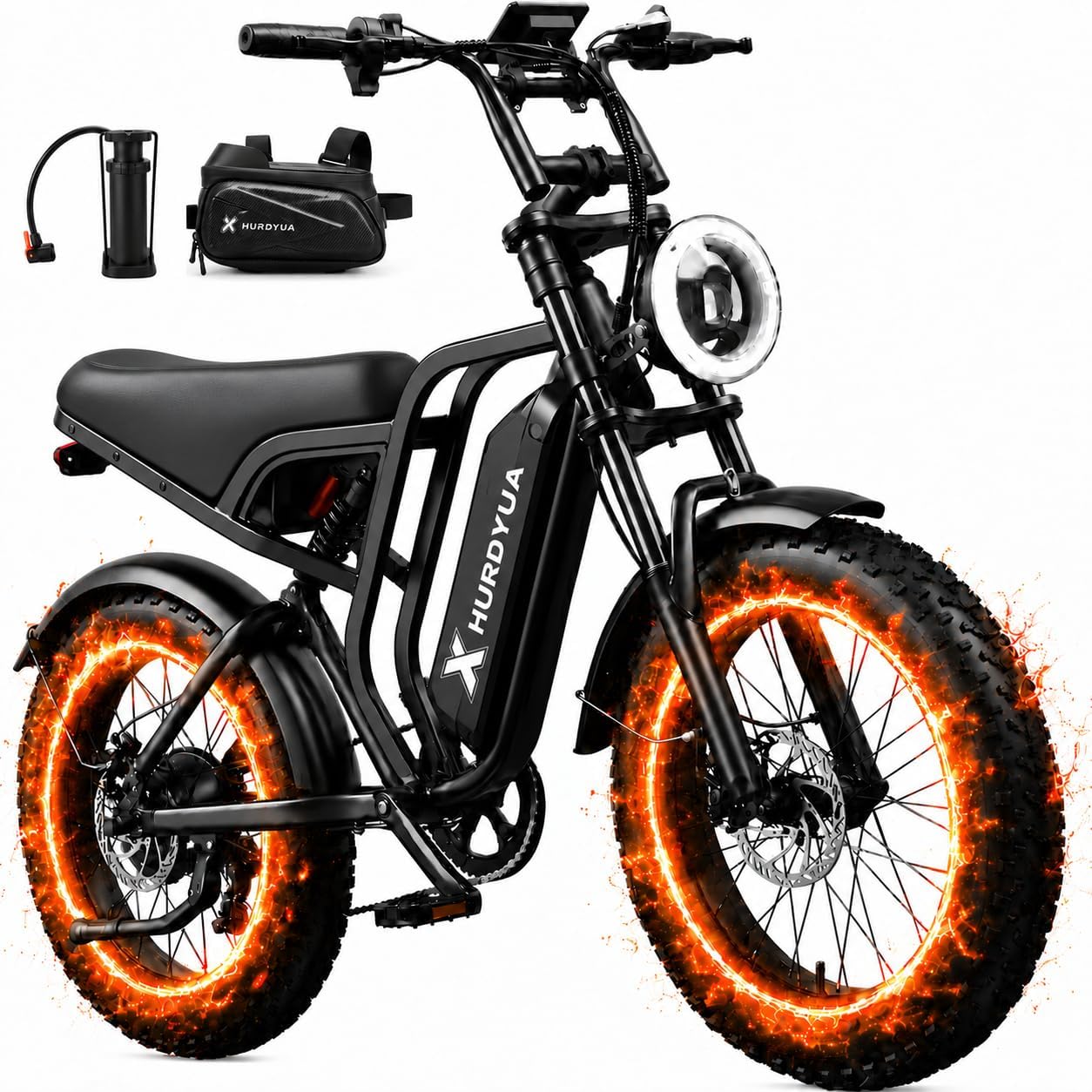
The long-commute pick: Electric Bike for Adults 1500W Peak Motor 48V 15.6Ah Removable Battery
 Visit on Amazon →
This is the one I would hand a friend with a real commute. The 48V system and the 1500W peak motor are the right shape for a heavy rider on a hill, and the 15.6Ah pack gives you enough capacity that you are not nursing the throttle the whole way in. Peak wattage is the number that matters when you are close to 200 pounds and the road tilts up, because that is the moment the controller pulls everything the motor has.
The removable battery is the feature I would pay for twice. It means you can lock the bike outside, carry the pack in, and charge it under your desk instead of running a cord across a sidewalk. It also means that in a few years, when the pack has cycled out, you are replacing a battery instead of a bicycle.
Assembly is the part most reviews skip. A bike like this ships mostly built, and the remaining work is handlebars, front wheel, pedals, and a check of every bolt before the first ride. Give it two hours the first time, including the part where you actually torque things instead of guessing.
Flaws but not dealbreakers: A 1500W peak motor on a 48V pack is not a 60V dirt bike and should not be compared to one. This is a commuter that climbs and keeps up with traffic, not a machine for a motocross track. It also weighs like a bike, so if you live on a third-floor walk-up with no elevator, factor that in before you order.
Anyone with a five to fifteen mile commute, hills on the route, and a place to park a full-size bike should start here.
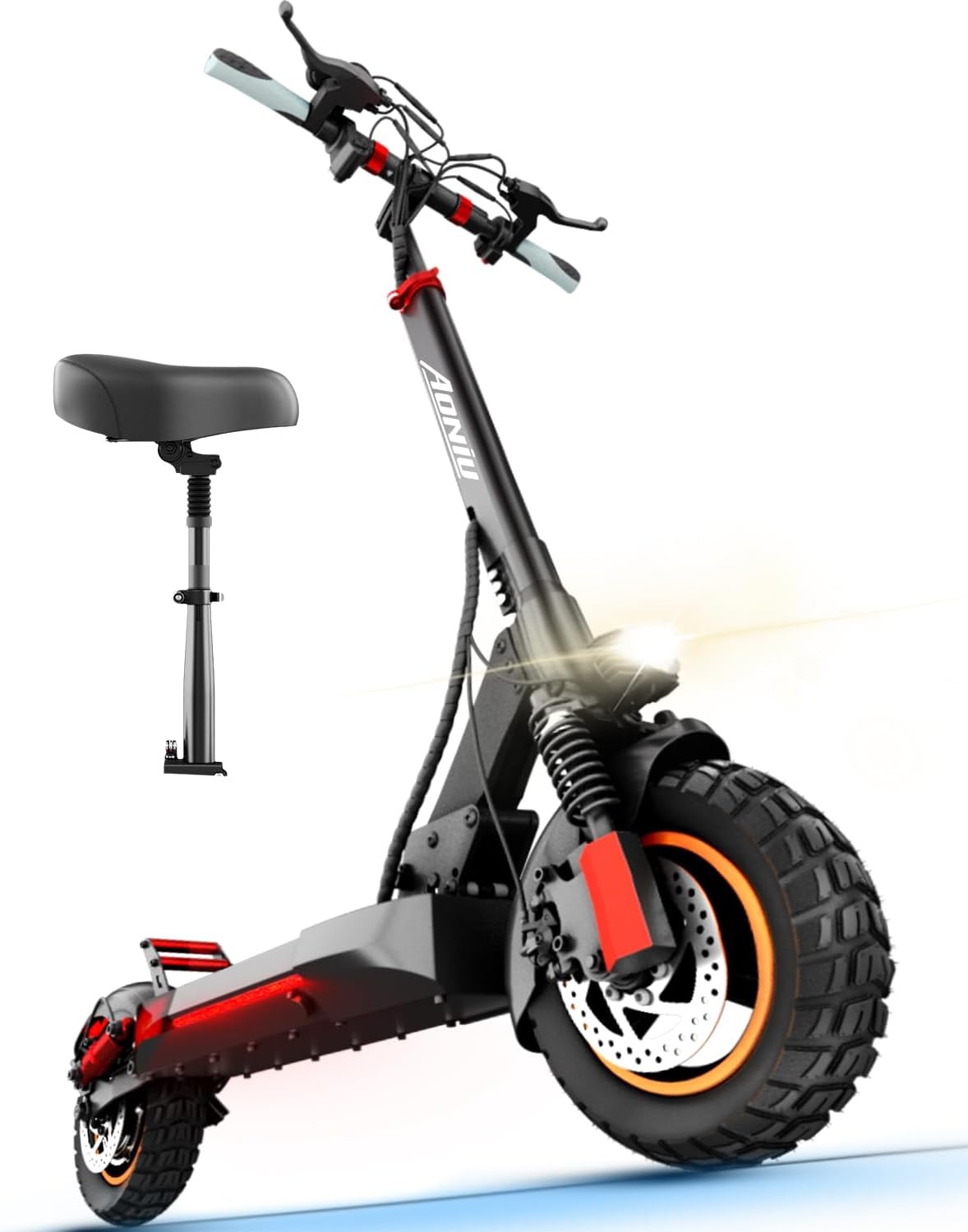
The short-hop pick: M4 Electric Scooter for Adults Off Road Escooter for Commuting
 Visit on Amazon →
The M4 is built for the commute where a full-size bike is overkill. An off road escooter with real tires and a deck wide enough to stand on comfortably is a different animal from the little folding scooters chained to light poles, and this one is set up for commuting rather than the last hundred yards from a parking lot.
The case for a scooter is simple. It is smaller, it stores in a closet or under a desk, and it does not require you to change clothes. The off road spec matters more than people expect, because the tires and the suspension are what keep a 200-pound rider from feeling every expansion joint on the way to work. If your route is under five miles, mostly flat, and ends somewhere you can roll the scooter inside, this is the easier answer.
Flaws but not dealbreakers: Scooters trade stability for size. Smaller wheels mean potholes and gravel demand more attention, and you are not carrying groceries on one. If your commute includes a long climb or a stretch of rough pavement you cannot route around, the e-bike above is the better call.
Anyone with a short, flat commute and secure indoor storage will get more out of this than a full-size bike.
The actual decision workflow
Run these in order. The first one that gives you a clear answer, stop.
Step one: Measure the real round trip. Not the drive. The actual door-to-door distance both ways, plus any detours you make on a normal day. Under five miles, the scooter is in play. Over ten, buy the bike.
Step two: Look at the elevation. Denver riders know this one. A commute that looks flat on a map can hide a 300-foot climb on the way home. Motor wattage is what gets you up that, and a heavier rider needs more of it. This is where a 1500W peak motor earns its place.
Step three: Decide where the machine sleeps. At home, at the office, at the bar. A full-size bike needs floor space or a rack. A scooter needs a corner. A removable battery means the machine can sit somewhere cold while the pack sits somewhere warm, which matters in a Denver winter.
Step four: Ask what you carry. Laptop bag only, and a scooter is fine. Groceries, gym bag, tools, a change of clothes, and you want a bike with a rack and panniers.
Step five: Check the weight against your body. Almost 200 pounds is the number I test at, and it is not unusual. Any machine you are considering has to move that weight up your worst hill without bogging down. Peak wattage is the spec that tells you whether it will.
Step six: Verify the battery details. Capacity in amp hours, voltage, and whether the pack comes out. Removable is worth more than a slightly bigger number, because charging indoors is how you actually keep a commuter topped up.
Step seven: Budget the assembly. Whatever you buy arrives in a box. Bikes take about two hours the first time, scooters less. If you cannot put it together yourself, price a local shop before you buy, because a shop build is not free.
Step eight: Plan the tune. Out of the box is never quite right. Tire pressure, brake adjustment, and the assist or speed settings are all things you will revisit in the first week. Every owner does it. Nobody mentions it at the counter.
What I would not buy, and why
A 250W single-speed commuter looks like a bargain until you put a heavy rider on a hill. That class of bike is fine for a light rider on flat ground and miserable for everyone else. Wattage is not a luxury feature.
Solid tires on a scooter are the other trap. They never go flat, which sounds great, and they transmit every bump straight into your knees, which is not. Real tires and real suspension are what make an off road scooter comfortable enough to ride daily.
And a bike with no removable battery is a bike you charge in a garage with an extension cord. If a seller will not tell you what cells are in the pack, assume the worst. LG cells are the only ones I trust, and I say that as someone who has watched a cheap pack fade inside a year.
The math that matters
Two things cost money after the purchase: electricity and wear. Charging a commuter pack is cheap enough that it disappears next to a tank of gas, and that is the whole point of the exercise. What you should watch instead is battery cycles and consumables.
Every charge cycle takes a little capacity with it. A bigger pack charged twice a week lasts longer than a small pack charged every day, which is an argument for capacity even if you never use the full range. Brake pads, tires, and a chain are the recurring cost on a bike. On a scooter it is tires and brake pads.
The purchase price is the one number you can check yourself, and prices on Amazon move. Check current Amazon price on each listing before you decide, because a thirty dollar swing between the bike and the scooter should not be the thing that decides your commute for the next three years.
The bottom line
Buy the e-bike if your commute is long, hilly, or involves carrying anything. Buy the scooter if it is short, flat, and ends somewhere with a closet. Both beat sitting in traffic, and either one will still be running in three years if you keep the tires up, the brakes adjusted, and the battery charged indoors.
Pick the machine that matches the route you actually ride, not the one that looks better in a photo. Then put it together properly, tune it, and ride it hard enough to find out what it is made of.