Choosing Motoroost equipment should begin with the job the equipment must perform. A product can appear appealing because its title includes a powerful motor, a large wheel size, suspension, lighting, or connected features, but those details only matter when they match the rider, route, storage situation, and maintenance expectations.
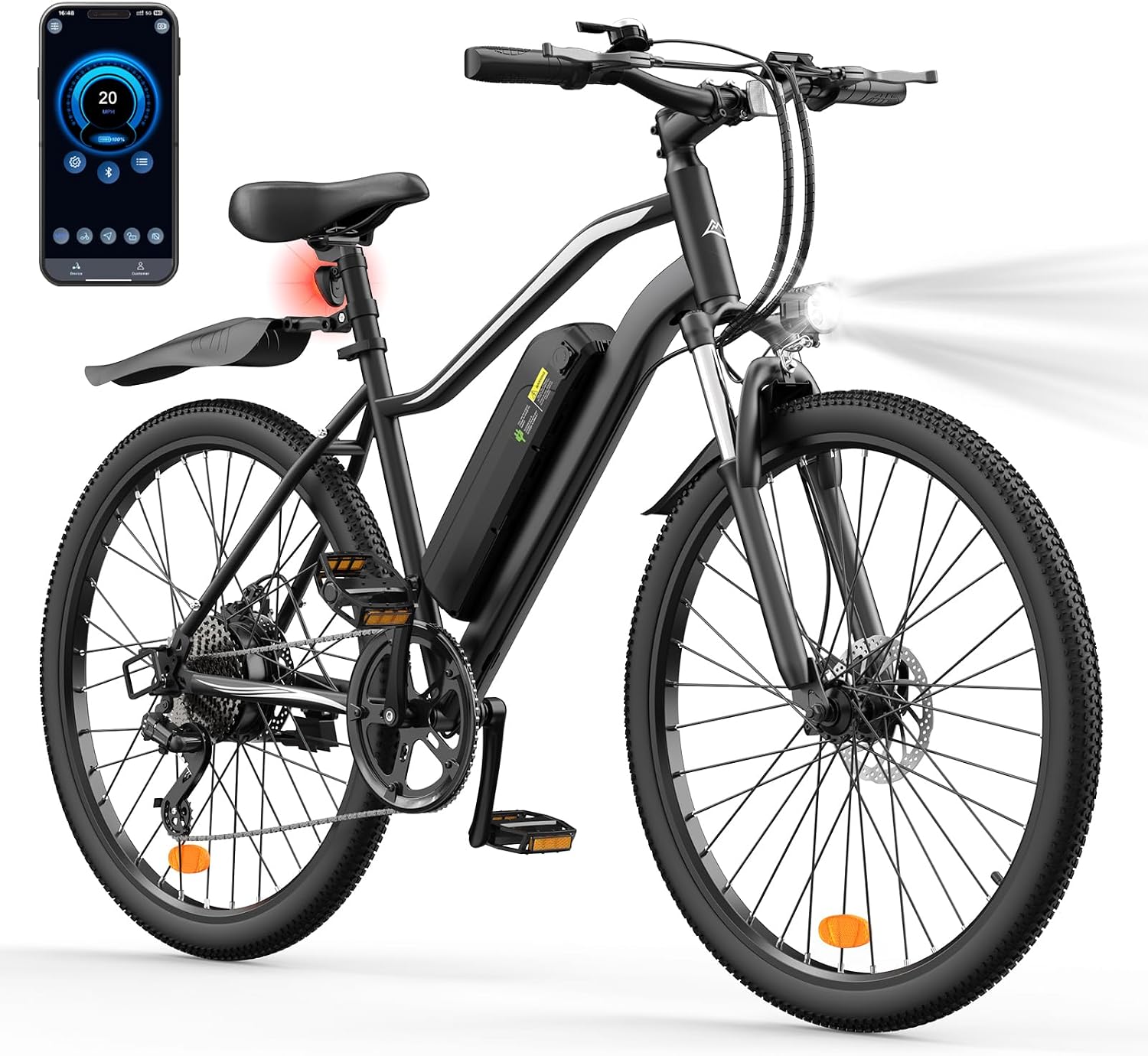
The available option for this guide is the Fcgeoi Electric Bike for Adults. Its listed description identifies a 1000W peak motor, a stated 20MPH speed, 26-inch tires, APP connectivity, a 36V battery capacity, a shock absorber, dual disc brakes, an adjustable seat, fenders, and front and rear lighting. Those are the supplied product details. They should be treated as a starting point for decision-making rather than a substitute for checking the complete listing, fit, local rules, and intended use.
This guide uses one reserved product because only one product source is available. Instead of pretending to compare unrelated models, the sections below examine how the same option may fit different decision priorities. The goal is to help a buyer decide whether the product’s listed configuration aligns with real riding conditions.
Begin with the route, not the feature list
Write down the route before deciding whether the bike is suitable. Include the usual distance, hills, surface types, weather, traffic, storage location, and opportunities to recharge. A short paved commute creates different demands from a recreational ride on rough paths. Mixed use can require compromises in comfort, control, carrying capacity, and cleaning.
The product description identifies 26-inch tires and a shock absorber. Those listed features may be relevant when a rider wants a setup that addresses uneven surfaces, but the description alone does not establish how the bike will feel on a particular trail or road. Terrain, rider weight, tire condition, tire pressure, and cargo can all affect control.
The best question is not whether a bike has a particular feature. Ask whether that feature supports the route you actually ride.
Before buying, consider:
- How much of the route is paved?
- Are there repeated climbs?
- Will the rider encounter gravel, broken pavement, or other uneven surfaces?
- Is the bike used for transportation, recreation, or both?
- Will the rider carry a bag, work clothing, groceries, or tools?
- Can the bike be stored securely indoors?
- Is charging available where the bike will be parked?
- What maintenance can the owner perform?
A product that matches the normal route is generally more useful than one chosen only for its most impressive specification.
Interpret the listed power carefully
The product title lists a 1000W peak motor and a stated 20MPH speed. Those figures are useful identifiers, but they do not predict every riding experience. Acceleration, hill behavior, battery consumption, control response, and range depend on more than the headline numbers.
Rider weight, cargo, wind, incline, riding surface, temperature, and assist use can change how an electric bike behaves. A route with frequent starts and steep sections may place different demands on the system than a mostly flat route with a steady pace.
Treat the listed 20MPH figure as a stated product detail, not a promise that every rider will reach or maintain that speed in every condition. Similarly, the listed 1000W peak motor figure should not be used by itself to determine whether the bike is appropriate for a specific rider or location.
A sensible evaluation includes:
- Identify the heaviest normal rider-and-cargo combination.
- Mark the steepest parts of the route.
- Estimate how often the bike will stop and start.
- Consider whether the rider prefers gentle assistance or stronger response.
- Check applicable local rules for electric bicycles and speed classifications.
- Plan for a reserve rather than using the entire battery on every trip.
Starting in a lower assist setting can help a new rider learn the controls. It may also make acceleration easier to manage in crowded areas. Any available settings should be used according to the product instructions and local requirements.
Understand the battery information
The description lists a 36V battery capacity, but it does not provide a watt-hour figure, charge time, or range estimate in the supplied source. Those missing details matter when judging daily practicality. A buyer should consult the full product listing and instructions for the exact battery information before relying on the bike for a fixed commute.
Do not choose an electric bike based only on the expectation that the stated battery configuration will cover a particular distance. Real-world use can vary because of:
- Rider and cargo weight
- Assist level
- Hills and wind
- Surface condition
- Temperature
- Stop-and-go riding
- Tire pressure
- Battery age
- Storage and charging habits
If the bike will be used for work or school, identify a charging plan before purchase. Determine where the bike can be parked, whether the battery can be removed as instructed, and how charging will be handled safely. Keep the charging equipment dry and use the intended charger and procedures.
A simple route log can improve the decision. Record the route, weather, assist use, starting charge, and ending charge. Several ordinary rides provide more useful information than a single optimistic estimate.
Decide whether the comfort features fit the rider
The listed shock absorber and adjustable seat point toward setup flexibility, but a feature is only helpful when it can be adjusted appropriately. Seat height affects leg position and control. A rider should be able to mount, stop, and place the bike securely without feeling stretched or cramped.
Before a first ride, check:
- Whether the seat can be positioned for the rider
- Whether the handlebars allow a comfortable reach
- Whether both brake levers are easy to access
- Whether the rider can see the controls without looking away for too long
- Whether the rider can support the bike at stops
- Whether the riding position remains comfortable after more than a few minutes
The best adjustment is not necessarily the highest or lowest position. Make one change at a time, then test the bike in a clear area. If the bike will be shared by multiple riders, record the preferred positions so the setup can be repeated.
A shock absorber should not be treated as permission to ride beyond the bike’s intended conditions. Inspect the front end and related hardware regularly, especially after rough rides, transport, or a fall.
Evaluate braking and visibility priorities
The title lists dual disc brakes, a headlight, and a taillight. These features are directly relevant to control and visibility, but their presence does not remove the need for inspection or good riding habits.
Before riding, confirm that the brake levers feel consistent and that the braking system responds without unusual noise, excessive travel, pulling, or vibration. Test braking at low speed before entering traffic or riding on a decline. New riders should practice smooth braking rather than waiting until an emergency.
Lighting should be checked before every ride when visibility may be reduced. Make sure the headlight and taillight are not blocked by clothing, a bag, or another accessory. Reflective clothing or additional visibility equipment may still be useful, depending on the environment.
Braking distance changes with speed, surface, slope, rider load, tire condition, and weather. Leave more space when conditions are wet, dark, busy, or unfamiliar. The bike’s listed braking equipment is one part of a complete safety routine, not a reason to ride beyond the rider’s ability to stop.
Consider fenders and everyday practicality
Fenders are listed in the product description. They may be useful for riders who expect damp roads, puddles, or commuting conditions, but they should be inspected for secure attachment and adequate clearance.
Before using the bike regularly, check that:
- Fenders do not rub the tires
- Fasteners remain tight
- Mud or debris cannot interfere with wheel movement
- Added bags or clothing do not catch on the wheels
- The bike can be cleaned without forcing water into electrical areas
For commuting, practical setup may matter more than maximum assistance. A lock, helmet, weather layer, repair supplies, and a way to carry personal items may be as important to the daily experience as the bike itself. Plan how those items will be transported without affecting steering or balance.
Check APP-related expectations
The product title identifies APP connectivity, but the supplied source does not describe the application’s functions, compatibility, permissions, subscription terms, or required phone operating system. Do not assume that a connected feature provides navigation, tracking, tuning, diagnostics, or other functions unless the full listing or instructions confirm them.
If the APP feature is important to the purchase decision, verify:
- Which phone systems are supported
- What information the application displays
- Whether a phone connection is required for normal riding
- Whether an account is needed
- What permissions are requested
- Whether the bike remains usable if the phone is unavailable
- How software or firmware updates are handled
Treat the connected function as an additional convenience until its exact capabilities are confirmed. The bike should still be evaluated on its physical fit, control layout, braking, storage, charging, and intended route.
Plan assembly and the first inspection
Assembly is the first opportunity to identify shipping damage, loose hardware, misalignment, or missing parts. Work on a stable surface and follow the supplied instructions. Keep packaging and documentation until the bike has been inspected and tested.
Before the first ride:
- Inspect the frame, fork, wheels, tires, cables, controls, and lighting.
- Confirm that the seat and handlebars are aligned.
- Verify that wheels are installed as instructed.
- Check brake operation before applying motor assistance.
- Charge the battery using the intended equipment.
- Confirm that cables do not contact moving parts.
- Test the lights and display or controls.
- Start in an open, low-traffic area.
- Test acceleration and braking at low speed.
- Recheck fasteners after the initial ride.
Stop the setup process if you find cracked parts, bent components, damaged cables, unusual rubbing, or a control that does not function as expected. A serious issue should be addressed through the appropriate seller or manufacturer support rather than hidden with an improvised repair.
Match the bike to the rider’s experience
A 1000W peak motor and a stated 20MPH speed may be more capability than a new rider needs immediately. New or returning riders should begin in a safe area and learn starting, stopping, turning, and braking before riding near traffic or on crowded paths.
The rider should be able to:
- Mount and dismount confidently
- Keep the bike stable at low speed
- Modulate both brakes
- Start without an abrupt reaction
- Turn while maintaining control
- Understand the available controls
- Recognize when conditions are beyond their experience
Rider confidence should come from practice, not from relying on equipment specifications. Use appropriate protective equipment and follow local requirements for where and how the bike may be operated.
Four ways to judge the same option
The following cards present the reserved product from four decision angles. They are not four different products. They are four ways to determine whether the same listed configuration fits a particular priority.

Best overall starting point for mixed-use evaluation
Fcgeoi Electric Bike for Adults
The product description lists a 1000W peak motor, a stated 20MPH speed, 26-inch tires, APP connectivity, a 36V battery capacity, a shock absorber, dual disc brakes, an adjustable seat, fenders, a headlight, and a taillight. This makes it a reasonable starting point for a buyer whose decision includes several priorities at once: everyday setup, control, comfort adjustments, and visibility.
It should be selected only after confirming that the dimensions, battery details, riding classification, and operating rules fit the intended use. Since the supplied source does not provide complete range, weight, charge-time, or fit information, those details should be verified before purchase.
Best fit-focused option to investigate
Fcgeoi Electric Bike for Adults
The adjustable seat and listed shock absorber deserve attention when rider position and comfort are central to the decision. An adjustable seat can help a buyer establish a more practical riding position, while the listed shock absorber may be relevant for routes that are not perfectly smooth.
The supplied product information does not specify the adjustment range, suspension design, rider weight limit, or fit measurements. Those omissions mean the buyer should confirm the full listing before deciding. The right approach is to compare the bike’s dimensions with the rider’s height, reach, inseam, storage space, and mounting confidence.
After assembly, test the seat position, handlebar reach, brake access, and steering at low speed. Comfort should support control rather than encourage riding faster or farther than the route allows.
Best safety-feature checklist option
Fcgeoi Electric Bike for Adults
The product description lists dual disc brakes, a headlight, a taillight, and fenders. These features may matter to riders who expect changing visibility or damp road conditions. They also create a useful inspection checklist: verify braking response, check that the lights operate, inspect fender clearance, and make sure accessories cannot interfere with moving parts.
The listing does not state brake specifications, light output, water resistance, or whether every component is powered through the main battery. Confirm those details if they affect the purchase decision. Regardless of equipment, riders should leave stopping distance, practice low-speed braking, and use additional visibility equipment when appropriate.
This is the right decision angle for a buyer who values a ready-to-evaluate everyday setup, provided the complete listing confirms the details needed for the intended route.
Best technology-and-capacity option to verify
Fcgeoi Electric Bike for Adults
The title identifies APP connectivity and a 36V battery capacity, along with a 1000W peak motor and a stated 20MPH speed. This angle suits a buyer who wants to investigate connected controls and the relationship between motor assistance and battery planning.
The available source does not provide application functions, range, charge time, watt-hour capacity, or battery-removal instructions. Those are important unanswered questions. Confirm them before treating the bike as a dependable commuting solution.
A careful buyer should also check whether the APP is optional, what phone compatibility it requires, what information it displays, and whether the bike remains fully usable without it. Use the listed power and speed figures as identifiers, then judge the complete system by route demands, rider experience, charging access, and local rules.
Final decision checklist
Choose the Fcgeoi Electric Bike for Adults only if its confirmed dimensions, controls, battery information, and operating classification suit the intended rider and route. The supplied description provides several useful starting points, including the listed motor, speed, tire size, battery voltage, APP connection, shock absorber, braking, seat, fenders, and lights. It does not answer every buying question.
Before committing, verify the full product information for:
- Complete battery capacity and charging details
- Weight and rider limits
- Frame and overall dimensions
- Included assembly requirements
- APP compatibility and functions
- Brake and lighting details
- Warranty and support information
- Local operating requirements
The strongest decision is the one that remains practical after the first ride. Plan the route, inspect the setup, learn the controls, protect the battery, and maintain the brakes, tires, cables, lights, and mounting hardware. A well-matched setup is more valuable than a feature list that does not fit the rider’s actual needs.