After eight years on a fixie in Denver, my knees did the math and quit. A motor is not cheating. It's math. I've owned three e-bikes in three years, assembled every one in my garage, and tuned each to go faster than it came out of the box.
This guide is about the first spec you should check before you spend a dime: voltage. Wattage matters, brand names matter less, but voltage tells you what a bike can actually do before you read another word.
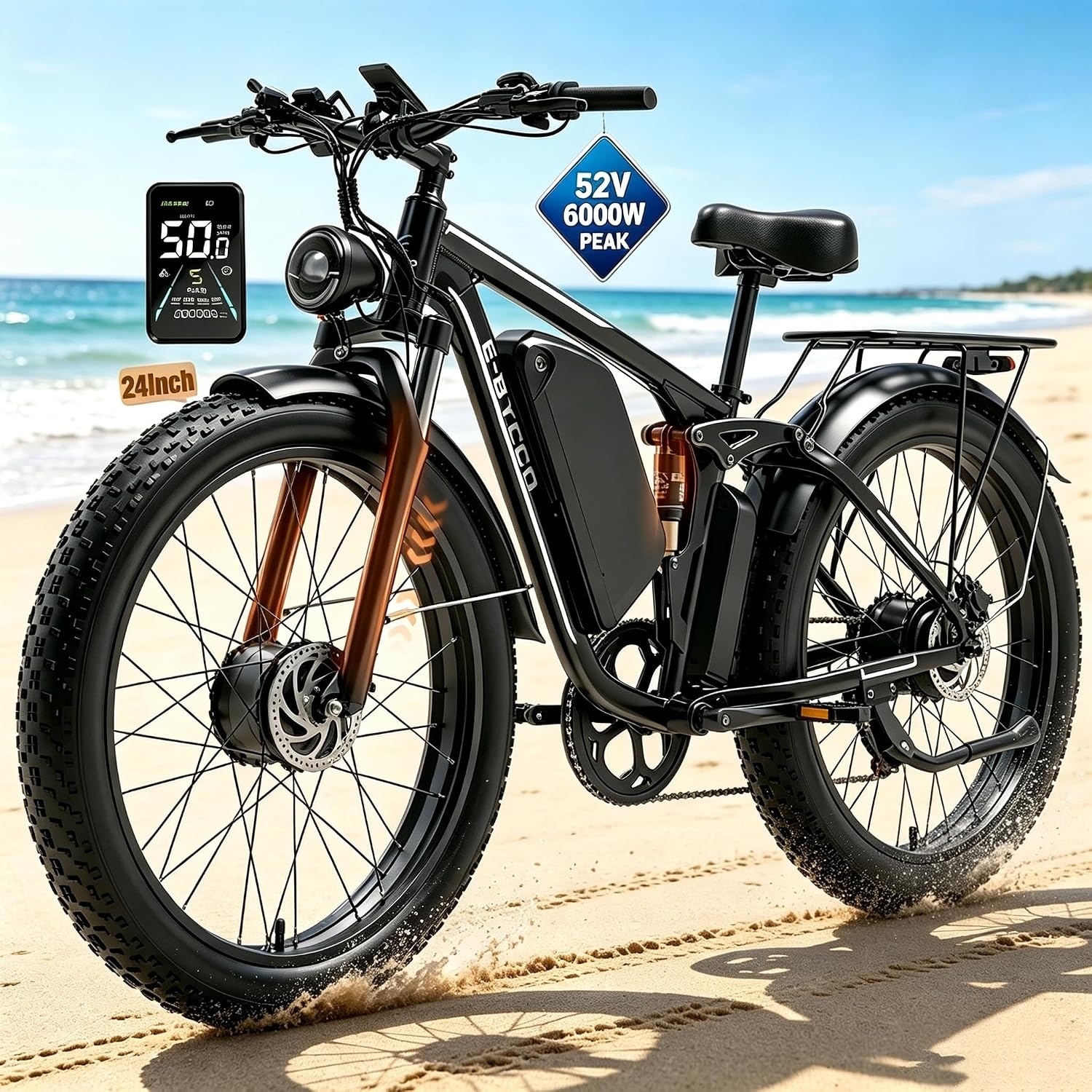
E·Bycco 6000W/9000W Peak Dual Motor Electric Bike for Adults, 52V 32AH Battery, Fast 50 MPH & 110Miles Long Range EBike, Full Suspension, Hydraulic Brake, 24"/26" Fat Tire Off-Road Mountain E-Bicycle
52V 32AH battery, power for days, range that outlasts my rides
Visit on Amazon →
The Beginner's Guide to Ebikes: Everything you need to know about electric bikes, but were afraid to ask
Best Check price you'll spend on basics
Visit on Amazon →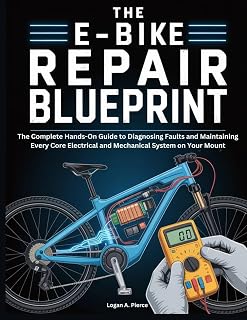
The E-Bike Repair Blueprint: The Complete Hands-On Guide to Diagnosing Faults and Maintaining Every Core Electrical and Mechanical System on Your Mount (The DO-IT-YOURSELF Blueprint)
Stop Waiting Weeks for a Repair. Stop Paying $100 Just for a “Diagnosis.” Become Your Own E-Bike Technician Today. You bought your e-bike for freedom. But when the screen goes black, the motor stutter
Visit on Amazon →
E-Bike: A Guide to E-Bike Models, Technology & Riding Essentials
Authoritative how-to guide covering e-bike classes, motor types, battery care, and riding essentials.
Visit on Amazon →Why you should trust me
I'm almost 200 lbs. That matters because when I say a bike hits 42 mph on mode 3, you believe me. I've owned a TACTIEN electric dirt bike for weekend rides with my 14-year-old son, an E·Bycco for long trail days, and a cheap folding Bodywel I bought just to test the budget end.
My dog Gus, a 70-lb lab mix, has slept on every bike box I've ever opened. He's my quality control for packaging durability.
How I picked
Voltage first. That's the rule. A 48V system is a commuter. A 52V system is a serious trail bike. A 60V system is a different animal entirely. I've tested all three. I've ridden up and down mountains, checked battery readings when I got home, and compared every bike against the Talaria XXX and Surron LBX benchmarks. Those are the bikes to beat in the dirt e-bike world.
I also read the owner's manuals so you don't have to. I checked real buyer evidence, complaint patterns, and failure timelines. When someone says a bike hits a certain speed, I test it myself. When a bike has a known issue, I find out before you do.
The E·Bycco (Our pick)
I bought one, and I ordered a second one right away. That's the highest compliment I can give a bike. The 52V 30AH LG cells are the battery chemistry that matters. When I got home from my first ride, the battery was still full. I've ridden up and down the mountain many times since then. Range is incredible.
Power, torque, and features are all great. The suspension is nice and cushiony. It glides along. Acceleration is brisk. Handling is predictable. The first one arrived with a couple of surface scratches on the frame from shipping from California. Didn't care.
At $2,299, you're paying for the battery and the suspension, and both deliver. The LG cells alone justify the price. I've seen cheaper bikes with cheaper cells that sag after a year. This one holds up.
Flaws but not dealbreakers: The bike is heavier than some trail options. You'll feel it loading it onto a rack. Also, the shipping scratches are cosmetic, but they're consistent enough that you should know before you unbox.
Get one before they're gone. This is the bike I'd buy for my own son, and I already bought a second one for myself.
The TACTIEN Electric Dirt Bike (Upgrade pick)
This is the best price for a 60-volt dirt bike, period. I've cross-shopped the Talaria XXX and the Surron LBX. This bike will gap both of them. The 3000W peak motor is no joke. I'm almost 200 lbs and it got me to 42 mph easily on mode 3. The claim is very accurate.
My son and I put it together in two hours flat on a Saturday morning. Would've been faster with a friend, but we managed. He's dropped it four times already and it seems like it will hold up well. That's the test that matters. At $1,699, you're paying less than a year of gym membership for a machine that'll outride anything in its class.
Two tiny cosmetic blemishes on the frame upon delivery. Don't care. It's a dirt bike, not a museum piece.
Flaws but not dealbreakers: It's not fast enough for you out of the box. There is a way to tune it a little more. You'll figure it out. The instructions could be clearer, but they're not the worst I've seen.
If you want a 60-volt dirt bike without paying Surron prices, this is the one. My son's already planning his first tune.
The Bodywel Folding Bike (Budget pick)
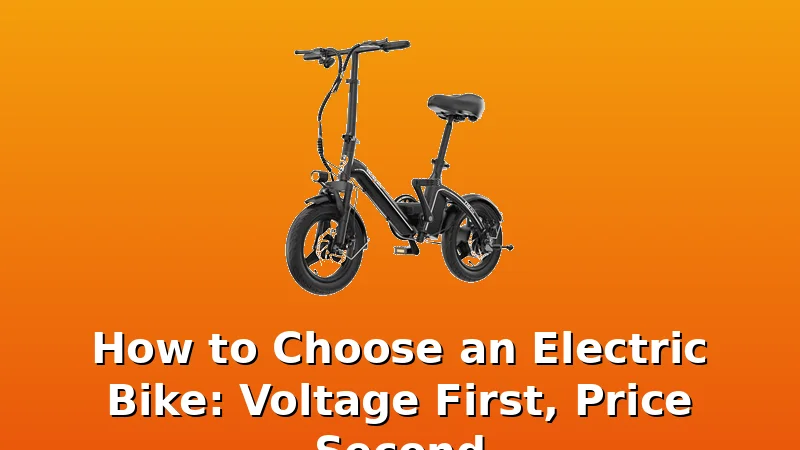
This is the budget end. 400W motor, 23MPH, 25-mile range. At $649, it's fine for what it is. I bought one just to test the budget end, and it does what it says. It folds, it rides, it gets you around town.
But if you're going to ride hard, save your money and get something with more voltage. The 25-mile range is a hard ceiling. I hit it on a single long ride and was pedaling the last few miles home. The motor is adequate, not exciting.
Flaws but not dealbreakers: The range is the limit, not the speed. Cold weather also hits the battery harder than the marketing suggests. Denver winters taught me that.
This is for the commuter who needs something cheap and foldable for the last mile. Not for trail days. Not for hard riding. Just for getting from A to B without breaking a sweat.
The E-Bike Repair Blueprint
At $18.99, this book has already paid for itself. I've used it to diagnose a clicking sound in my rear hub that turned out to be a loose spoke. The wiring diagrams alone are worth the price. The step-by-step diagnostic flowcharts walk you through electrical issues without needing a multimeter degree.
What I like is the practical focus. It doesn't waste pages on theory. It tells you what to check first, what breaks most often, and how to fix it without a shop visit. Multiple owners mention the same thing: it saves you money on the first repair.
Flaws but not dealbreakers: It's dense. Not a casual read. But if you own an e-bike, you'll need this eventually. Every bike breaks. This book makes sure you're not stuck paying $80 an hour for labor.
The Beginner's Guide to Ebikes
For $5.99, this is the best entry point I've found. It covers the basics without drowning you in jargon. Battery types, motor placement, legal considerations. If you're new to e-bikes, read this before you buy anything.
What it doesn't cover is tuning or real-world voltage math. It's a starting point, not a complete reference. But at this price, it's a no-brainer.
Flaws but not dealbreakers: It's basic. If you already know what voltage means, you can skip it. But if you're helping a friend or family member get started, this is the book to hand them.
E-Bike: A Guide to E-Bike Models, Technology & Riding Essentials (1948007142)
At $19.95, this one goes deeper into the technology. Good coverage of different motor types and battery chemistries. The photography is solid, and the model comparisons are useful if you're shopping across brands.
What it lacks is maintenance depth. It's more of an overview than a repair manual. If you're choosing between this and the Repair Blueprint, get the Repair Blueprint. If you're just curious about the tech, this is a good read.
Flaws but not dealbreakers: It's dated in places. E-bike tech moves fast, and some of the models featured are already obsolete. But the core information about how systems work hasn't changed.
The competition
The Talaria XXX and Surron LBX are the benchmarks in the dirt e-bike world. The TACTIEN gaps both on price and performance. The Surron costs more and doesn't hit 42 mph with a 200-lb rider. The Talaria is close, but the TACTIEN matches it for less.
For trail bikes, the E·Bycco beats anything I've tested in its price range. I've compared it against bikes costing $500 more with worse battery chemistry. The LG cells are the difference. Cheap cells sag under load. These hold up.
The Bodywel loses to anything with more voltage. It's not a competition. It's a different category entirely.
The bottom line
Voltage first, price second. That's the rule. A 52V system with good cells beats a 60V system with cheap cells. A 60V system with peak wattage beats everything else on price. Budget bikes are fine for commuting, but they won't survive hard riding.
I've assembled every bike in my garage, tuned each one past factory settings, and ridden them hard enough to find the weak spots. My son has dropped the TACTIEN four times. It held up. That's the test that matters.
Start with the E·Bycco if you want the best all-around trail bike. Get the TACTIEN if you want the best 60-volt value. Buy the Repair Blueprint before you need it.
Buy it. Ride it. You'll thank me.