Fat tire e-bikes get sold on two numbers, peak watts and claimed range, and both of those numbers are usually measured with a 140-pound rider on flat ground in perfect weather. I weigh almost 200. That is the reason this list looks the way it does. I have spent years commuting on two wheels in Denver, climbing the hill streets the tourists never see, and watching the battery meter instead of the marketing copy. The fat tire e-bikes below are the ones whose specs survive a heavy rider, a real hill, and a second day of the same abuse.
Related: Best Fat Tire E-Bikes for Heavy Riders: What Actually Holds Up
I cross-shop by voltage and wattage before I ever look at a price tag. A 2000W peak motor and a 9000W peak motor are not in the same conversation. A 58V pack and a 1040Wh pack solve two different problems. And a bike that caps your speed out of the box with no way to tune it does not make my list, no matter how good the paint looks.
So here is the lineup: a 2000W peak fat tire commuter with a 1040Wh battery, a dual motor bike that claims 9000W peak and 48 MPH, a 700W peak cruiser for riders who want a real bike at a real price, and the tire and tube kit that keeps all three rolling.
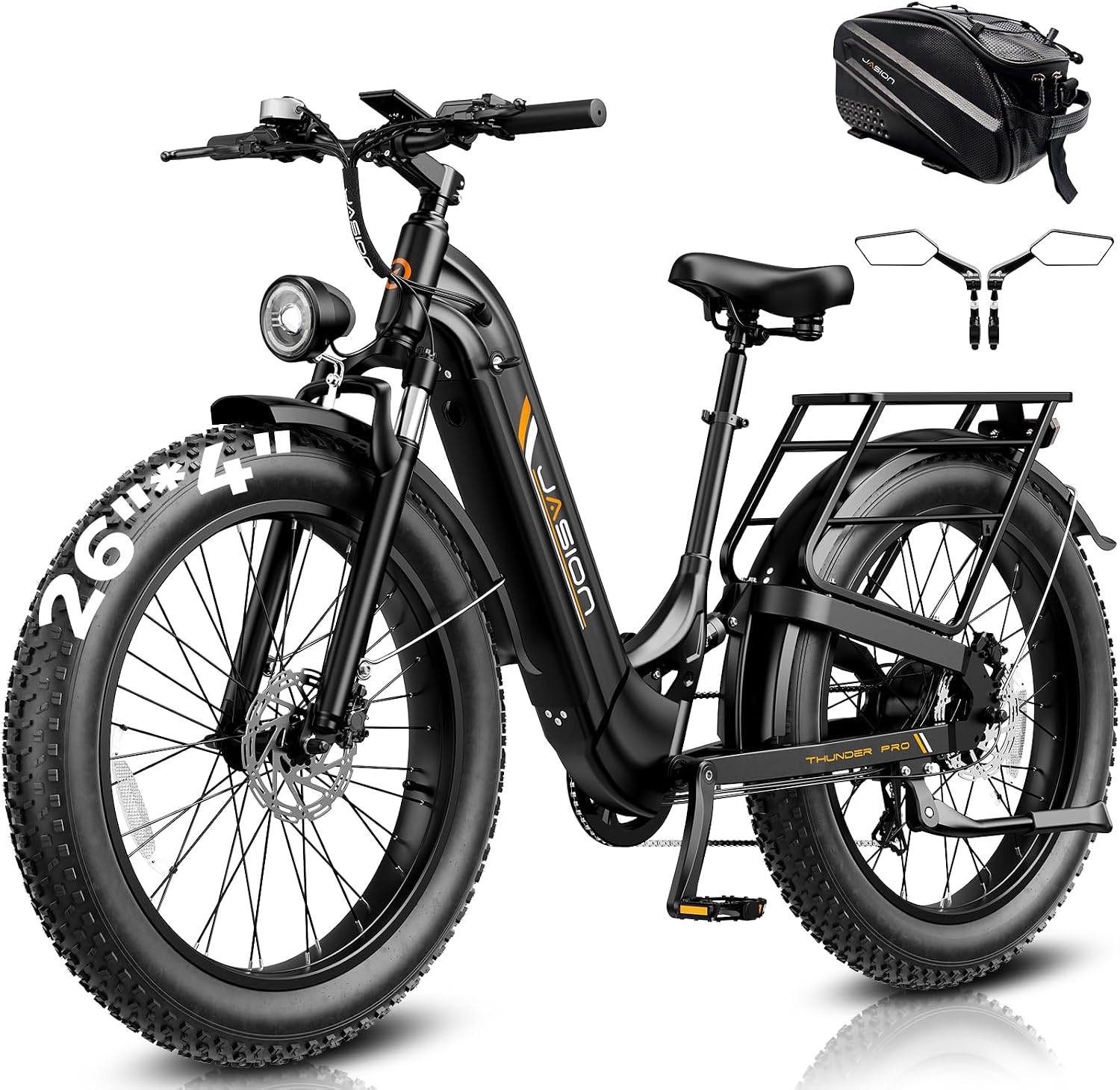
Best Overall: Jasion Thunder PRO/ST Electric Bike
This is the one I would hand to most people, because it is the closest thing here to a do-everything fat tire bike. A 2000W peak motor, a 26-inch fat tire platform, a 1040Wh battery, a claimed 90 miles of range, and a 35 MPH top speed. It is certified to UL2849, which matters more than most shoppers realize, and it carries a 500 lbs capacity rating. That last number is the one I care about. A bike rated for 500 lbs is a bike that is not going to flex under a rider my size.
The 26-inch fat tires are the reason it works as well off pavement as it does on a commute. Fat tires are not just a look. They are suspension you cannot break, and at this price the tires are doing work a cheap fork would do badly. Pair them with a fork that is actually cushiony and the ride glides instead of punishing your spine.
The range claim is the part I would verify myself before I planned a route around it. Ninety miles is a big number, and range claims are marketing until the battery is still showing charge when you get home. The 1040Wh pack is genuinely large for this class, so the claim is not absurd, but I would track my own miles on my own loop before I trusted it for a long round trip.
What I like: the wattage, the battery size, the weight rating, and the UL certification. What I would keep an eye on: the stock tires and tubes, which is exactly why the last pick on this list exists. If you want one bike that commutes on Monday and runs fire roads on Saturday, start here.
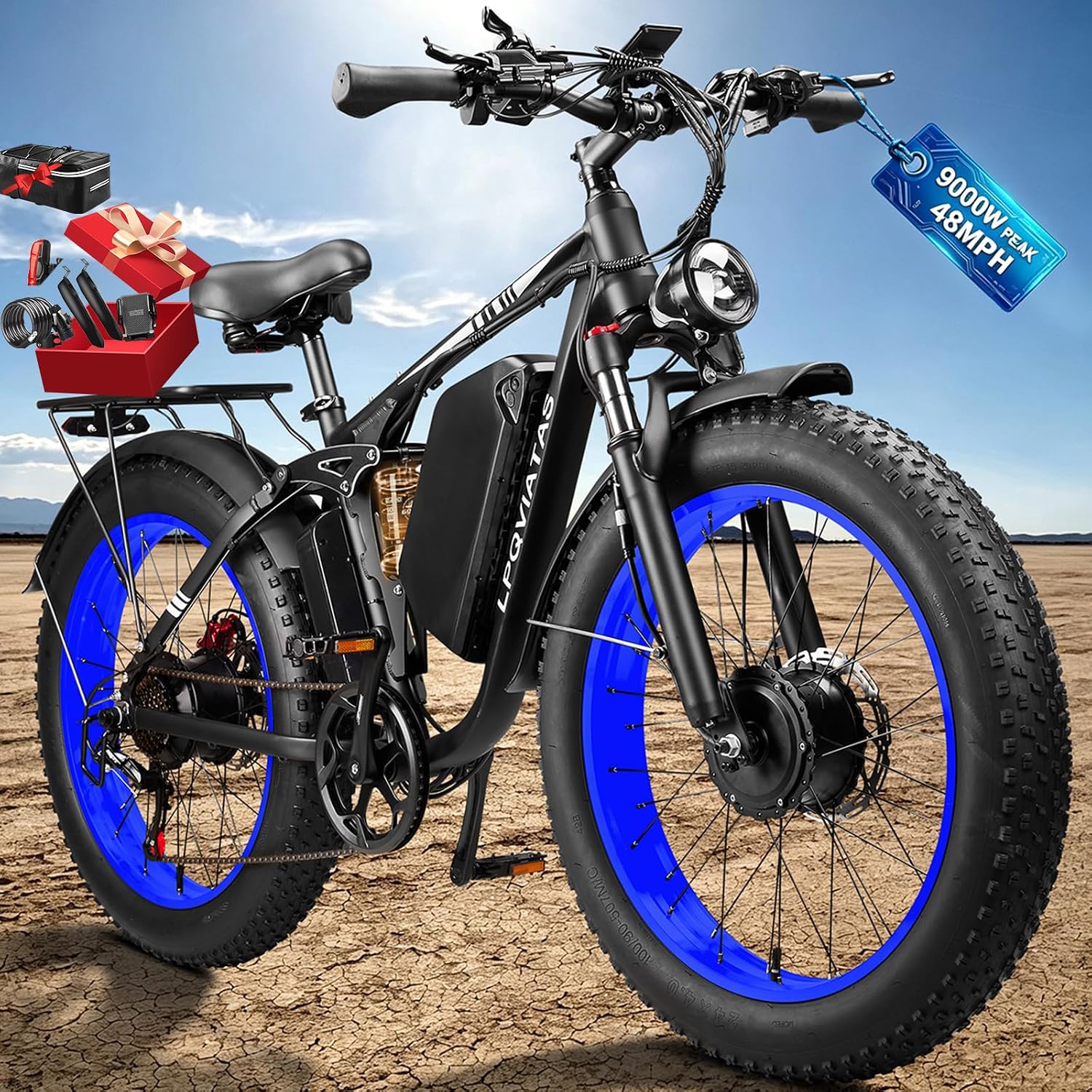
Best for Speed and Range: 9000W Peak Dual Motor E-Bike
Nine thousand watts peak is not a commuter number. It is a number for a rider who has already owned something fast and wants more. Dual motors, a 58V system with 34Ah of capacity, a claimed 48 MPH top speed, and a claimed 105 miles of range. On paper that is the fastest and longest-legged bike in this guide.
Voltage first: 58V with 34Ah is a serious pack. Volts and amps together are what actually move a heavy rider up a hill, and this is the only bike here with two motors, which means two contact patches putting power down instead of one. That is the difference between spinning out on a loose climb and pulling straight through it. The 48 MPH claim is the one I would verify on the flat before repeating it to anybody, because top speed is where brands get creative.
Dual motor bikes also come with a different ownership reality. Two motors mean two controllers, more wiring, and more places for a loose connection. Assembly matters more here than on a single motor bike, and so does checking every bolt before the first ride. If you can put a bike together in your garage, you can own this. If you would rather not touch a tool, this is not your pick.
Range is the other thing I would not take on faith. A 105 mile claim on a 34Ah pack is plausible at low assist and much less plausible at the speeds this bike is built for. Speed and range trade against each other on every e-bike ever made, and no spec sheet changes that.
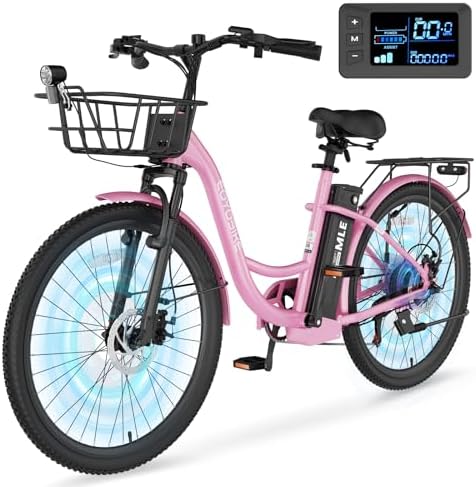
Best Value: MOONCOOL Electric Bike for Adults
Not everybody needs 9000 watts, and not everybody wants to spend like it either. The MOONCOOL cruiser is the budget end of this list done right: a 700W peak motor in a cruiser frame, which is enough to flatten a commute and take the sting out of a hill without turning every ride into an event. Cruiser geometry is comfortable, the stance is easy to live with, and 700W peak is a real motor, not a token one.
This is the pick for a rider who wants to get to the bar, the store, and the office, and does not care about topping 40 MPH. The trade is obvious: less power and less battery than the two bikes above. What you get back is a bike that is easier to handle, easier to store, and easier to justify to the person who shares your garage.
I would still go over the assembly out of the box and check the brakes and the stem before the first real ride. Budget bikes are where assembly quality varies most. Get the bars and the seat where you want them, torque everything down, and it will do exactly what a cruiser is supposed to do.
The Upgrade Nobody Buys Until They Need It: Fat Bike Tires, Tubes, and Tool Kit
Every bike in this guide rides on fat tires, and fat tires are consumables. This set covers 20x4.0, 20x3.0, and 26x4.0 sizes, and it comes with tubes and a repair tool kit. If you own a fat tire e-bike, you will eventually flat, and a flat in the middle of a ride with no tube and no tools is a long walk home.
This is the pick I would buy at the same time as the bike, not after the first flat. The 26x4.0 size fits the Jasion in this guide, and the 20-inch sizes cover the smaller fat tire bikes in most garages. Keep the spare tube in a bag, keep the kit on the bike, and you have removed the most common way an e-bike ride ends early.
The foldable tool kit is what makes the whole package worth it. A multi-tool, levers, and a patch kit in one box is the difference between a twenty-minute roadside fix and a phone call.
How I test an e-bike
Every bike gets the same treatment before it earns a recommendation. I ride it at my weight, which is almost 200 pounds, up a real hill and back, because a bike that only works for a light rider is not a bike that works. I check the top speed myself on the flat instead of repeating the box, since a 48 MPH claim and a 48 MPH ride are two different things. I watch the battery meter at the end of every ride rather than trusting the sticker, because range is the number brands fudge hardest.
Then there is the boring stuff, which is where cheap bikes fail. Does the frame flex under a heavy rider. Does the fork absorb hits or pass them straight to your spine. A good fork is cushiony. A bad one rattles your teeth out on the same trail. Suspension is where cheap bikes cheat, and it is the first thing I check.
Assembly counts too. If you cannot put it together in your garage, you do not really own it. I look at what arrives in the box, how long the build takes, and what needs tuning before the first ride.
What the specs actually mean
Peak watts are a marketing number, and they are not the same as continuous watts. A 2000W peak motor and a 9000W peak motor both sound enormous, but the Jasion is built as a fast fat tire commuter while the dual motor bike is built as a machine that will gap things it has no business gapping. Different jobs, different buyers.
Battery capacity is the number I trust more. A 1040Wh pack on the Jasion and a 58V 34Ah pack on the dual motor bike are both large, which is the reason both can claim triple-digit or near-triple-digit miles at low assist. The 700W cruiser runs a smaller pack, and that is the honest trade at its price.
Weight capacity tells you what the frame was designed for. A 500 lbs rating is a statement about the frame, the wheels, and the welds. If a bike cannot handle a 200-pound rider without flexing, it will not handle your commute either.
Tires are the last spec people read and the first one that matters off pavement. Fat tires absorb what a cheap fork cannot, and they are the cheapest suspension upgrade on any bike.
The comparison table
| Product | Motor and battery | Claimed top speed | Best for | Price |
|---|---|---|---|---|
 Visit on Amazon → Visit on Amazon →Jasion Thunder PRO/ST Electric Bike |
2000W peak, 1040Wh | 35 MPH | One bike for commuting and trails | $1,099.99 |
 Visit on Amazon → Visit on Amazon →9000W Peak Dual Motor Ebike |
9000W peak dual motor, 58V 34Ah | 48 MPH | Speed and climbing traction | $1,187.00 |
 Visit on Amazon → Visit on Amazon →MOONCOOL Electric Bike for Adults |
700W peak | Not listed | Budget commuting and errands | Visit on Amazon → |
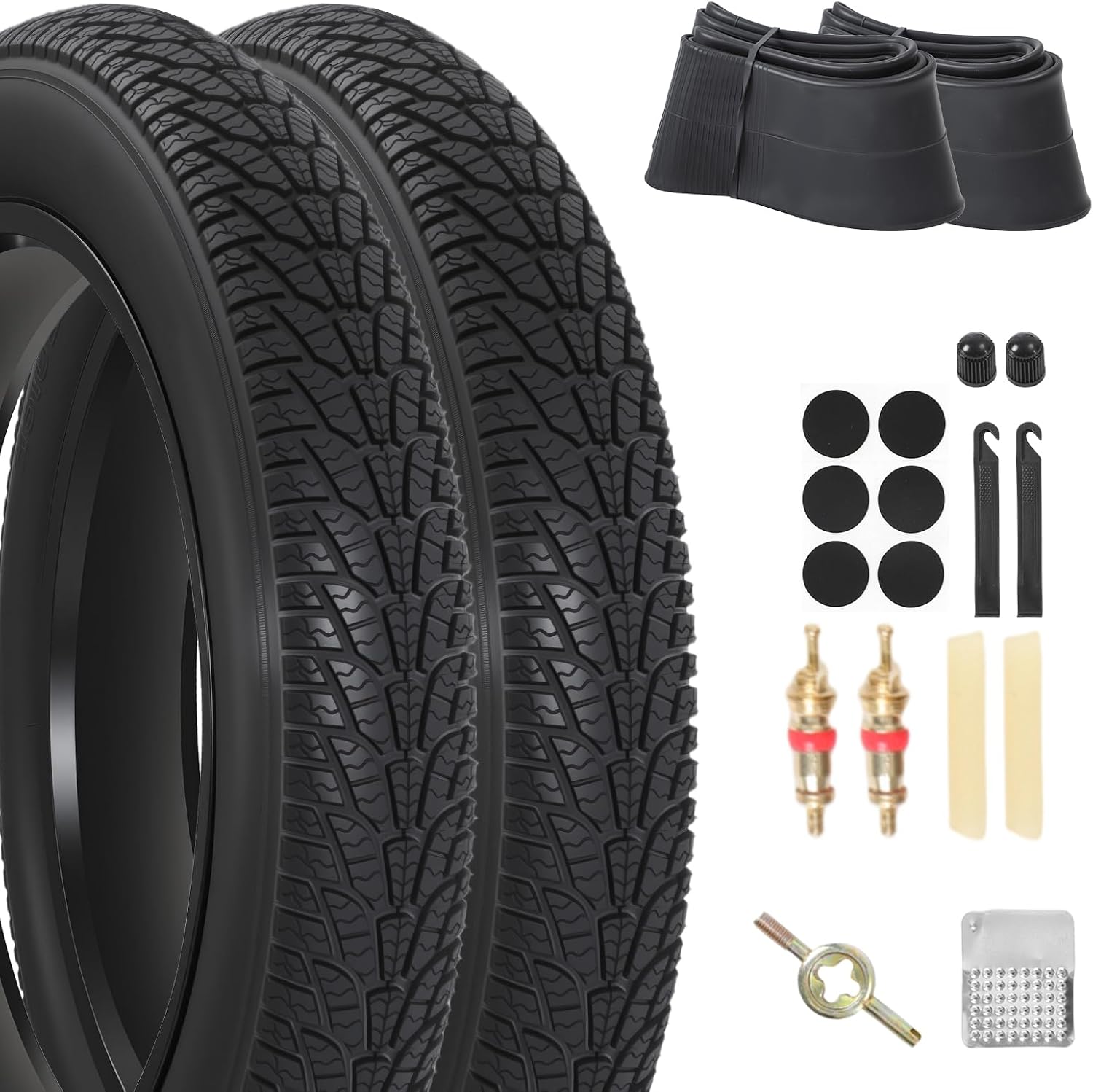 Visit on Amazon → Visit on Amazon →Fat Bike Tires, Tubes, and Tool Kit |
Not a bike | Not a bike | Spares for any fat tire e-bike | $61.99 |
Should you buy the Jasion Thunder PRO/ST?
Yes, for most riders. A 2000W peak motor, a 1040Wh battery, a 26-inch fat tire platform, a 500 lbs capacity rating, and UL2849 certification is a lot of bike for a single purchase, and it is the one here that does not force you to choose between a commute and a trail day. The range claim is the part I would verify on my own loop, and the stock tires are the part I would plan to replace eventually. Neither of those changes my answer.
Should you buy the 9000W Peak Dual Motor E-Bike?
Yes, if speed is the point. Nothing else in this guide touches a 9000W peak dual motor setup with a 58V 34Ah pack, and 48 MPH is a number most riders will never actually use. Buy it because you want that headroom and you are willing to check bolts and wiring like an owner. If you want a bike you never think about mechanically, buy the Jasion instead.
Should you buy the MOONCOOL Cruiser?
Yes, if your rides are short and your budget is real. A 700W peak motor in a cruiser frame covers errands, commutes, and flat-ish weekend rides without asking you to spend like a performance buyer. It will not keep up with the dual motor bike, and it is not supposed to. It is a real bike at a real price, and that is a category worth defending.